Dos Santos Baião Diego, Vieira Teixeira da Silva Davi, Margaret Flosi Paschoalin Vania
Chemistry Institute, Federal University of Rio de Janeiro, Avenida Athos da Silveira Ramos 149, Cidade Universitaria, Rio de Janeiro, RJ 21941-909, Brazil.
Foods. 2021 Apr 15;10(4):859. doi: 10.3390/foods10040859.
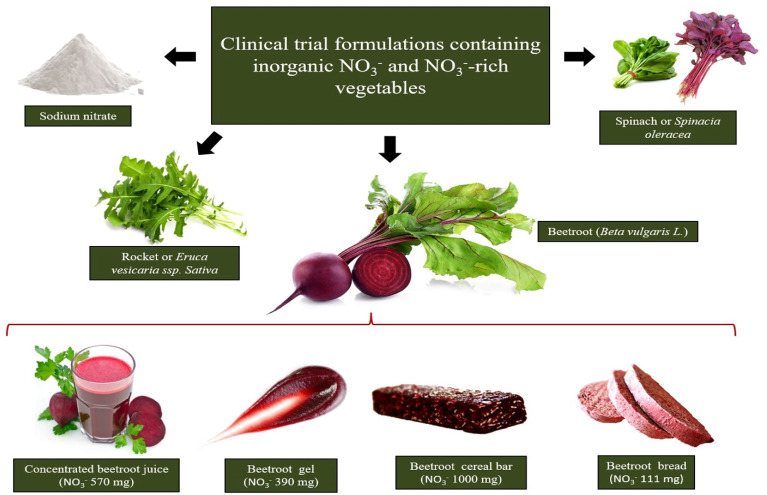
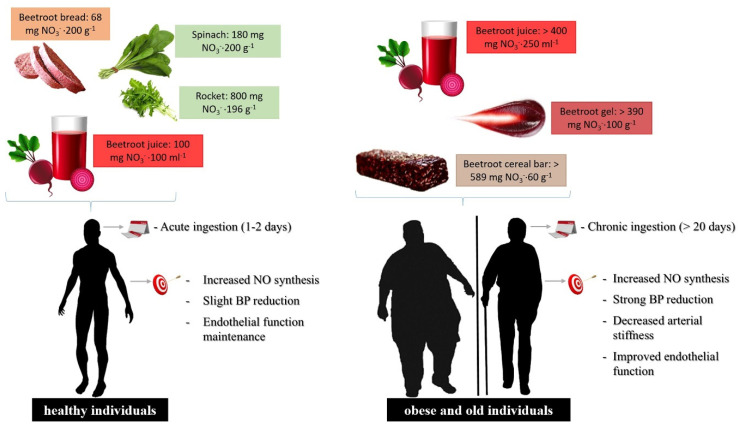
Beetroot is a remarkable vegetable, as its rich nitrate and bioactive compound contents ameliorate cardiovascular and metabolic functions by boosting nitric oxide synthesis and regulating gene expressions or modulating proteins and enzyme activities involved in these cellular processes. Dietary nitrate provides a physiological substrate for nitric oxide production, which promotes vasodilatation, increases blood flow and lowers blood pressure. A brief narrative and critical review on dietary nitrate intake effects are addressed herein by considering vegetable sources, dosage, intervention regimen and cardioprotective effects achieved in both healthy and cardiovascular-susceptible individuals. Compared to other nitrate-rich vegetables, beets were proven to be the best choice for non-drug therapy because of their sensorial characteristics and easy formulations that facilitate patient adherence for long periods, allied to bioaccessibility and consequent effectiveness. Beets were shown to be effective in raising nitrate and nitrite in biological fluids at levels capable of promoting sustained improvement in primary and advanced hemodynamic parameters.
甜菜根是一种非凡的蔬菜,因其富含硝酸盐和生物活性化合物,可通过促进一氧化氮合成、调节基因表达或调节参与这些细胞过程的蛋白质和酶活性,改善心血管和代谢功能。膳食硝酸盐为一氧化氮的产生提供了生理底物,可促进血管舒张、增加血流量并降低血压。本文通过考虑蔬菜来源、剂量、干预方案以及在健康个体和心血管易感个体中实现的心脏保护作用,对膳食硝酸盐摄入的影响进行了简要叙述和批判性综述。与其他富含硝酸盐的蔬菜相比,甜菜被证明是非药物治疗的最佳选择,因为其感官特性和易于配方,便于患者长期坚持,同时具有生物可及性和相应的有效性。研究表明,甜菜能有效提高生物体液中的硝酸盐和亚硝酸盐水平,从而持续改善初级和高级血流动力学参数。