Baião Diego Dos S, Silva Davi V T da, Paschoalin Vania M F
Instituto de Química, Universidade Federal do Rio de Janeiro, Avenida Athos da Silveira Ramos 149, Rio de Janeiro 21941-909, Brazil.
Antioxidants (Basel). 2020 Oct 8;9(10):960. doi: 10.3390/antiox9100960.
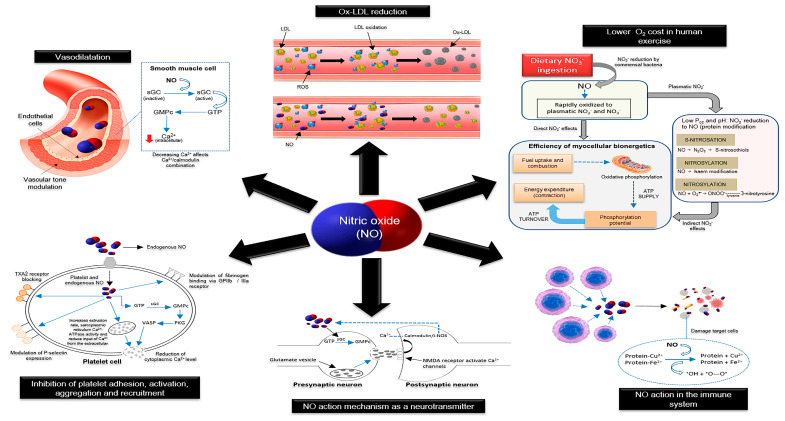
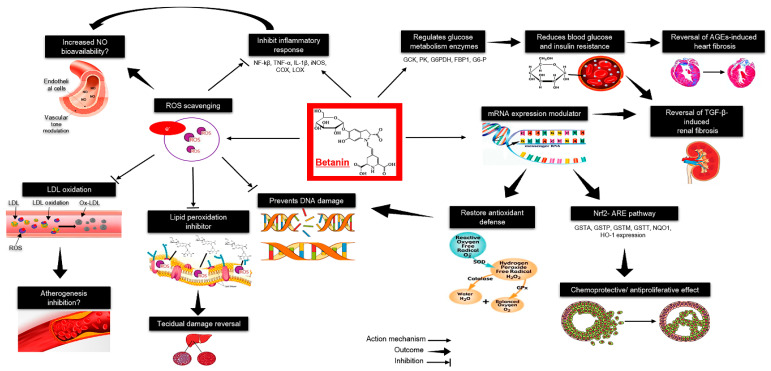
The cardioprotective effects of dietary nitrate from beetroot in healthy and hypertensive individuals are undeniable and irrefutable. Nitrate and nitrate-derived nitrite are precursors for nitric oxide synthesis exhibiting an effect on cardiomyocytes and myocardial ischemia/reperfusion, improving endothelial function, reducing arterial stiffness and stimulating smooth muscle relaxation, decreasing systolic and diastolic blood pressures. Beetroot phytochemicals like betanin, saponins, polyphenols, and organic acids can resist simulated gastrointestinal digestion, raising the hypothesis that the cardioprotective effects of beetroots result from the combination of nitrate/nitrite and bioactive compounds that limit the generation of reactive oxygen species and modulate gene expression. Nitrate and phytochemical concentrations can be adjusted in beet formulations to fulfill requirements for acute or long-term supplementations, enhancing patient adherence to beet intervention. Based on in vitro, in vivo, and clinical trials, beet nitrate and its bioactive phytochemicals are promising as a novel supportive therapy to ameliorate cardiovascular diseases.
甜菜根中膳食硝酸盐对健康个体和高血压患者的心脏保护作用是不可否认且无可辩驳的。硝酸盐和由硝酸盐衍生的亚硝酸盐是一氧化氮合成的前体,对心肌细胞和心肌缺血/再灌注有影响,可改善内皮功能、降低动脉僵硬度并刺激平滑肌舒张,降低收缩压和舒张压。甜菜根中的植物化学物质,如甜菜红素、皂苷、多酚和有机酸,能够抵抗模拟胃肠道消化,由此提出一个假设:甜菜根的心脏保护作用源于硝酸盐/亚硝酸盐与生物活性化合物的结合,这些化合物可限制活性氧的产生并调节基因表达。可以在甜菜配方中调整硝酸盐和植物化学物质的浓度,以满足急性或长期补充的需求,提高患者对甜菜干预的依从性。基于体外、体内和临床试验,甜菜硝酸盐及其生物活性植物化学物质有望成为改善心血管疾病的新型辅助疗法。