
酵母到人细胞中线粒体自噬的通用原理和特定机制。
Common Principles and Specific Mechanisms of Mitophagy from Yeast to Humans.
机构信息
Institute of Biochemistry and Molecular Biology I, Medical Faculty and University Hospital Düsseldorf, Heinrich-Heine-University Düsseldorf, 40225 Düsseldorf, Germany.
出版信息
Int J Mol Sci. 2021 Apr 22;22(9):4363. doi: 10.3390/ijms22094363.
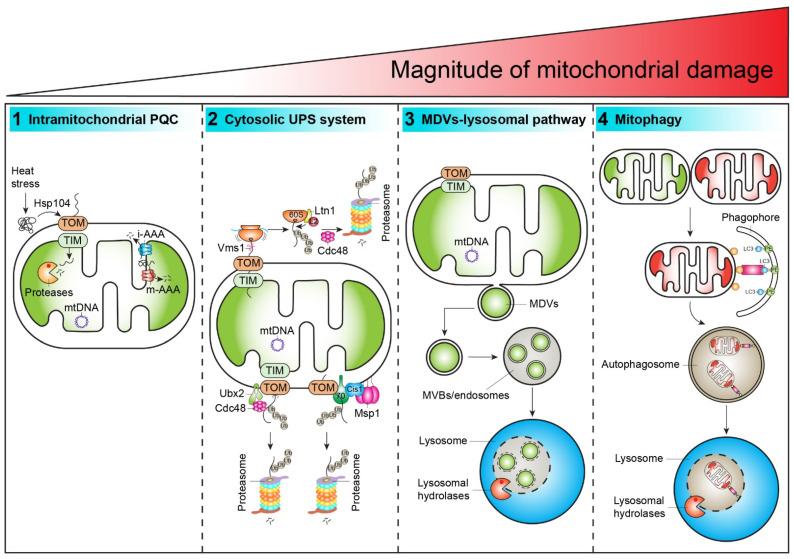
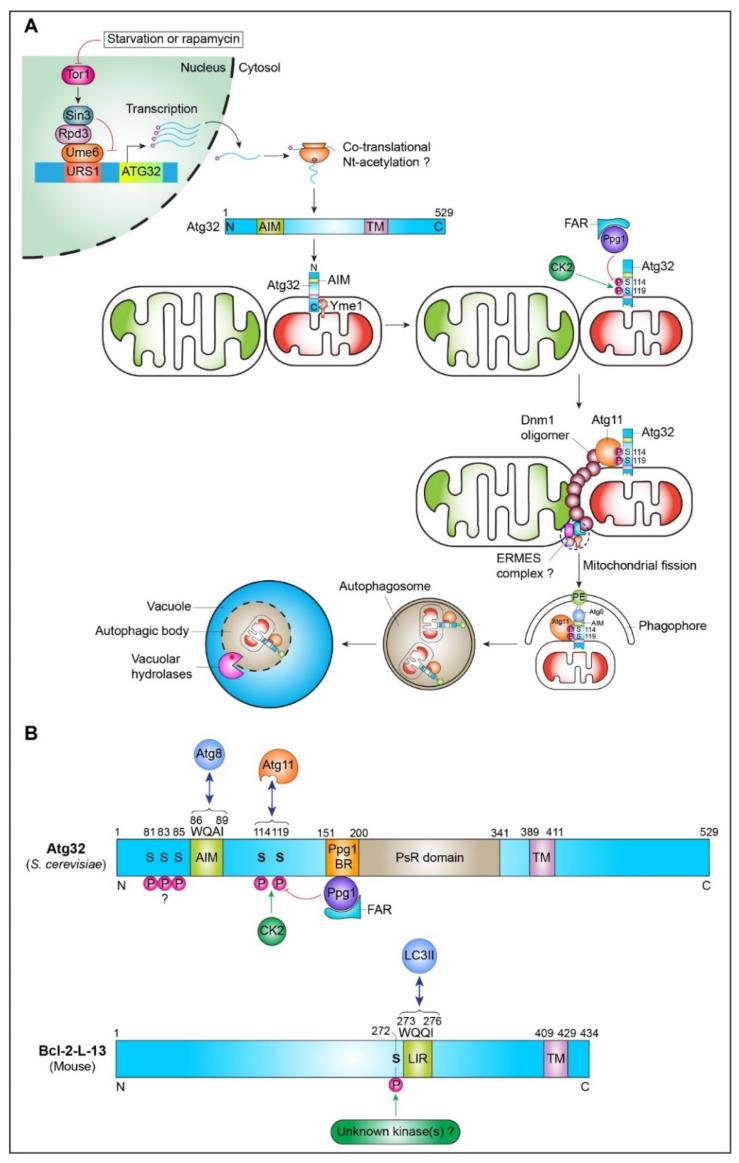
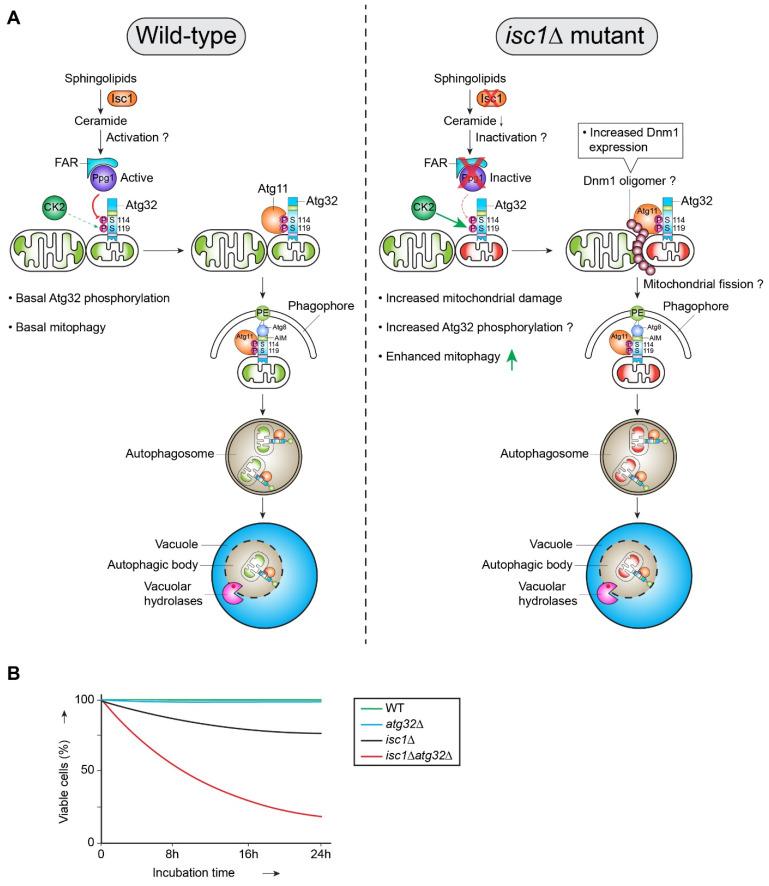
Mitochondria are double membrane-bound organelles in eukaryotic cells essential to a variety of cellular functions including energy conversion and ATP production, iron-sulfur biogenesis, lipid and amino acid metabolism, and regulating apoptosis and stress responses. Mitochondrial dysfunction is mechanistically linked to several neurodegenerative diseases, cancer, and ageing. Excessive and dysfunctional/damaged mitochondria are degraded by selective autophagic pathways known as mitophagy. Both budding yeast and mammals use the well-conserved machinery of core autophagy-related genes () to execute and regulate mitophagy. In mammalian cells, the PINK1-PARKIN mitophagy pathway is a well-studied pathway that senses dysfunctional mitochondria and marks them for degradation in the lysosome. PINK1-PARKIN mediated mitophagy relies on ubiquitin-binding mitophagy adaptors that are non-ATG proteins. Loss-of-function mutations in and are linked to Parkinson´s disease (PD) in humans, and defective mitophagy is proposed to be a main pathomechanism. Despite the common view that yeast cells lack PINK1- and PARKIN-homologs and that mitophagy in yeast is solely regulated by receptor-mediated mitophagy, some studies suggest that a ubiquitination-dependent mitophagy pathway also exists. Here, we will discuss shared mechanisms between mammals and yeast, how mitophagy in the latter is regulated in a ubiquitin-dependent and -independent manner, and why these pathways are essential for yeast cell survival and fitness under various physiological stress conditions.
线粒体是真核细胞中的双层膜细胞器,对于多种细胞功能至关重要,包括能量转换和 ATP 产生、铁硫生物发生、脂质和氨基酸代谢以及调节细胞凋亡和应激反应。线粒体功能障碍与多种神经退行性疾病、癌症和衰老有关。过量的和功能失调/受损的线粒体通过称为线粒体自噬的选择性自噬途径被降解。出芽酵母和哺乳动物都使用核心自噬相关基因 () 的高度保守机制来执行和调节线粒体自噬。在哺乳动物细胞中,PINK1-PARKIN 线粒体自噬途径是一种研究得很好的途径,它可以感知功能失调的线粒体,并将其标记为在溶酶体中降解。PINK1-PARKIN 介导的线粒体自噬依赖于泛素结合的线粒体自噬衔接蛋白,这些蛋白是非 ATG 蛋白。和 中的功能丧失突变与人类帕金森病 (PD) 有关,并且认为缺陷的线粒体自噬是主要的病理机制。尽管普遍认为酵母细胞缺乏 PINK1-和 PARKIN 同源物,并且酵母中的线粒体自噬仅受受体介导的线粒体自噬调节,但一些研究表明也存在依赖泛素的线粒体自噬途径。在这里,我们将讨论哺乳动物和酵母之间的共同机制,酵母中后者如何以依赖泛素和不依赖泛素的方式进行调节,以及为什么这些途径对于酵母细胞在各种生理应激条件下的存活和适应性至关重要。

 Zotero 插件