Monroy-Iglesias Maria J, Dolly Saoirse, Sarker Debashis, Thillai Kiruthikah, Van Hemelrijck Mieke, Santaolalla Aida
Translational Oncology & Urology Research (TOUR), School of Cancer and Pharmaceutical Sciences, King's College London, London SE1 9RT, UK.
Department of Medical Oncology, Guy's and St Thomas' NHS Foundation Trust, London SE1 9RT, UK.
J Clin Med. 2021 Apr 13;10(8):1665. doi: 10.3390/jcm10081665.
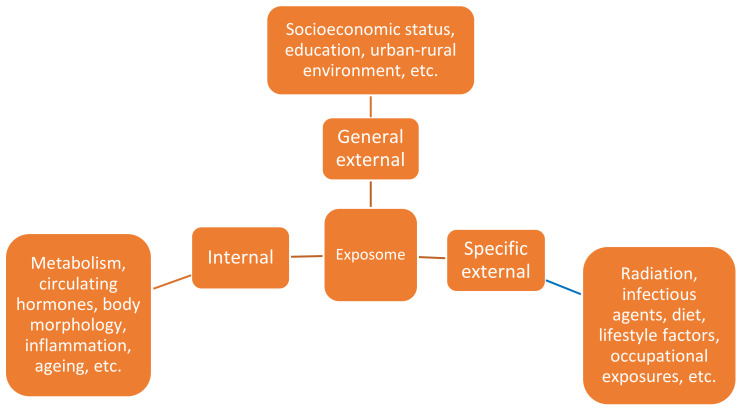
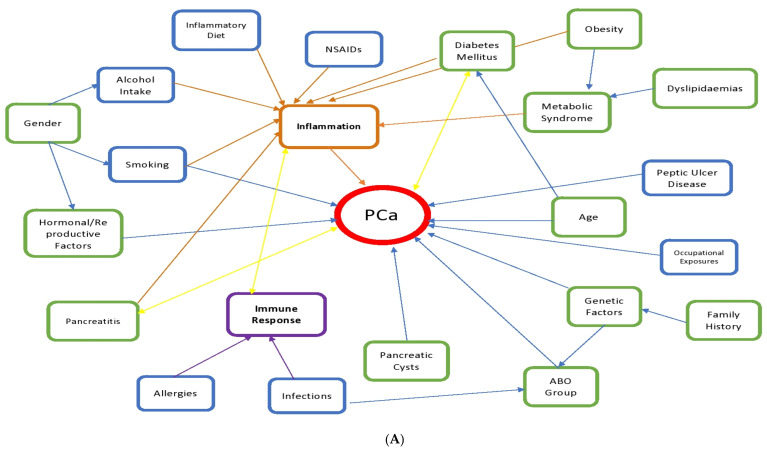
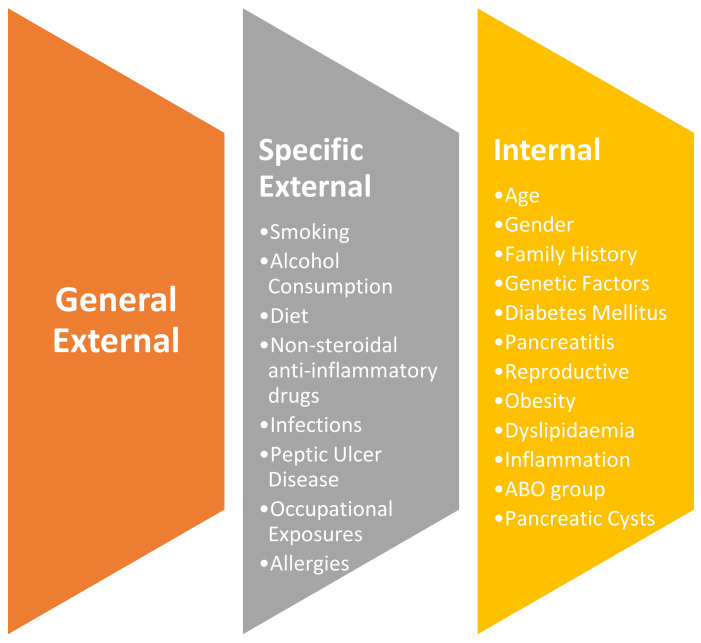
Pancreatic cancer (PCa) is associated with a poor prognosis and high mortality rate. The causes of PCa are not fully elucidated yet, although certain exposome factors have been identified. The exposome is defined as the sum of all environmental factors influencing the occurrence of a disease during a life span. The development of an exposome approach for PCa has the potential to discover new disease-associated factors to better understand the carcinogenesis of PCa and help with early detection strategies. Our systematic review of the literature identified several exposome factors that have been associated with PCa alone and in combination with other exposures. A potential inflammatory signature has been observed among the interaction of several exposures (i.e., smoking, alcohol consumption, diabetes mellitus, obesity, and inflammatory markers) that further increases the incidence and progression of PCa. A large number of exposures have been identified such as genetic, hormonal, microorganism infections and immune responses that warrant further investigation. Future early detection strategies should utilize this information to assess individuals' risk for PCa.
胰腺癌(PCa)预后较差,死亡率较高。尽管已确定了某些暴露组因素,但PCa的病因尚未完全阐明。暴露组被定义为在一个人一生中影响疾病发生的所有环境因素的总和。开发针对PCa的暴露组研究方法有可能发现新的疾病相关因素,从而更好地理解PCa的致癌机制,并有助于早期检测策略的制定。我们对文献的系统综述确定了几个单独或与其他暴露因素联合与PCa相关的暴露组因素。在几种暴露因素(即吸烟、饮酒、糖尿病、肥胖和炎症标志物)的相互作用中观察到一种潜在的炎症特征,这进一步增加了PCa的发病率和进展。已确定了大量暴露因素,如遗传、激素、微生物感染和免疫反应等,这些都值得进一步研究。未来的早期检测策略应利用这些信息来评估个体患PCa的风险。