Yahaya Ahmad Guji, Okuyama Tomohiro, Kristof Jaroslav, Blajan Marius Gabriel, Shimizu Kazuo
Graduate School of Science and Technology, Shizuoka University, Hamamatsu 832-8561, Japan.
Graduate School of Integrated Science and Technology, Shizuoka University, Hamamatsu 432-8561, Japan.
Molecules. 2021 Apr 26;26(9):2523. doi: 10.3390/molecules26092523.
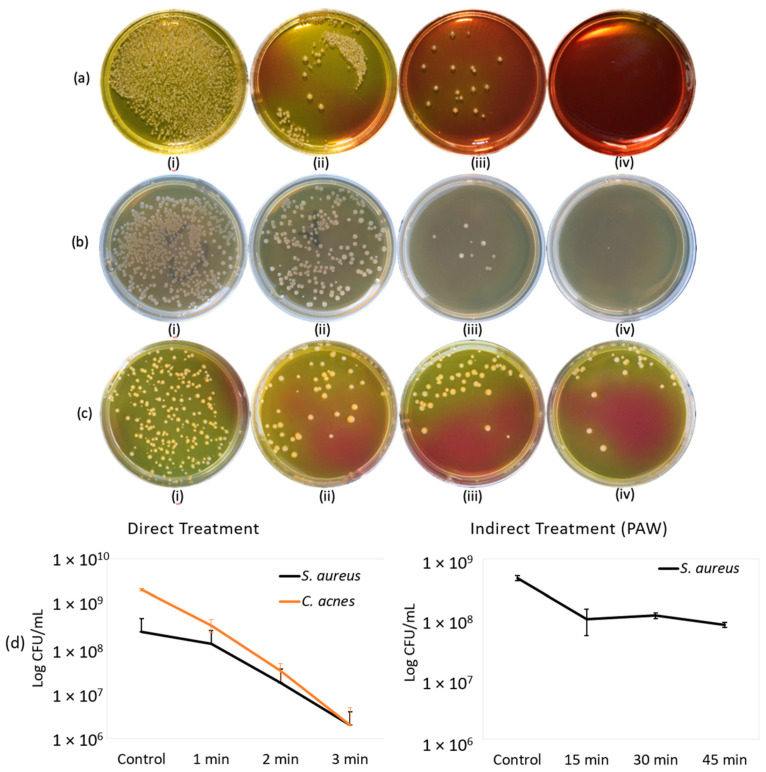
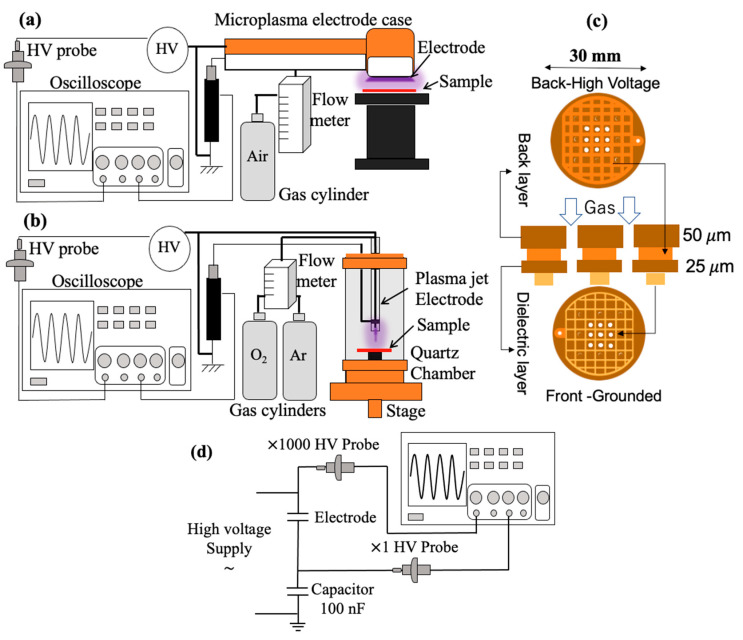
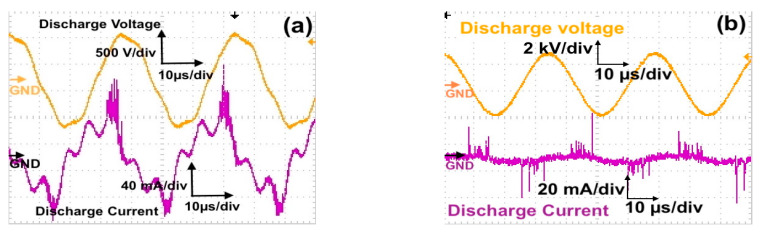
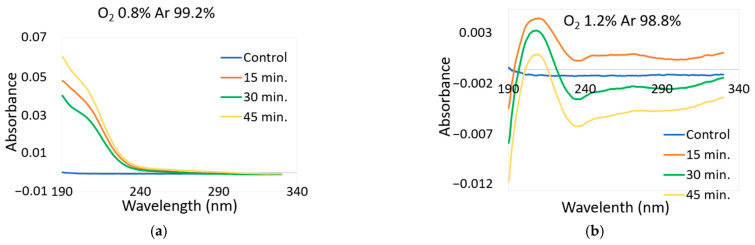
The direct and indirect bactericidal effects of dielectric barrier discharge (DBD) cold atmospheric-pressure microplasma in an air and plasma jet generated in an argon-oxygen gas mixture was investigated on and . An AC power supply was used to generate plasma at relatively low discharge voltages (0.9-2.4 kV) and frequency (27-30 kHz). Cultured bacteria were cultivated at a serial dilution of 10, then exposed to direct microplasma treatment and indirect treatment through plasma-activated water (PAW). The obtained results revealed that these methods of bacterial inactivation showed a 2 and 1 log reduction in the number of survived CFU/mL with direct treatment being the most effective means of treatment at just 3 min using air. UV-Vis spectroscopy confirmed that an increase in treatment time at 1.2% O, 98.8% Ar caused a decrease in O concentration in the water as well as a decrease in absorbance of the peaks at 210 nm, which are attributed NO and NO concentration in the water, termed denitratification and denitritification in the treated water, respectively.
研究了介质阻挡放电(DBD)冷大气压微等离子体在空气以及氩氧混合气体中产生的等离子体射流中的直接和间接杀菌作用,对象为[具体研究对象缺失]。使用交流电源在相对较低的放电电压(0.9 - 2.4 kV)和频率(27 - 30 kHz)下产生等离子体。将培养的细菌以10倍系列稀释培养,然后进行直接微等离子体处理以及通过等离子体活化水(PAW)进行间接处理。所得结果表明,这些细菌灭活方法使存活的CFU/mL数量分别减少了2个对数和1个对数,其中直接处理是最有效的方法,在仅使用空气处理3分钟时效果最佳。紫外可见光谱证实,在1.2% O₂、98.8% Ar条件下,处理时间增加会导致水中O₃浓度降低,以及210 nm处峰的吸光度降低,这分别归因于水中的NO₂⁻和NO₃⁻浓度降低,在处理后的水中分别称为脱硝和脱亚硝酸盐作用。