Key Laboratory of Trustworthy Distributed Computing and Service (BUPT), Ministry of Education, Beijing 100876, China.
School of Cyberspace Security, Beijing University of Posts and Telecommunications, Beijing 100876, China.
Int J Environ Res Public Health. 2021 Apr 26;18(9):4591. doi: 10.3390/ijerph18094591.
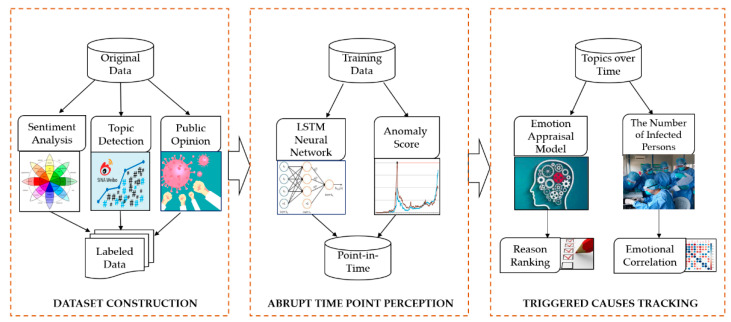
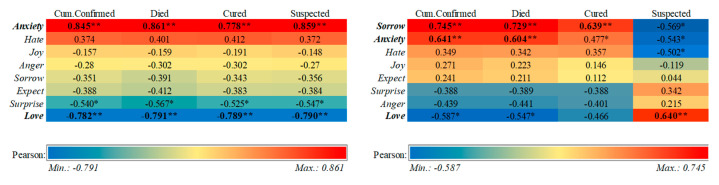
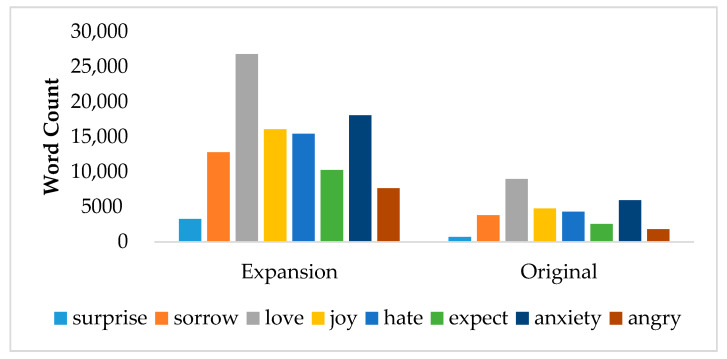
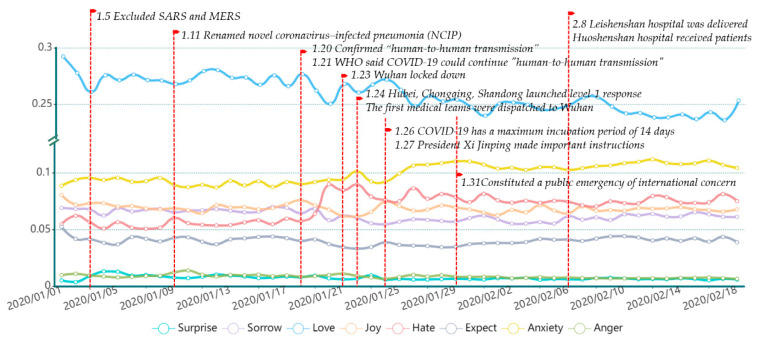
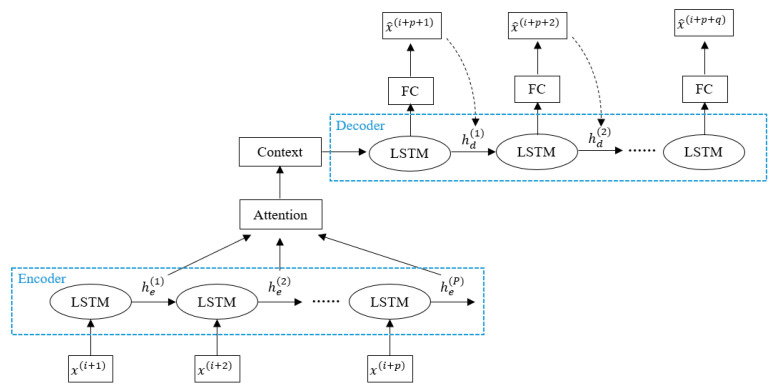
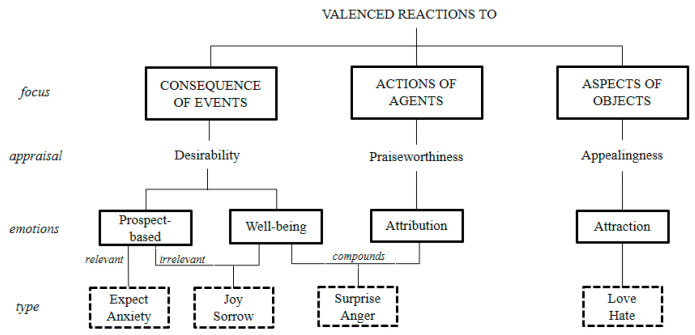
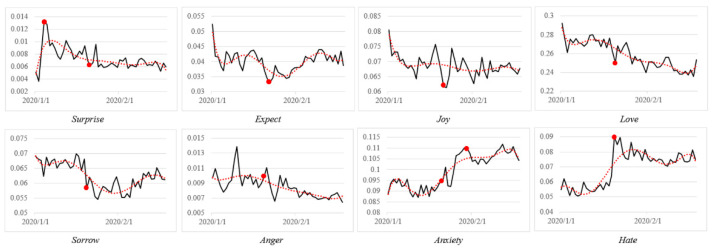
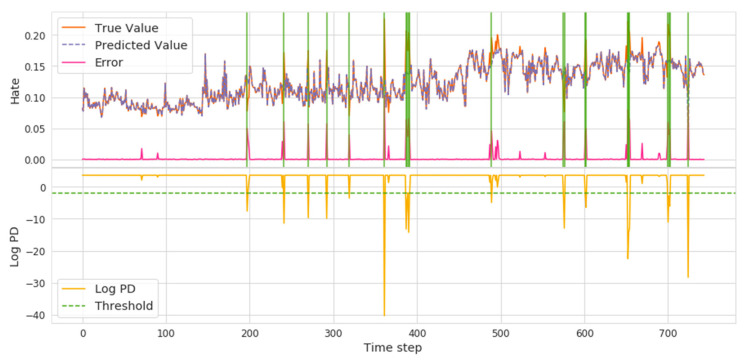
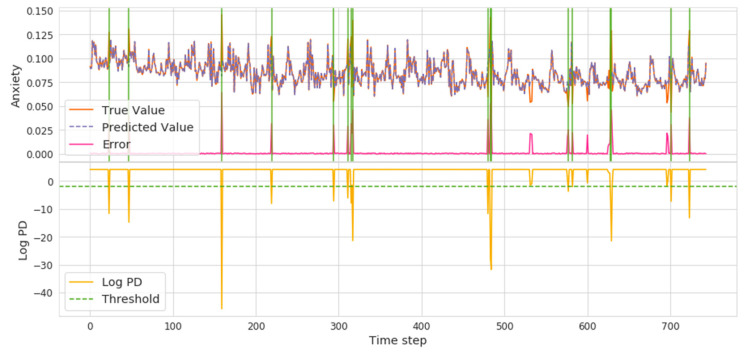
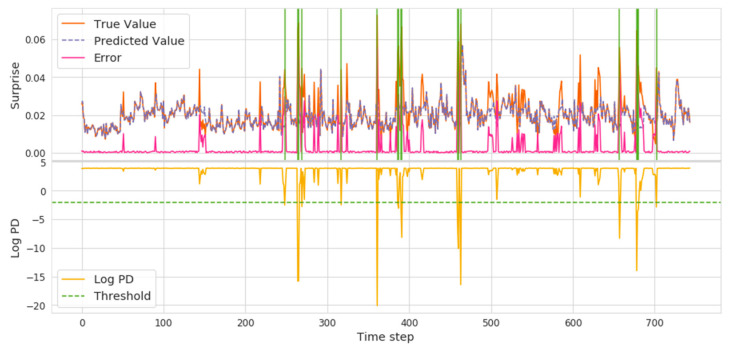
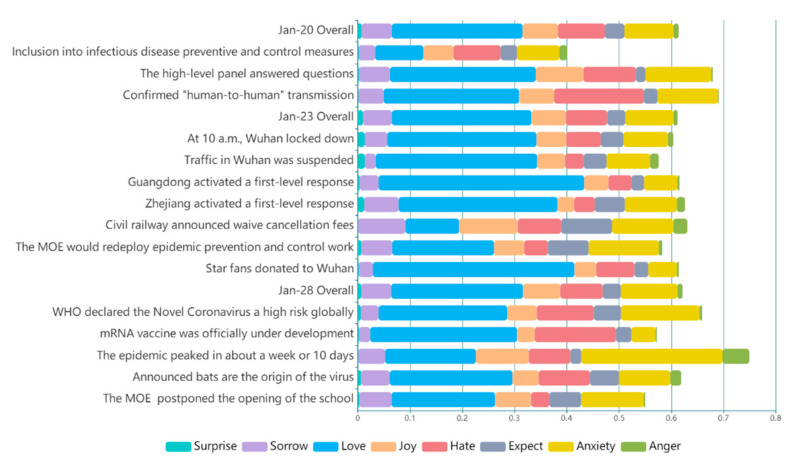
Health support has been sought by the public from online social media after the outbreak of novel coronavirus disease 2019 (COVID-19). In addition to the physical symptoms caused by the virus, there are adverse impacts on psychological responses. Therefore, precisely capturing the public emotions becomes crucial to providing adequate support. By constructing a domain-specific COVID-19 public health emergency discrete emotion lexicon, we utilized one million COVID-19 theme texts from the Chinese online social platform Weibo to analyze social-emotional volatility. Based on computed emotional valence, we proposed a public emotional perception model that achieves: (1) targeting of public emotion abrupt time points using an LSTM-based attention encoder-decoder (LAED) mechanism for emotional time-series, and (2) backtracking of specific triggered causes of abnormal volatility in a cognitive emotional arousal path. Experimental results prove that our model provides a solid research basis for enhancing social-emotional security outcomes.
新型冠状病毒病 2019(COVID-19)爆发后,公众从在线社交媒体寻求健康支持。除了病毒引起的身体症状外,对心理反应也有不良影响。因此,准确捕捉公众情绪对于提供充分支持至关重要。通过构建特定于 COVID-19 的公共卫生应急离散情绪词典,我们利用来自中国在线社交平台微博的一百万个 COVID-19 主题文本分析了社会情绪波动。基于计算出的情绪效价,我们提出了一种公众情绪感知模型,实现了:(1)使用基于 LSTM 的注意力编码器-解码器(LAED)机制对情绪时间序列进行公众情绪突发时间点的目标定位,以及(2)在认知情绪唤醒路径中回溯异常波动的具体触发原因。实验结果证明,我们的模型为增强社会情感安全结果提供了坚实的研究基础。