Department of Environmental Science, University of Arizona, Tucson, Arizona, USA.
Global Research & Development for Lysol and Dettol, Reckitt Benckiser LLC, Montvale, New Jersey, USA.
Appl Environ Microbiol. 2021 Jun 25;87(14):e0300220. doi: 10.1128/AEM.03002-20.
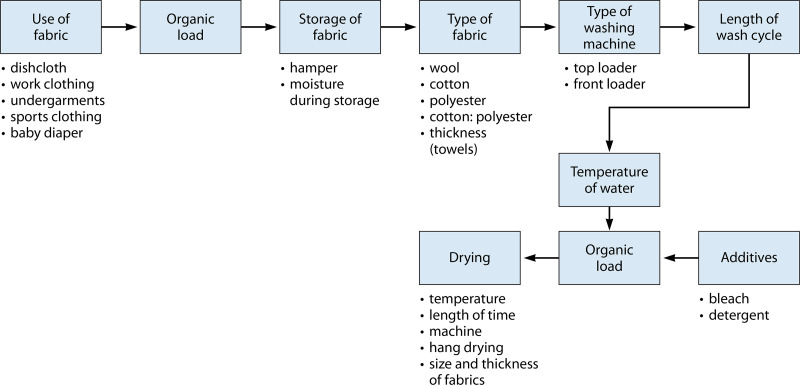
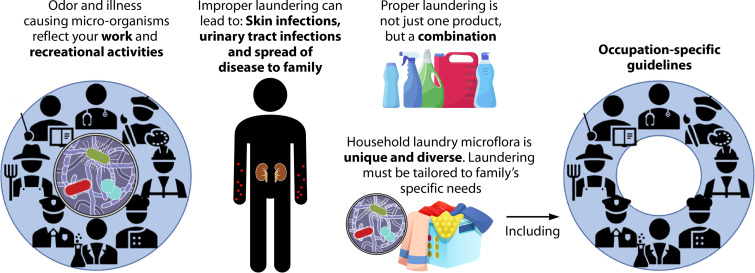
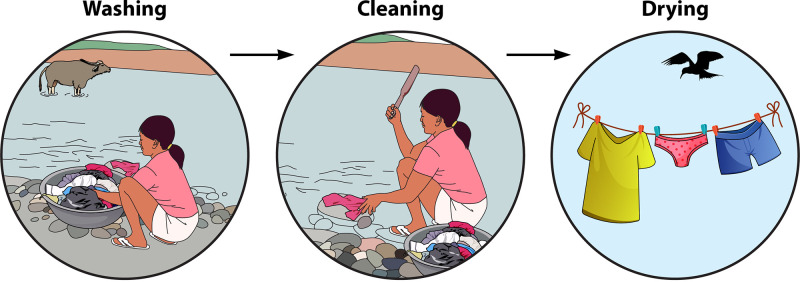
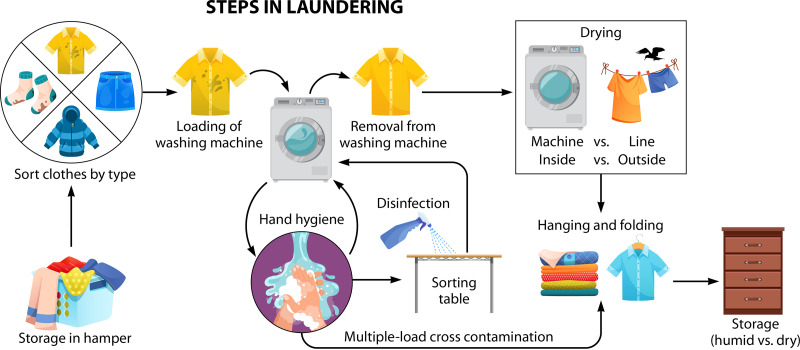
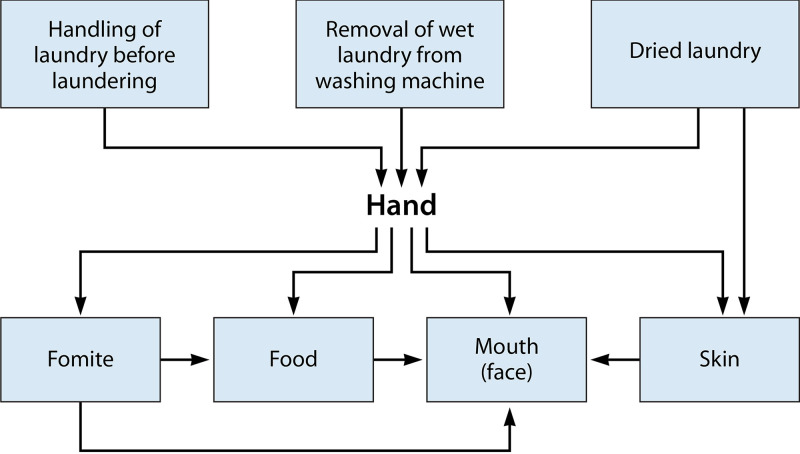
Laundering of textiles-clothing, linens, and cleaning cloths-functionally removes dirt and bodily fluids, which prevents the transmission of and reexposure to pathogens as well as providing odor control. Thus, proper laundering is key to controlling microbes that cause illness and produce odors. The practice of laundering varies from region to region and is influenced by culture and resources. This review aims to define laundering as a series of steps that influence the exposure of the person processing the laundry to pathogens, with respect to the removal and control of pathogens and odor-causing bacteria, while taking into consideration the types of textiles. Defining laundering in this manner will help better educate the consumer and highlight areas where more research is needed and how to maximize products and resources. The control of microorganisms during laundering involves mechanical (agitation and soaking), chemical (detergent and bleach), and physical (detergent and temperature) processes. Temperature plays the most important role in terms of pathogen control, requiring temperatures exceeding 40°C to 60°C for proper inactivation, while detergents play a role in reducing the microbial load of laundering through the release of microbes attached to fabrics and the inactivation of microbes sensitive to detergents (e.g., enveloped viruses). The use of additives (enzymes) and bleach (chlorine and activated oxygen) becomes essential in washes with temperatures below 20°C, especially for certain enteric viruses and bacteria. A structured approach is needed that identifies all the steps in the laundering process and attempts to identify each step relative to its importance to infection risk and odor production.
纺织品(衣物、亚麻布和清洁布)的洗涤功能是去除污垢和体液,从而防止病原体的传播和再次暴露,并提供气味控制。因此,正确的洗涤是控制导致疾病和产生异味的微生物的关键。洗涤的实践因地区而异,并受到文化和资源的影响。本综述旨在将洗涤定义为一系列步骤,这些步骤会影响处理衣物的人员接触病原体的情况,同时考虑到纺织品的类型,以去除和控制病原体和产生异味的细菌。以这种方式定义洗涤将有助于更好地教育消费者,并突出需要更多研究的领域以及如何最大限度地利用产品和资源。洗涤过程中微生物的控制涉及机械(搅拌和浸泡)、化学(洗涤剂和漂白剂)和物理(洗涤剂和温度)过程。温度在病原体控制方面起着最重要的作用,需要超过 40°C 到 60°C 的温度才能进行适当的灭活,而洗涤剂通过释放附着在织物上的微生物和使对洗涤剂敏感的微生物失活(例如,包膜病毒),在减少洗涤微生物负荷方面发挥作用。在低于 20°C 的洗涤温度下,添加物(酶)和漂白剂(氯和活性氧)的使用变得至关重要,特别是对于某些肠道病毒和细菌。需要采取一种结构化的方法,确定洗涤过程中的所有步骤,并尝试确定每个步骤相对于感染风险和气味产生的重要性。