Department of Poultry Science, University of Arkansas: Division of Agriculture, Fayetteville, AR, USA.
Department of Poultry Science, University of Arkansas: Division of Agriculture, Fayetteville, AR, USA.
Poult Sci. 2021 Jun;100(6):101138. doi: 10.1016/j.psj.2021.101138. Epub 2021 Mar 21.
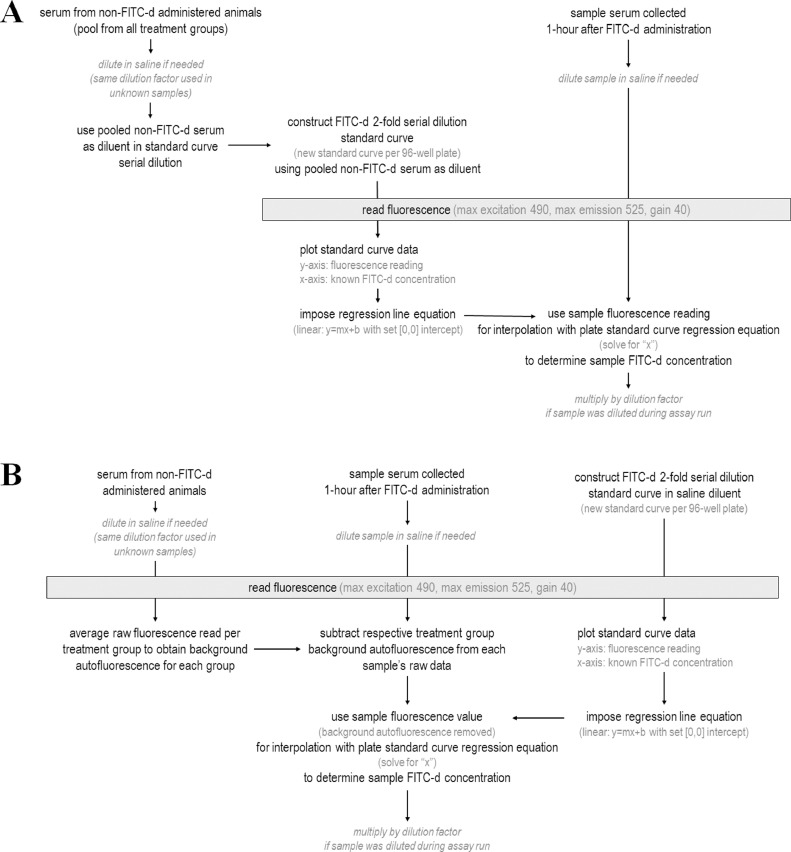
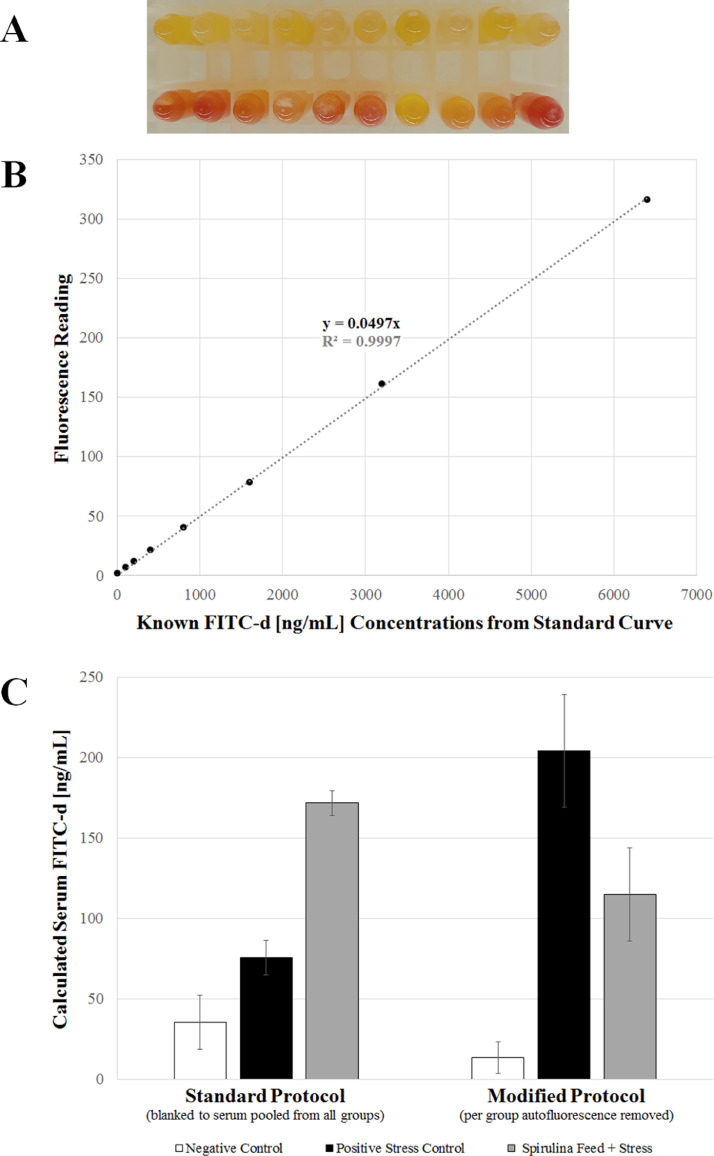
Oral administration of fluorescein isothiocyanate dextran (FITC-d) has been used as an indicator for intestinal permeability in poultry research for several years. Under healthy conditions, tight junctions in the intestinal wall will not allow the 4-6kDa FITC-d to enter the bloodstream. Detection of FITC-d in serum (1-hour post-oral administration of FITC-d) has proven to be a reliable indicator of leaky gut syndrome (increased intestinal inflammation and disruption of tight junctions). Administration of supplementary phytobiotics in feed, particularly products with high beta-carotene levels or other pigments, has resulted in strong serum background fluorescence, which can render this assay unreliable. To account for this increase in background autofluorescence, the FITC-d assay procedure has been modified to accommodate these particular serum samples by including pre-administration serum collection from each treatment group to remove background fluorescence. The modified FITC-d procedure detailed will allow for analysis of intestinal permeability in pigmented serum.
口服荧光素异硫氰酸酯葡聚糖(FITC-d)已被用作家禽研究中肠道通透性的指示剂多年。在健康状态下,肠壁中的紧密连接不会允许 4-6kDa 的 FITC-d 进入血液。在血清中检测 FITC-d(口服 FITC-d 后 1 小时)已被证明是肠漏综合征(增加肠道炎症和破坏紧密连接)的可靠指标。在饲料中添加补充植物生物制剂,特别是β-胡萝卜素水平或其他色素较高的产品,会导致血清背景荧光增强,从而使该检测变得不可靠。为了应对这种背景自发荧光的增加,FITC-d 检测程序已经进行了修改,通过从每个治疗组预先采集血清来去除背景荧光,从而适应这些特定的血清样本。详细介绍的改良 FITC-d 程序将允许分析色素性血清中的肠道通透性。