Viral Disease and Epidemiology Research Division, National Agriculture and Food Research Organization, National Institute of Animal Health, Tsukuba, Ibaraki, Japan.
BMC Vet Res. 2021 May 11;17(1):188. doi: 10.1186/s12917-021-02891-0.
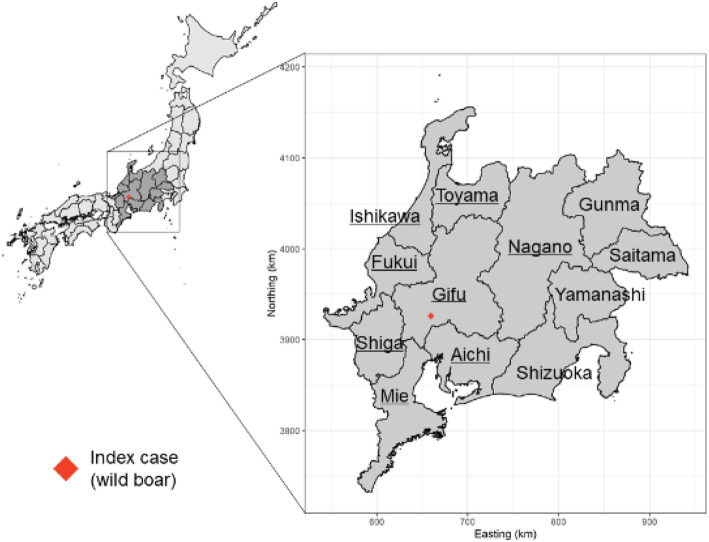
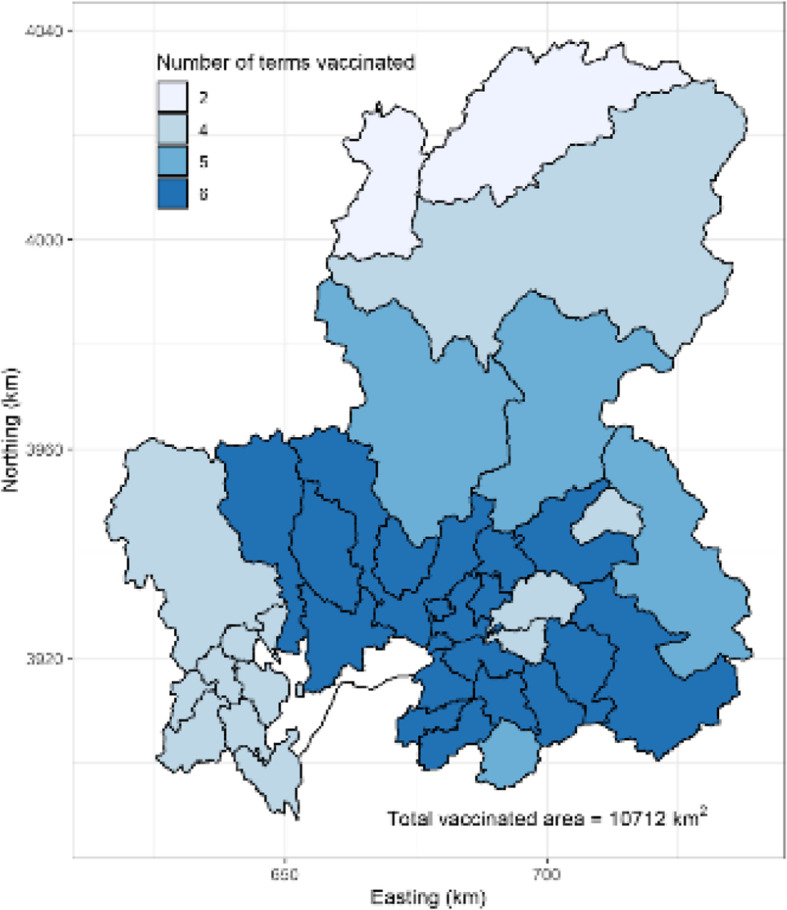
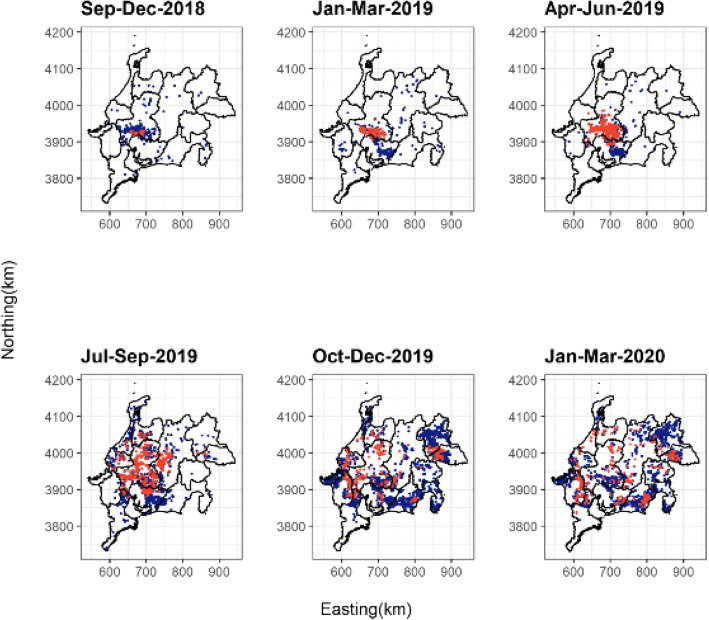
Classical swine fever (CSF) is a contagious disease of pigs and wild boars that is transmitted through direct/indirect contact between animals or CSF virus-contaminated fomites. When the disease re-emerged in 2018 in Japan, a CSF-infected wild boar was reported shortly after the initial pig farm outbreak; subsequently, the disease spread widely. To control the disease spread among wild boars, intensive capturing, fencing, and oral bait vaccination were implemented with concomitant virological and serological surveillance. This study aimed to describe the disease spread in the wild boar population in Japan from September 2018, when the first case was reported, to March 2020, based on the surveillance data. We conducted statistical analyses using a generalized linear mixed model to identify factors associated with CSF infection among wild boars. Moreover, we descriptively assessed the effect of oral bait vaccination, which started in March 2019 in some municipalities in the affected areas.
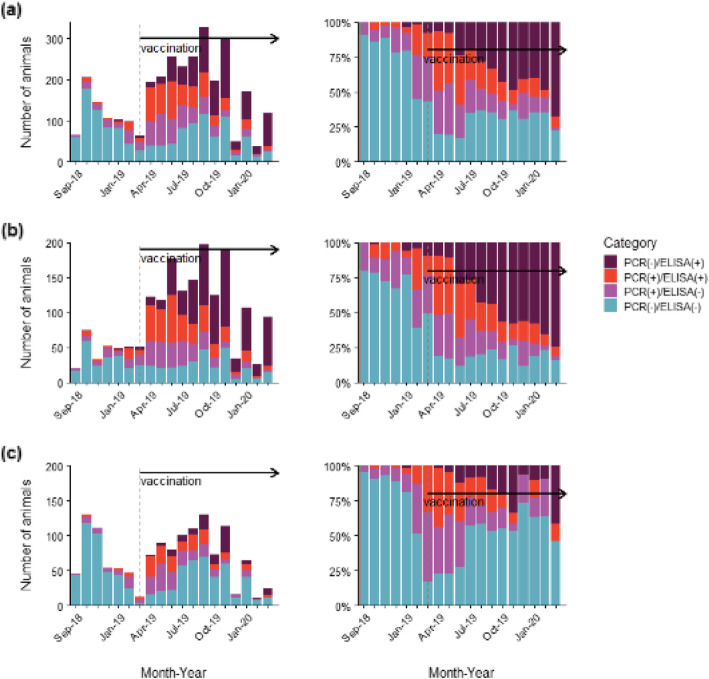
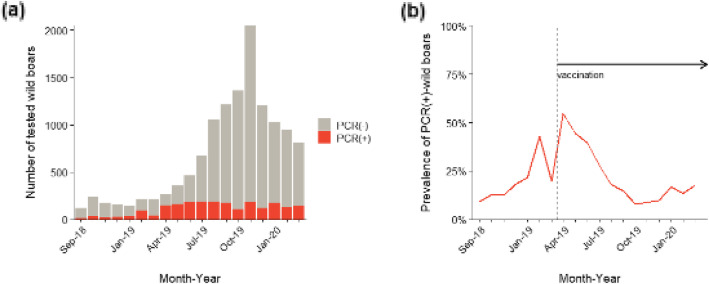
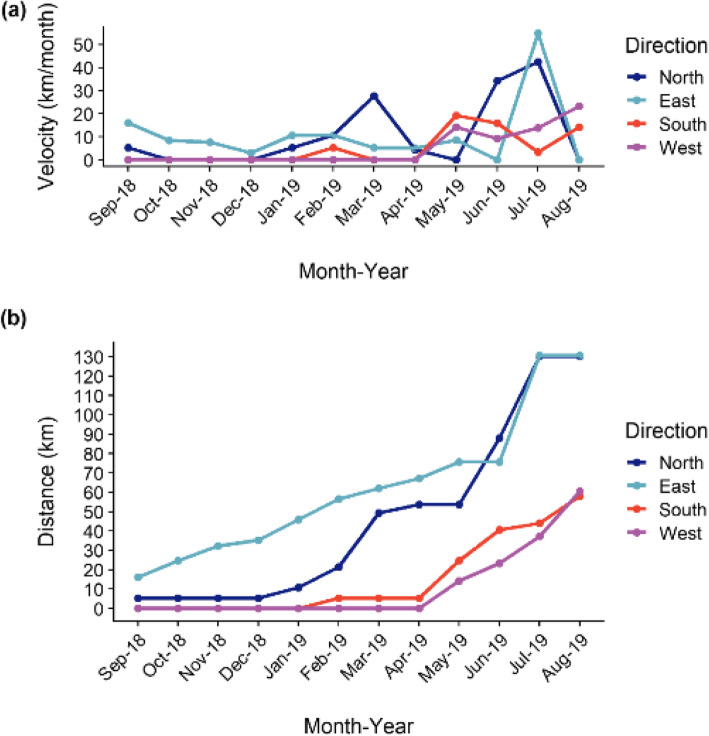
We observed a faster CSF infection spread in the wild boar population in Japan compared with the CSF epidemics in European countries. The infection probability was significantly higher in dead and adult animals. The influence of the multiple rounds of oral bait vaccination was not elucidated by the statistical modeling analyses. There was a decrease and increase in the proportion of infected and immune animals, respectively; however, the immunization in piglets remained insufficient after vaccination for 1 year.
Conditions regarding the wild boar habitat, including forest continuity, higher wild boar population density, and a larger proportion of susceptible piglets, were addressed to increase the infection risk in the wild boar population. These findings could improve the national control strategy against the CSF epidemic among wild boars.
古典猪瘟(Classical swine fever,CSF)是一种传染性猪病和野猪,通过动物之间的直接/间接接触或 CSF 病毒污染的媒介传播。2018 年日本再次爆发该病时,在最初的养猪场爆发后不久就报告了一例 CSF 感染的野猪;随后,该病迅速蔓延。为了控制野猪中的疾病传播,实施了密集的捕获、围栏和口服诱饵接种,并进行了伴随的病毒学和血清学监测。本研究旨在根据监测数据,描述 2018 年 9 月首例病例报告以来日本野猪种群中该病的传播情况,截至 2020 年 3 月。我们使用广义线性混合模型进行统计分析,以确定与野猪 CSF 感染相关的因素。此外,我们对 2019 年 3 月在受影响地区的一些市开始的口服诱饵接种的效果进行了描述性评估。
我们观察到日本野猪种群中 CSF 感染的传播速度比欧洲国家的 CSF 流行更快。死亡和成年动物的感染概率明显更高。多次口服诱饵接种的影响并未通过统计建模分析得到阐明。感染和免疫动物的比例分别下降和增加;然而,接种疫苗 1 年后,仔猪的免疫接种仍然不足。
野猪栖息地条件,包括森林连续性、更高的野猪种群密度和更大比例的易感仔猪,增加了野猪种群的感染风险。这些发现可以改进针对野猪 CSF 流行的国家控制策略。