Das Arghya, Dhar Abhishek, Goyal Srashti, Kundu Anupam, Pandey Saurav
International Center for Theoretical Sciences, Tata Institute of Fundamental Research, Bangalore 560089, India.
Chaos Solitons Fractals. 2021 Mar;144:110595. doi: 10.1016/j.chaos.2020.110595. Epub 2021 Jan 5.
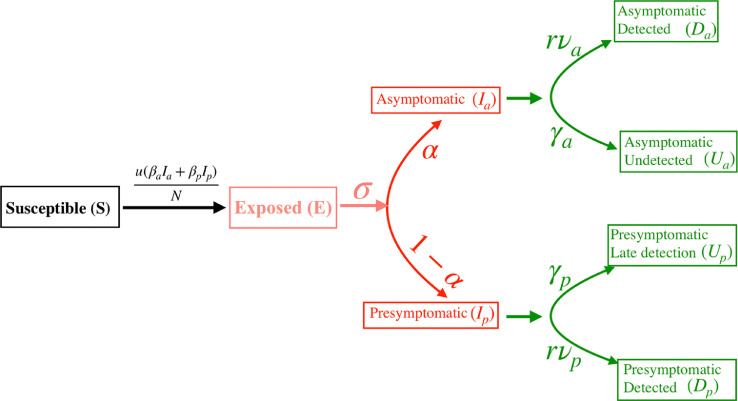
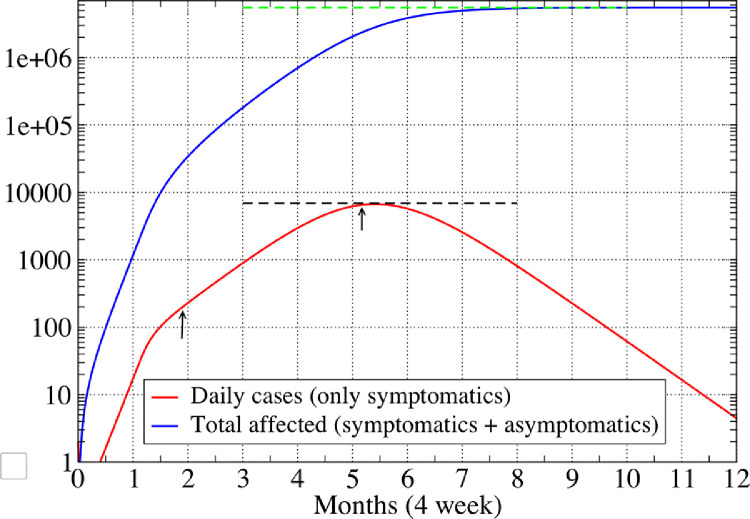
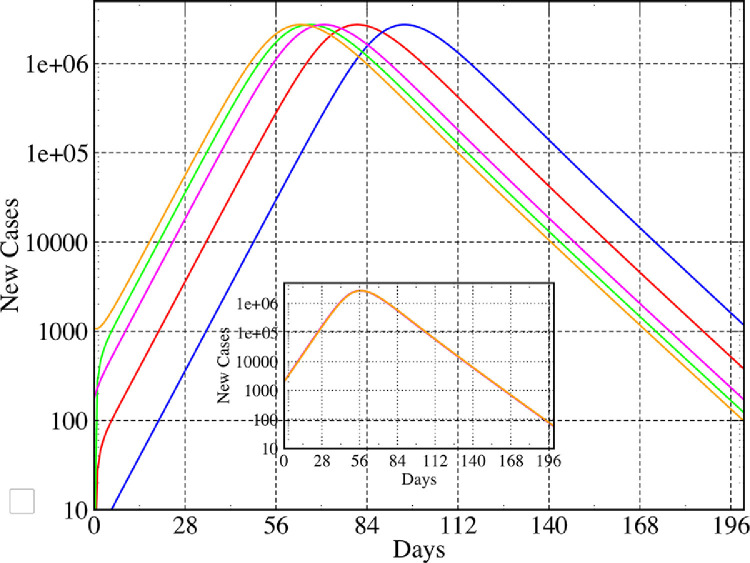
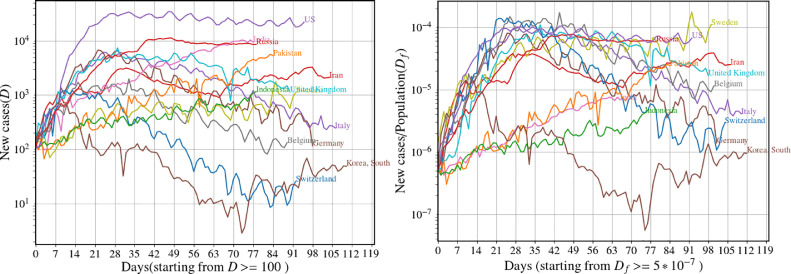
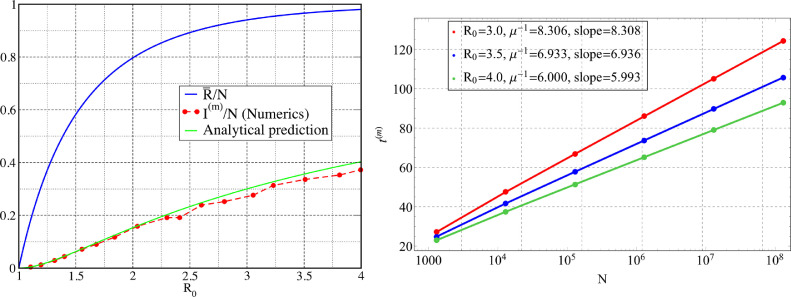
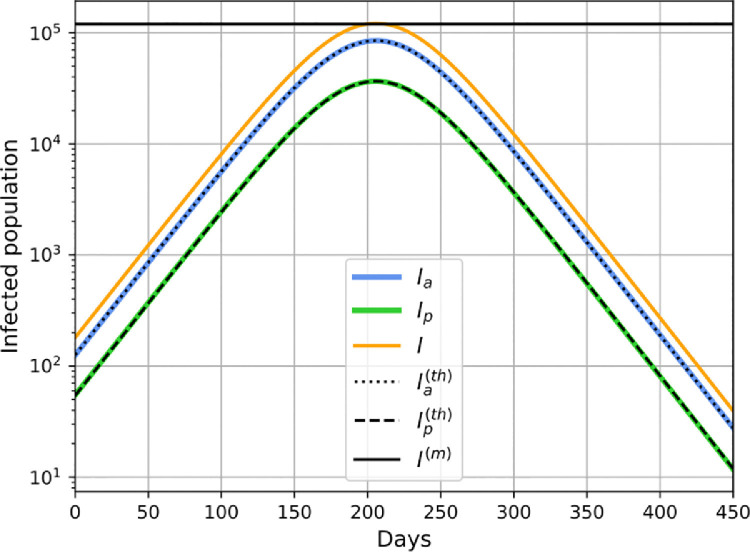
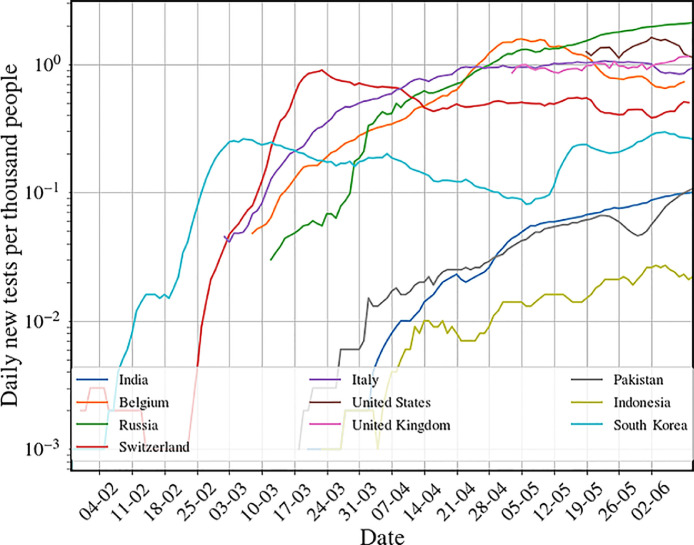
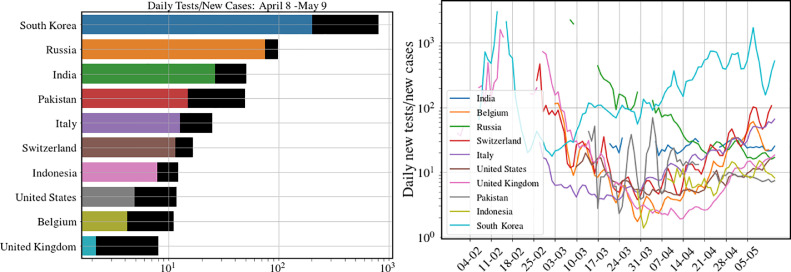
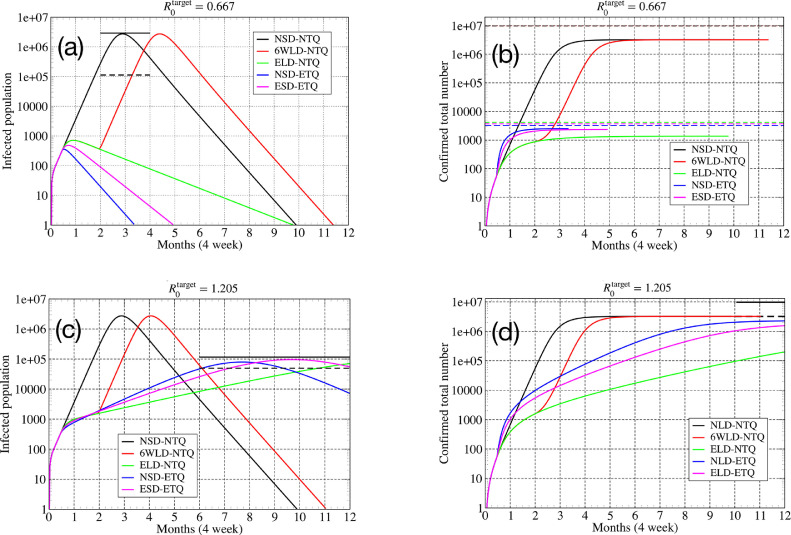
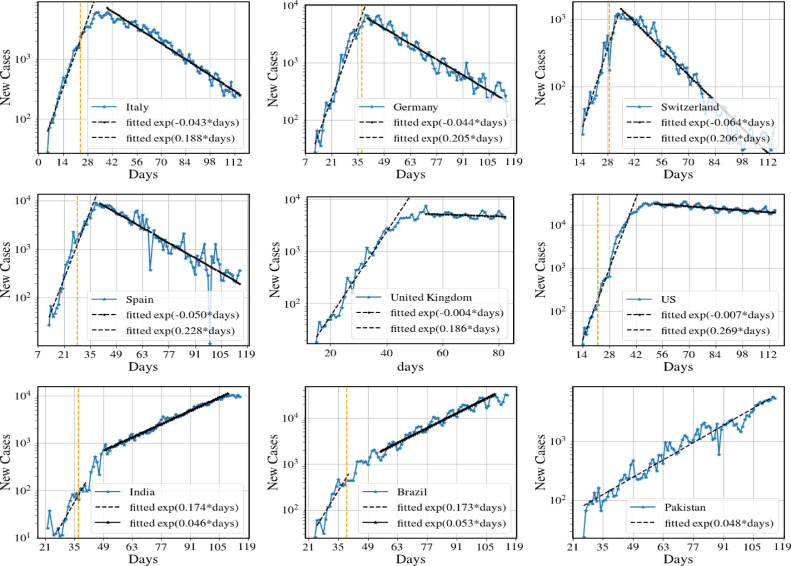
The Susceptible-Exposed-Infected-Recovered (SEIR) epidemiological model is one of the standard models of disease spreading. Here we analyse an extended SEIR model that accounts for asymptomatic carriers, believed to play an important role in COVID-19 transmission. For this model we derive a number of analytic results for important quantities such as the peak number of infections, the time taken to reach the peak and the size of the final affected population. We also propose an accurate way of specifying initial conditions for the numerics (from insufficient data) using the fact that the early time exponential growth is well-described by the dominant eigenvector of the linearized equations. Secondly we explore the effect of different intervention strategies such as social distancing (SD) and testing-quarantining (TQ). The two intervention strategies (SD and TQ) try to reduce the disease reproductive number, to a target value but in distinct ways, which we implement in our model equations. We find that for the same TQ is more efficient in controlling the pandemic than SD. However, for TQ to be effective, it has to be based on contact tracing and our study quantifies the required ratio of tests-per-day to the number of new cases-per-day. Our analysis shows that the largest eigenvalue of the linearised dynamics provides a simple understanding of the disease progression, both pre- and post- intervention, and explains observed data for many countries. We apply our results to the COVID data for India to obtain heuristic projections for the course of the pandemic, and note that the predictions strongly depend on the assumed fraction of asymptomatic carriers.
易感-暴露-感染-康复(SEIR)流行病学模型是疾病传播的标准模型之一。在此,我们分析一个扩展的SEIR模型,该模型考虑了无症状携带者,据信其在新冠病毒传播中起重要作用。对于这个模型,我们得出了一些关于重要量的解析结果,比如感染峰值数量、达到峰值所需时间以及最终受影响人群规模。我们还提出了一种准确的方法,利用线性化方程的主导特征向量能很好地描述早期指数增长这一事实,来为数值计算指定初始条件(从不足的数据中)。其次,我们探讨了不同干预策略的效果,如社交距离(SD)和检测-隔离(TQ)。这两种干预策略(SD和TQ)试图将疾病繁殖数降低到一个目标值,但方式不同,我们在模型方程中予以实现。我们发现,对于相同的目标值,TQ在控制疫情方面比SD更有效。然而,要使TQ有效,它必须基于接触者追踪,并且我们的研究量化了每日检测数与每日新增病例数的所需比例。我们的分析表明,线性化动力学的最大特征值为干预前后的疾病进展提供了简单的理解,并解释了许多国家的观测数据。我们将结果应用于印度的新冠数据,以获得疫情发展过程的启发式预测,并指出预测结果强烈依赖于无症状携带者的假定比例。