Lu Yi, Kang Jiaqi, Li Zhongjia, Wang Xiao, Liu Kang, Zhou Kechong, Wang Wei, Shen Chen
Department of Urology, The Second Affiliated Hospital of Dalian Medical University, 467 Zhongshan Road, Shahekou District, Dalian, 116023, China.
Tianjin Medical University, Tianjin, 300070, China.
Basic Clin Androl. 2021 May 13;31(1):11. doi: 10.1186/s12610-021-00129-5.
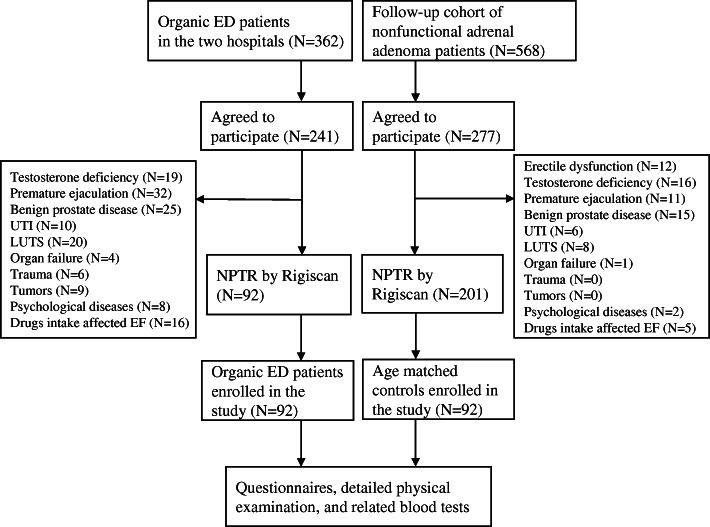
Diet, one of the components of lifestyle, has been believed to have associations with erectile dysfunction (ED). However, whether there is an association between plant-based diet and ED is remains to be explored. Thus, we conducted the nested case-control study to investigate the relationship between the plant-based diet and ED in China.
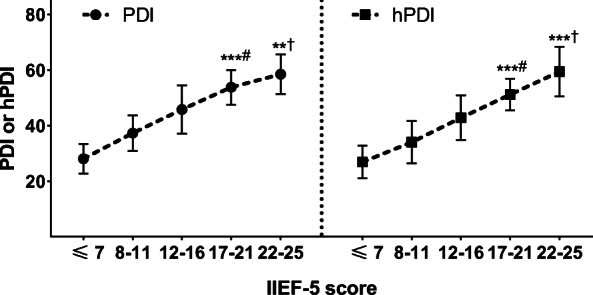
ED group (92 subjeczts) and ED free group (92 subjects) were similar in terms of basic features (P > 0.05), except for lifestyle (P < 0.05). The plant-diet index (PDI) and healthy plant-diet index (hPDI) in the ED group were significantly lower than those in the control group (P < 0.001). Adjusted multivariate analysis indicated that the presence of ED was negatively associated with nitric oxide levels, PDI, and hPDI (all P < 0.05), and was positively related to body mass index, metabolic syndrome, and E-selectin levels. Furthermore, both the PDI and hPDI increased significantly as the International Index of Erectile Function (IIEF-5) scores increased within the ED group (P < 0.05). Multi-model multivariate analysis indicated the robustness of results.
More plant-based diet intake was associated with a reduced presence of ED and less severe ED in China. Committing to plant-based diet can be encouraged for many health benefits and to lower ED burden. Further well-designed studies are warranted to validate our findings.
饮食作为生活方式的组成部分之一,一直被认为与勃起功能障碍(ED)有关。然而,以植物性食物为主的饮食与勃起功能障碍之间是否存在关联仍有待探索。因此,我们开展了这项巢式病例对照研究,以调查中国以植物性食物为主的饮食与勃起功能障碍之间的关系。
勃起功能障碍组(92名受试者)和无勃起功能障碍组(92名受试者)在基本特征方面相似(P>0.05),但生活方式除外(P<0.05)。勃起功能障碍组的植物性饮食指数(PDI)和健康植物性饮食指数(hPDI)显著低于对照组(P<0.001)。校正后的多变量分析表明,勃起功能障碍的存在与一氧化氮水平、PDI和hPDI呈负相关(均P<0.05),与体重指数、代谢综合征和E选择素水平呈正相关。此外,在勃起功能障碍组中,随着国际勃起功能指数(IIEF-5)评分的增加,PDI和hPDI均显著增加(P<0.05)。多模型多变量分析表明结果具有稳健性。
在中国,更多地摄入以植物性食物为主的饮食与勃起功能障碍发生率降低及病情较轻有关。鉴于诸多健康益处并为减轻勃起功能障碍负担,可鼓励采用以植物性食物为主的饮食。需要进一步设计完善的研究来验证我们的发现。