College of Pharmaceutical Sciences, Zhejiang University, Hangzhou, Zhejiang, China.
Zhejiang University Medical Center, Sir Run Run Shaw Hospital, Hangzhou, Zhejiang, China.
Nat Commun. 2021 May 13;12(1):2773. doi: 10.1038/s41467-021-22674-3.
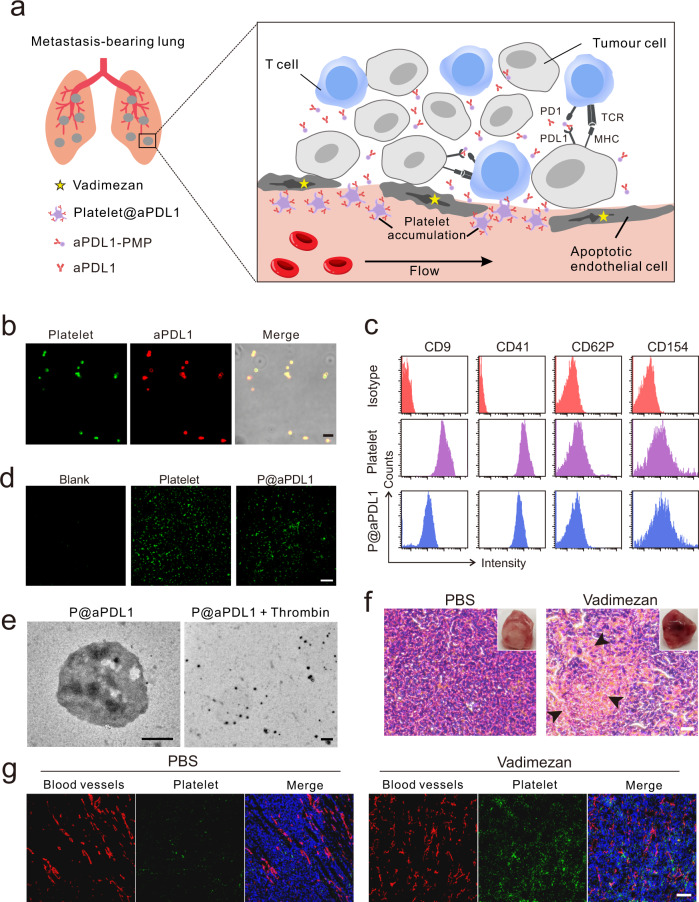
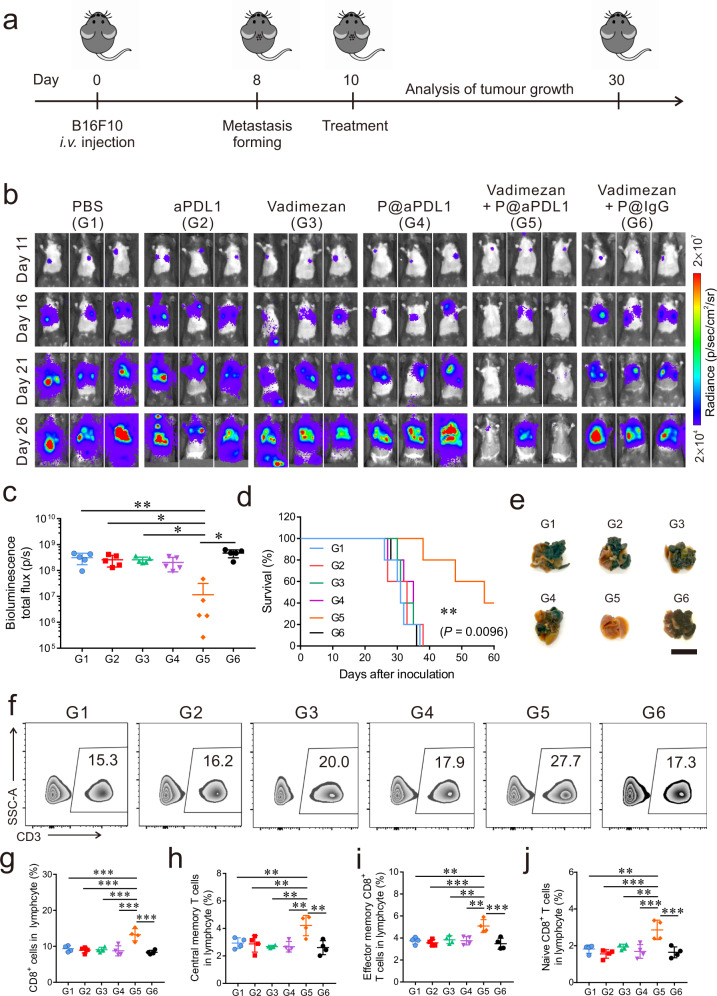
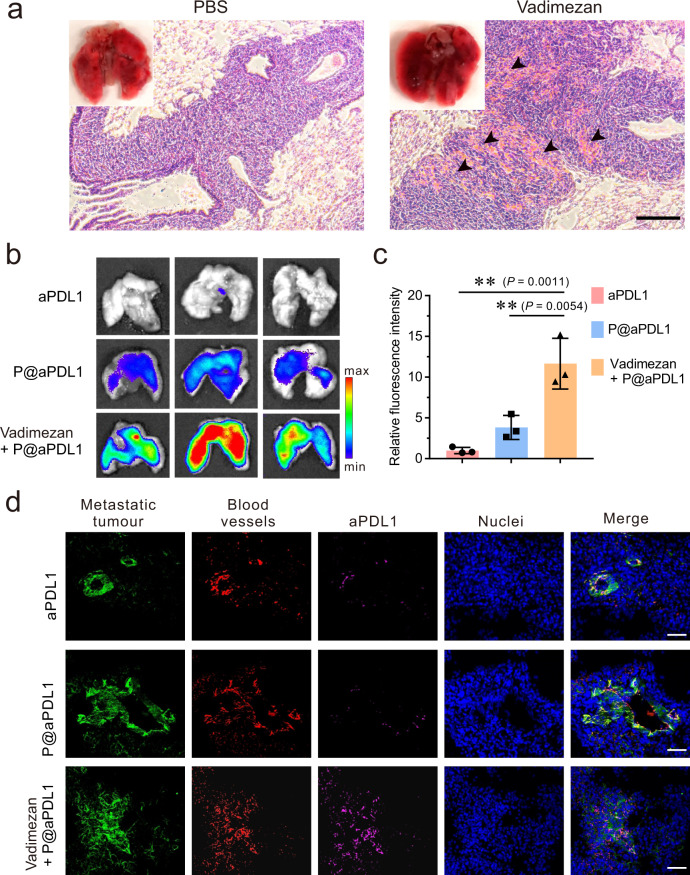
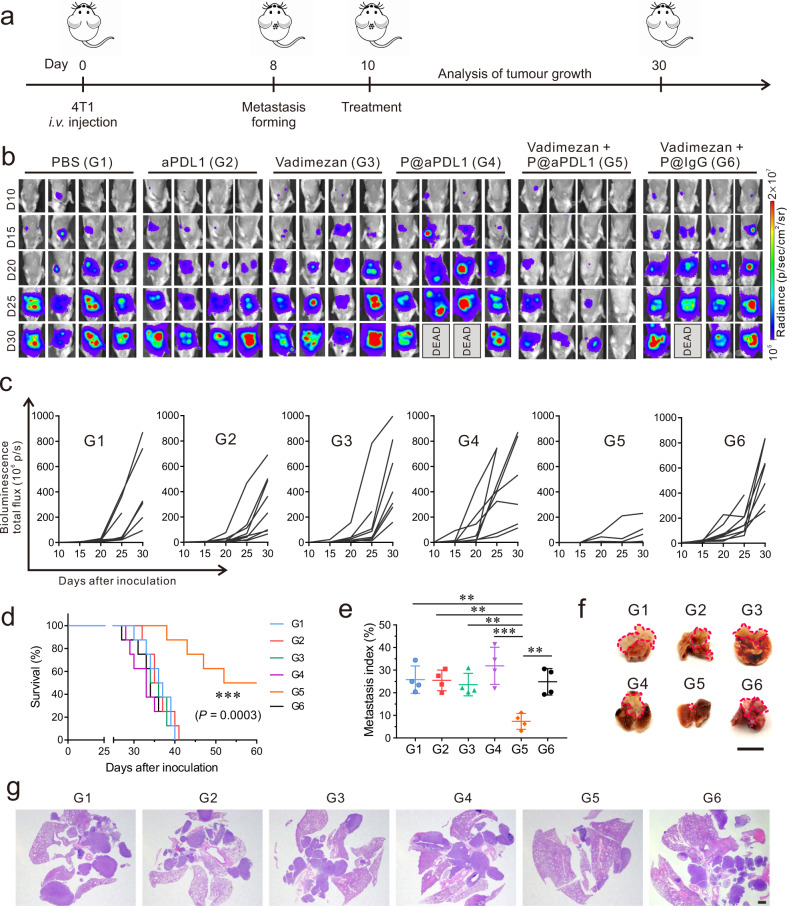
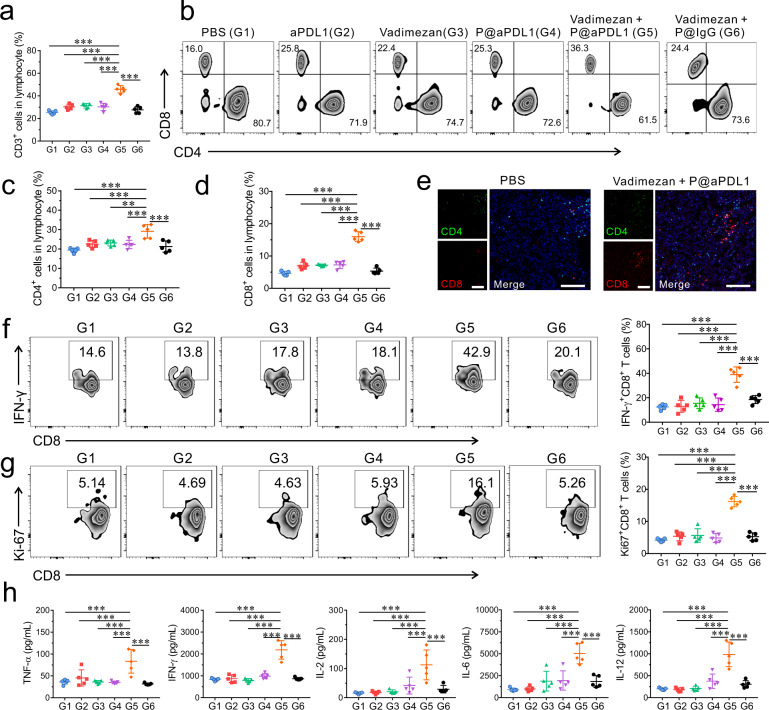
Although therapies of cancer are advancing, it remains challenging for therapeutics to reach the sites of metastasis, which accounts for majority of cancer associated death. In this study, we have developed a strategy that guides an anti-programmed cell death-ligand 1 (aPDL1) antibody to accumulate in metastatic lesions to promote anti-tumour immune responses. Briefly, we have developed a combination in which Vadimezan disrupts tumour blood vessels of tumour metastases and facilitates the recruitment and activation of adoptively transferred aPDL1-conjugated platelets. In situ activated platelets generate aPDL1-decorated platelet-derived microparticles (PMP) that diffuse within the tumour and elicit immune responses. The proposed combination increases 10-fold aPDL1 antibody accumulation in lung metastases as compared to the intravenous administration of the antibody and enhances the magnitude of immune responses leading to improved antitumour effects.
尽管癌症治疗方法在不断进步,但治疗药物到达转移部位仍然具有挑战性,而转移部位是导致大多数癌症相关死亡的原因。在这项研究中,我们开发了一种策略,可引导抗程序性细胞死亡配体 1(aPDL1)抗体在转移灶中积累,以促进抗肿瘤免疫反应。简而言之,我们开发了一种联合疗法,其中 Vadimezan 破坏肿瘤转移部位的肿瘤血管,并促进过继转移的 aPDL1 结合血小板的募集和激活。原位激活的血小板产生 aPDL1 修饰的血小板衍生的微颗粒(PMP),在肿瘤内扩散并引发免疫反应。与静脉注射抗体相比,该联合疗法使 aPDL1 抗体在肺转移部位的积累增加了 10 倍,并增强了免疫反应的强度,从而改善了抗肿瘤效果。