Department of Radiology, Peking University Third Hospital, 49 North Garden Road, Haidian District, Beijing, 100191, People's Republic of China.
Department of Radiological Sciences, University of California, Irvine, CA, USA.
Eur Radiol. 2021 Dec;31(12):9612-9619. doi: 10.1007/s00330-021-08014-5. Epub 2021 May 16.
To evaluate the performance of deep learning using ResNet50 in differentiation of benign and malignant vertebral fracture on CT.
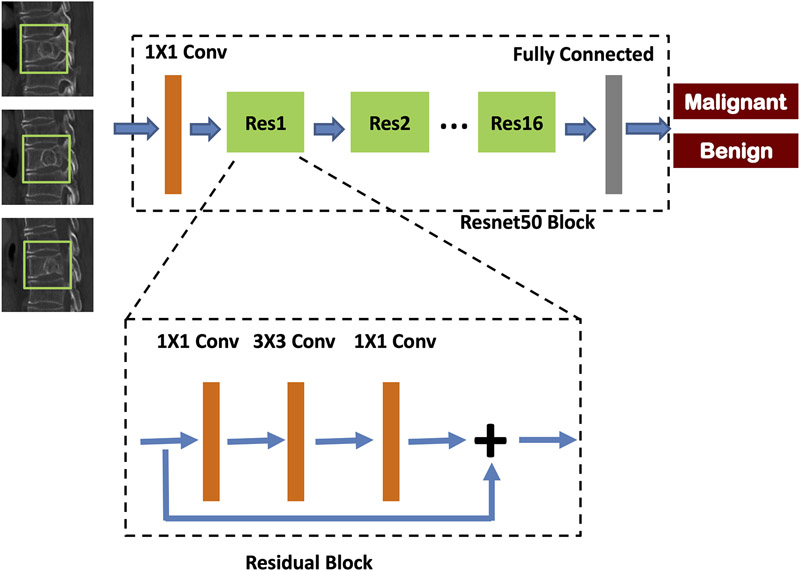
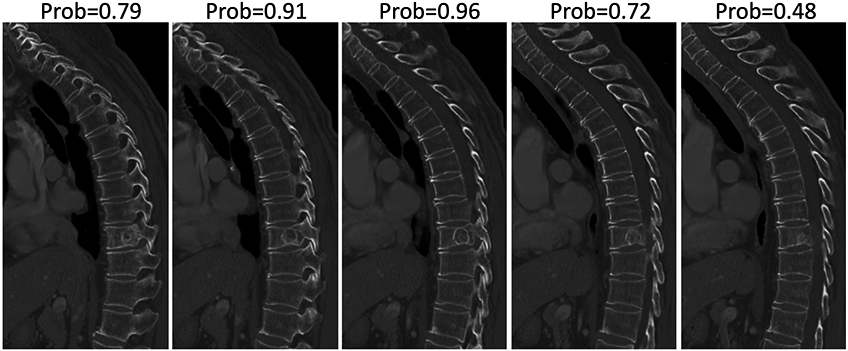
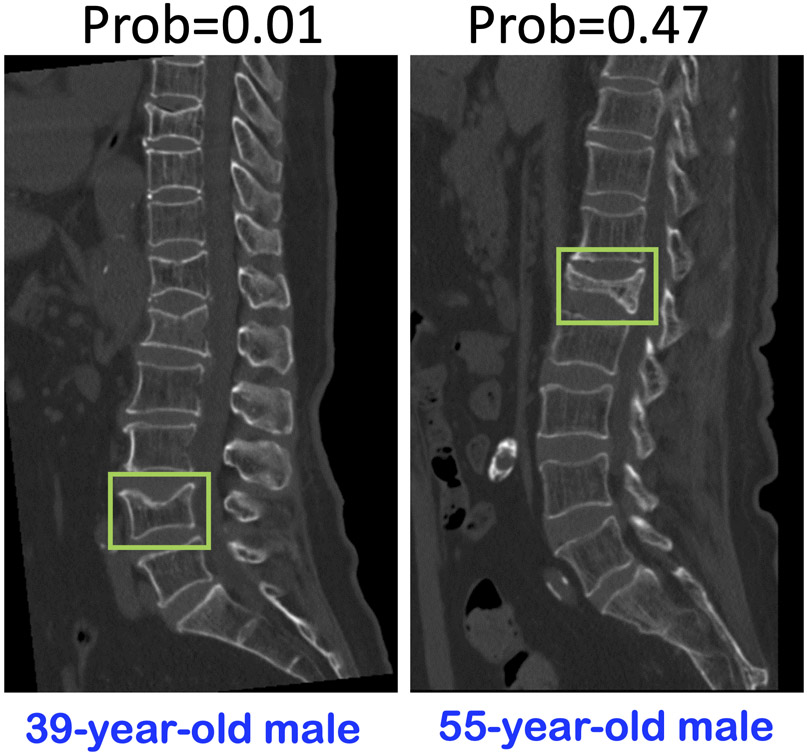
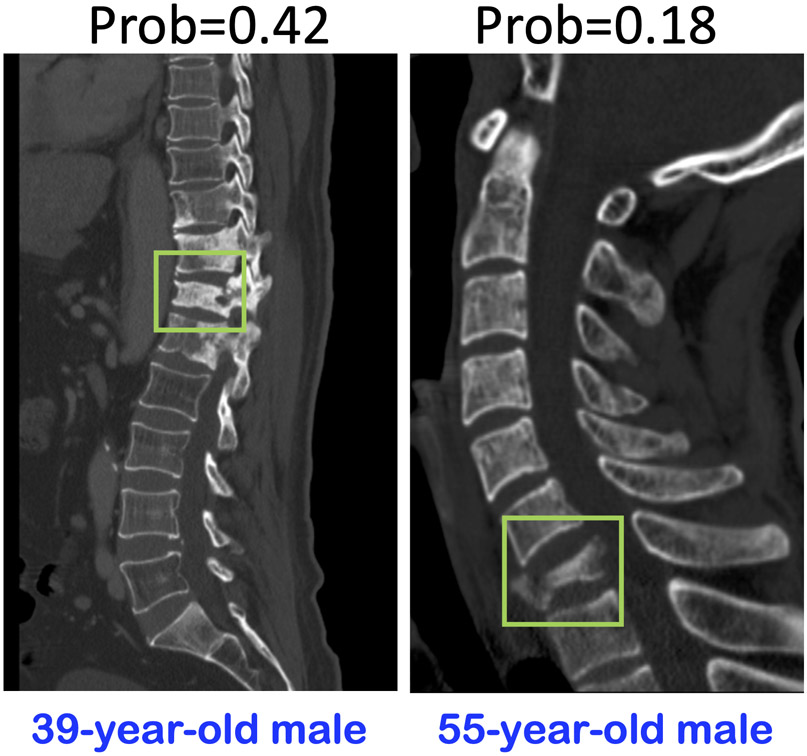
A dataset of 433 patients confirmed with 296 malignant and 137 benign fractures was retrospectively selected from our spinal CT image database. A senior radiologist performed visual reading to evaluate six imaging features, and three junior radiologists gave diagnostic prediction. A ROI was placed on the most abnormal vertebrae, and the smallest square bounding box was generated. The input channel into ResNet50 network was 3, including the slice with its two neighboring slices. The diagnostic performance was evaluated using 10-fold cross-validation. After obtaining the malignancy probability from all slices in a patient, the highest probability was assigned to that patient to give the final diagnosis, using the threshold of 0.5.
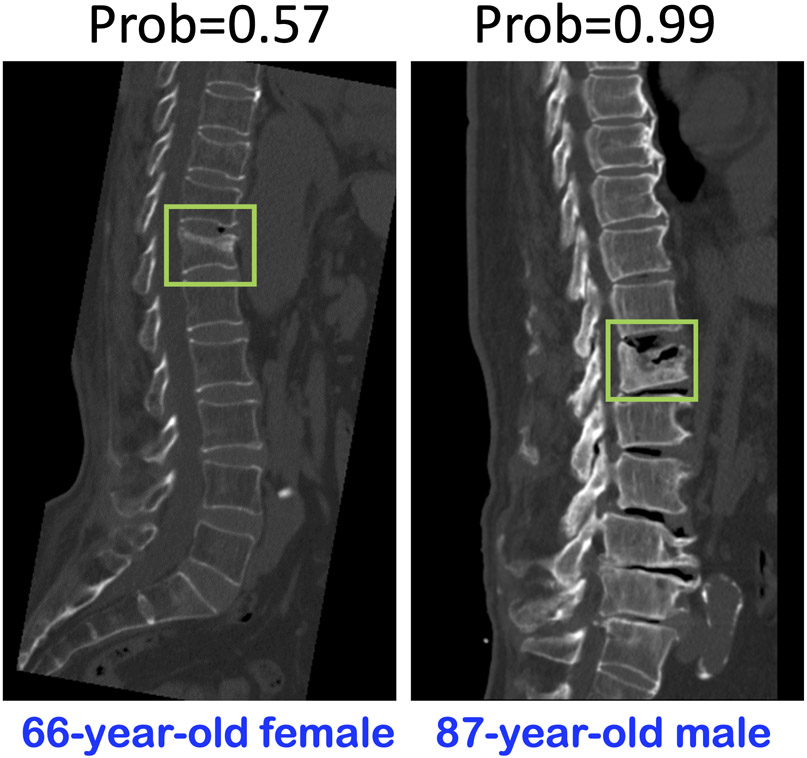
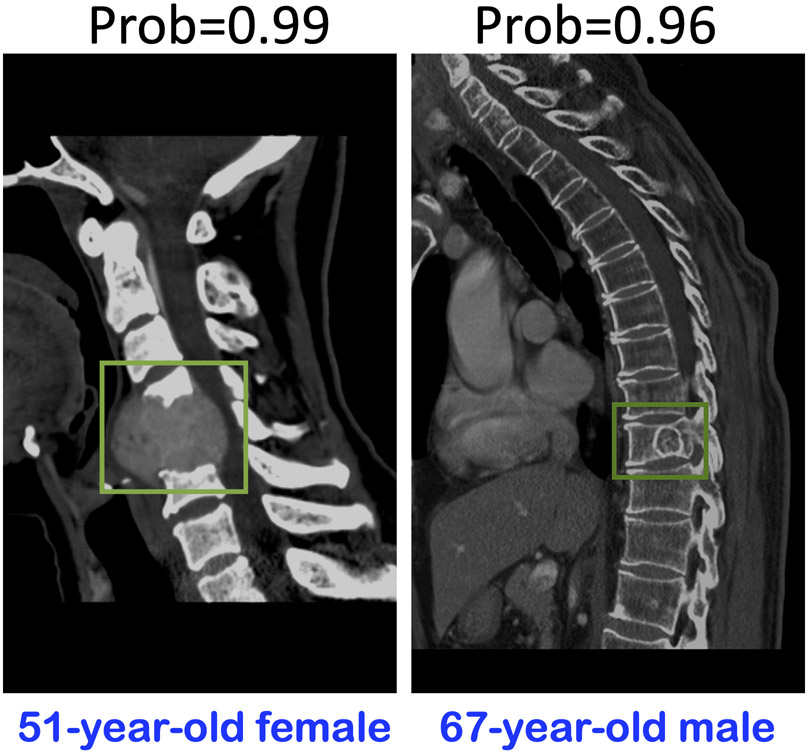
Visual features such as soft tissue mass and bone destruction were highly suggestive of malignancy; the presence of a transverse fracture line was highly suggestive of a benign fracture. The reading by three radiologists with 5, 3, and 1 year of experience achieved an accuracy of 99%, 95.2%, and 92.8%, respectively. In ResNet50 analysis, the per-slice diagnostic sensitivity, specificity, and accuracy were 0.90, 0.79, and 85%. When the slices were combined to ve per-patient diagnosis, the sensitivity, specificity, and accuracy were 0.95, 0.80, and 88%.
Deep learning has become an important tool for the detection of fractures on CT. In this study, ResNet50 achieved good accuracy, which can be further improved with more cases and optimized methods for future clinical implementation.
• Deep learning using ResNet50 can yield a high accuracy for differential diagnosis of benign and malignant vertebral fracture on CT. • The per-slice diagnostic sensitivity, specificity, and accuracy were 0.90, 0.79, and 85% in deep learning using ResNet50 analysis. • The slices combined with per-patient diagnostic sensitivity, specificity, and accuracy were 0.95, 0.80, and 88% in deep learning using ResNet50 analysis.
评估 ResNet50 深度学习在 CT 鉴别良恶性椎体骨折中的性能。
回顾性地从我们的脊柱 CT 图像数据库中选择了 433 例患者的数据,其中 296 例为恶性骨折,137 例为良性骨折。一名资深放射科医生进行了视觉阅读,以评估六个影像学特征,三名初级放射科医生进行了诊断预测。在最异常的椎骨上放置 ROI,并生成最小的正方形边界框。将 3 个切片(包括其相邻的 2 个切片)作为 ResNet50 网络的输入通道。使用 10 折交叉验证评估诊断性能。从患者的所有切片中获得恶性概率后,将最高概率分配给该患者,以 0.5 的阈值给出最终诊断。
软组织肿块和骨破坏等视觉特征高度提示恶性;存在横向骨折线高度提示良性骨折。具有 5 年、3 年和 1 年经验的三位放射科医生的阅读准确率分别为 99%、95.2%和 92.8%。在 ResNet50 分析中,每片的诊断敏感性、特异性和准确性分别为 0.90、0.79 和 85%。当将切片组合为每个患者的 5 个诊断时,敏感性、特异性和准确性分别为 0.95、0.80 和 88%。
深度学习已成为 CT 骨折检测的重要工具。在这项研究中,ResNet50 达到了很高的准确性,未来通过更多病例和优化方法可以进一步提高其准确性,以用于临床实施。
•ResNet50 深度学习可实现 CT 鉴别良恶性椎体骨折的高准确性。•ResNet50 深度学习的每片诊断敏感性、特异性和准确性分别为 0.90、0.79 和 85%。•ResNet50 深度学习的每例患者诊断的切片组合敏感性、特异性和准确性分别为 0.95、0.80 和 88%。