Sithara Thomas, Drosatos Konstantinos
Center for Translational Medicine, Lewis Katz School of Medicine at Temple University, Philadelphia, PA, United States.
Front Physiol. 2021 Apr 29;12:669497. doi: 10.3389/fphys.2021.669497. eCollection 2021.
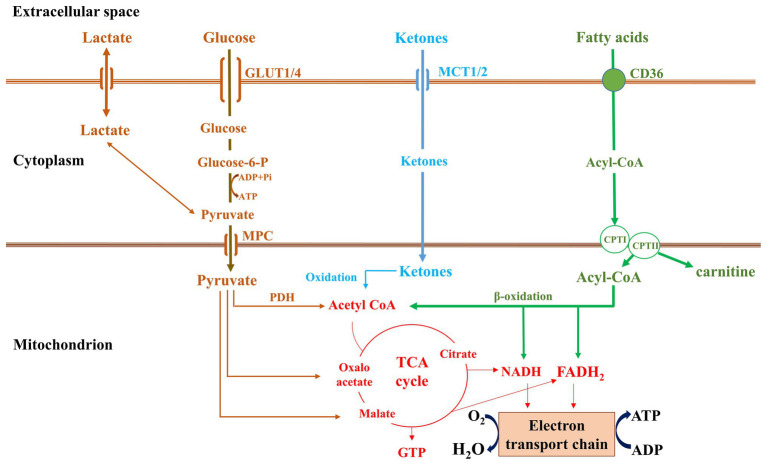
Aging is a process that can be accompanied by molecular and cellular alterations that compromise cardiac function. Although other metabolic disorders with increased prevalence in aged populations, such as diabetes mellitus, dyslipidemia, and hypertension, are associated with cardiovascular complications; aging-related cardiomyopathy has some unique features. Healthy hearts oxidize fatty acids, glucose, lactate, ketone bodies, and amino acids for producing energy. Under physiological conditions, cardiac mitochondria use fatty acids and carbohydrate mainly to generate ATP, 70% of which is derived from fatty acid oxidation (FAO). However, relative contribution of nutrients in ATP synthesis is altered in the aging heart with glucose oxidation increasing at the expense of FAO. Cardiac aging is also associated with impairment of mitochondrial abundance and function, resulting in accumulation of reactive oxygen species (ROS) and activation of oxidant signaling that eventually leads to further mitochondrial damage and aggravation of cardiac function. This review summarizes the main components of pathophysiology of cardiac aging, which pertain to cardiac metabolism, mitochondrial function, and systemic metabolic changes that affect cardiac function.
衰老过程中可能会伴随分子和细胞变化,从而损害心脏功能。尽管在老年人群中患病率增加的其他代谢紊乱,如糖尿病、血脂异常和高血压,都与心血管并发症有关;但衰老相关的心肌病有一些独特的特征。健康的心脏通过氧化脂肪酸、葡萄糖、乳酸、酮体和氨基酸来产生能量。在生理条件下,心脏线粒体主要利用脂肪酸和碳水化合物来生成ATP,其中70%来自脂肪酸氧化(FAO)。然而,在衰老的心脏中,ATP合成中营养物质的相对贡献发生了改变,葡萄糖氧化增加,以脂肪酸氧化为代价。心脏衰老还与线粒体数量和功能受损有关,导致活性氧(ROS)积累和氧化信号激活,最终导致进一步的线粒体损伤和心脏功能恶化。本综述总结了心脏衰老病理生理学的主要组成部分,这些组成部分与心脏代谢、线粒体功能以及影响心脏功能的全身代谢变化有关。