Harrison Theodore E, Bowler Jannice, Levins Todd N, Reeves K Dean, Cheng An-Lin
Pain Management, Private Practice, Sydney, CAN.
Pain Management, Private Practice, Victoria, CAN.
Cureus. 2021 Apr 13;13(4):e14470. doi: 10.7759/cureus.14470.
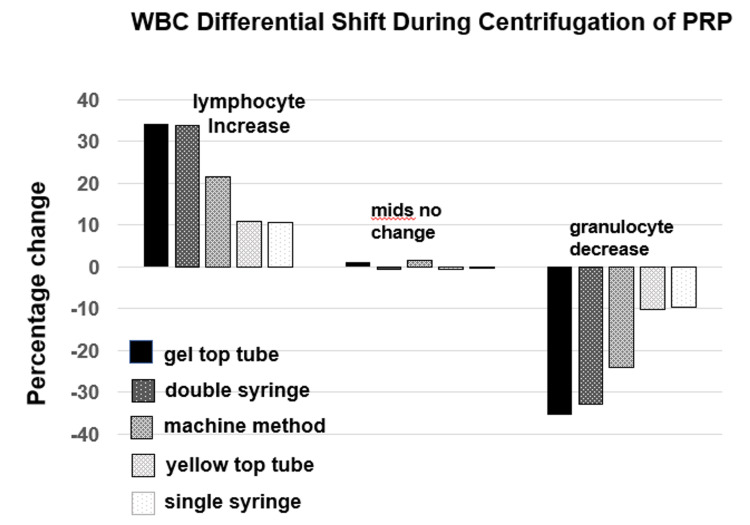
Platelet-rich plasma (PRP) is usually described with respect to its platelet concentration and sometimes the concentration of erythrocytes and leukocytes. In this study, we examined the numbers of leukocyte subtypes in PRPs prepared by five different methods. Single spin PRP methods evaluated resulted in a significant increase in the percentage of lymphocytes and proportional/inverse reduction of the percentage of granulocytes in comparison to those percentages found in whole blood. We propose that the centrifugation process traps the denser granulocytes in the RBC layer more readily than lymphocytes and that this will vary by g force and time. The PRP preparation method may be clinically relevant, because the distribution of leukocytes may affect clinical outcomes.
富血小板血浆(PRP)通常根据其血小板浓度来描述,有时也根据红细胞和白细胞的浓度来描述。在本研究中,我们检测了通过五种不同方法制备的PRP中白细胞亚型的数量。与全血中的百分比相比,所评估的单旋PRP方法导致淋巴细胞百分比显著增加,粒细胞百分比成比例/反向降低。我们认为,离心过程比淋巴细胞更容易将密度更大的粒细胞捕获在红细胞层中,并且这会因离心力和时间而异。PRP制备方法可能具有临床相关性,因为白细胞的分布可能会影响临床结果。