Singh Neelu, Das Monoj Kumar, Ansari Aftab, Mohanta Dambarudhar, Rajamani Paulraj
School of Environmental Sciences, Jawaharlal Nehru University, New Delhi, 10067, India.
Cancer Genetics and Chemoprevention Research Group, Department of Molecular Biology and Biotechnology, Tezpur University, Napaam, Tezpur, 784028, Assam, India.
Biotechnol Rep (Amst). 2021 Mar 27;30:e00612. doi: 10.1016/j.btre.2021.e00612. eCollection 2021 Jun.
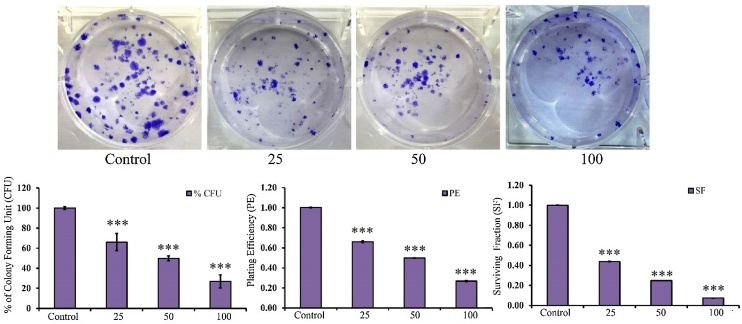
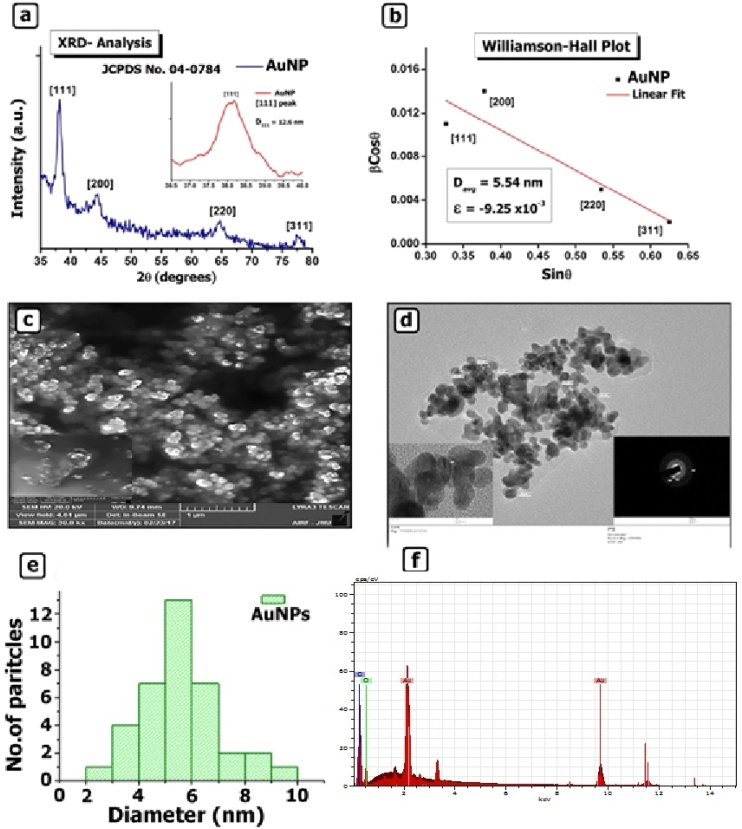
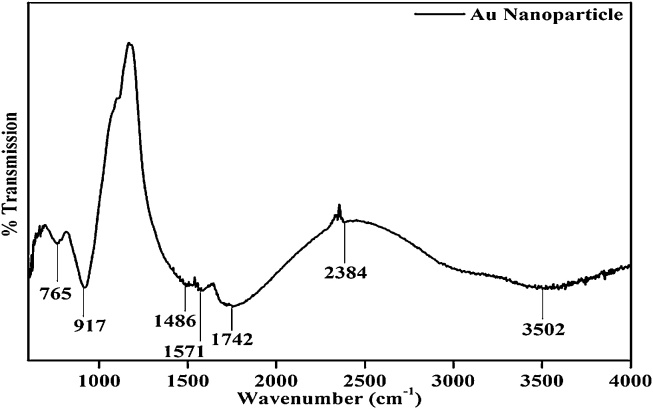
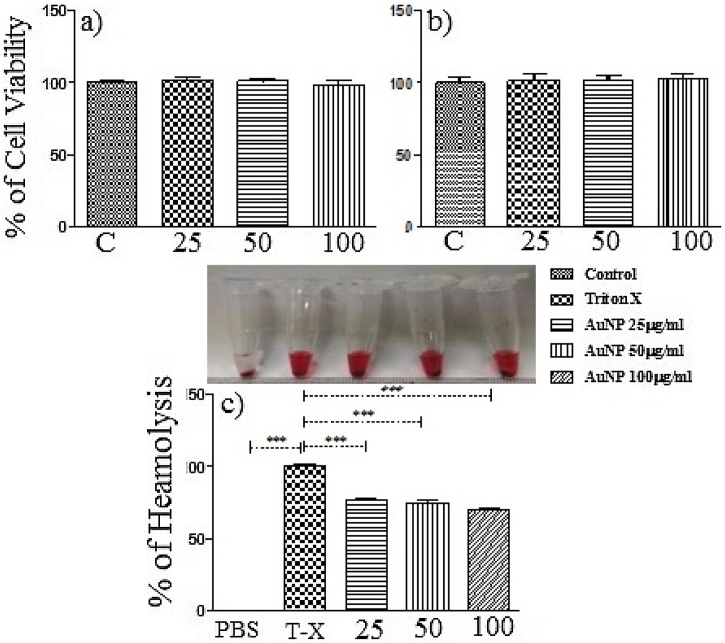
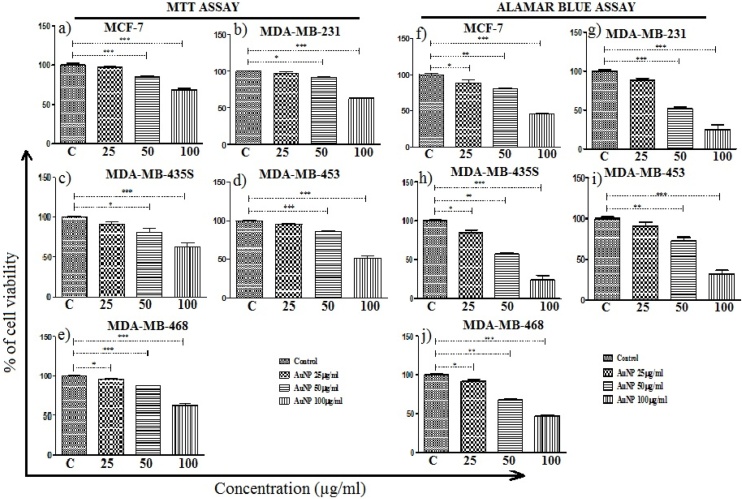
With the advancement of nanotechnology, the nano-sized particles make an imprint on our daily lives.The present investigation revealed that biomolecules present in seed exudates of Vigna radiata are responsible for the synthesis of AuNPs, confirmed by the routine characterization techniques. Anticancer efficacy showed by AuNPs might be due to the release of phytochemicals in the exudate which is being adsorbed on the surface of AuNPs referencing their anticancer efficacy against the tested breast cancer cell lines. Inhibition of clonogenicity and cell cycle arrest at G2/M phase then apoptosis of AuNPs was also observed, but found nontoxic to the human PBMC cells which further confirms its biocompatible property Among the various physicochemical study, present AuNPs shows unique information, they show photoluminescent property which may be used for bioimaging purposes. However, further molecular analysis needs to be explored to understand the underlying mechanism for therapeutic and biomedical application.
随着纳米技术的进步,纳米尺寸的颗粒在我们的日常生活中留下了印记。目前的研究表明,绿豆种子渗出物中存在的生物分子负责金纳米颗粒的合成,这一点已通过常规表征技术得到证实。金纳米颗粒显示出的抗癌功效可能是由于渗出物中植物化学物质的释放,这些物质吸附在金纳米颗粒表面,参考它们对测试乳腺癌细胞系的抗癌功效。还观察到金纳米颗粒对克隆形成的抑制作用以及细胞周期在G2/M期的停滞,然后是凋亡,但发现对人外周血单个核细胞无毒,这进一步证实了其生物相容性。在各种物理化学研究中,目前的金纳米颗粒显示出独特的信息,它们具有光致发光特性,可用于生物成像目的。然而,需要进一步进行分子分析以了解其治疗和生物医学应用的潜在机制。