Cardoso Camila O, Tolentino Seila, Gratieri Tais, Cunha-Filho Marcilio, Lopez Renata F V, Gelfuso Guilherme M
Laboratory of Food, Drugs, and Cosmetics (LTMAC), University of Brasilia, Brasília, 70910-900, DF, Brazil.
School of Pharmaceutical Sciences of Ribeirão Preto, University of São Paulo, Ribeirão Preto, 14040-903, SP, Brazil.
Clin Cosmet Investig Dermatol. 2021 May 12;14:485-499. doi: 10.2147/CCID.S284435. eCollection 2021.
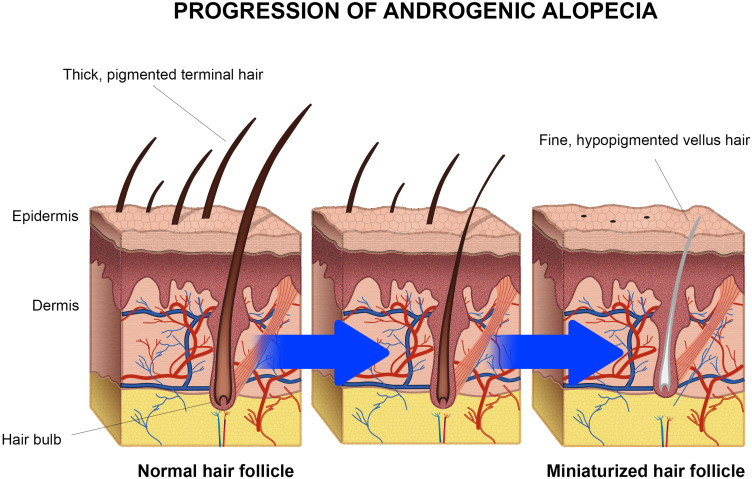
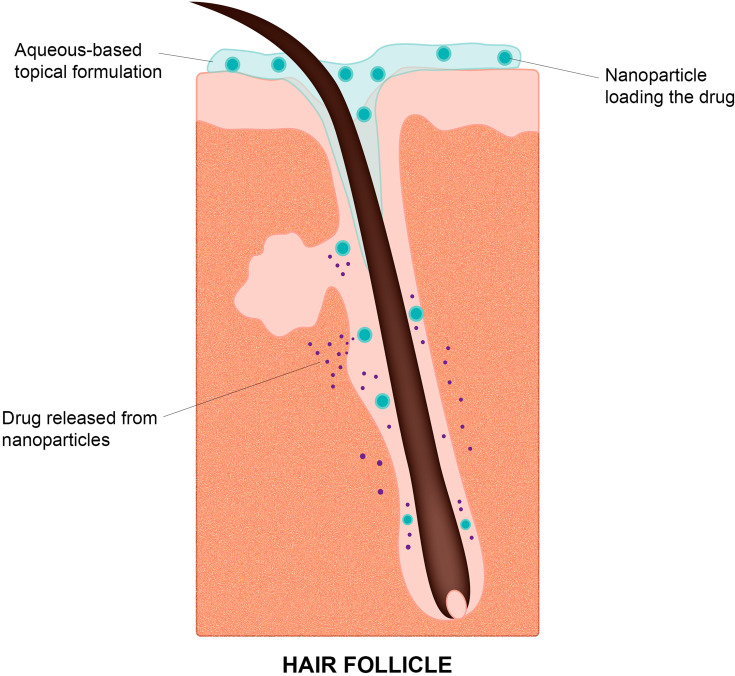
Alopecia is a clinical condition related to hair loss that can significantly affect both male and female adults' quality of life. Despite the high market demand, only few drugs are currently approved for alopecia treatment. Topical formulations still bring drawbacks, such as scalp irritation with frequent use, and low drug absorption to the site of action, which limits the efficacy. The most recent research points out that different formulation technology could circumvent the aforementioned flaws. Such technology includes incorporation of drugs in rigid or deformable nanoparticles, strategies involving physical, energetical and mechanical techniques, such as iontophoresis, sonophoresis, microneedling, and the use of solid effervescent granules to be hydrated at the moment of application in the scalp. In this paper, the progress of current research on topical formulations dedicated to the treatment of alopecia is reviewed and discussed.
脱发是一种与头发脱落相关的临床病症,会显著影响成年男性和女性的生活质量。尽管市场需求巨大,但目前仅有少数药物被批准用于脱发治疗。局部用制剂仍存在缺点,例如频繁使用会引起头皮刺激,且药物对作用部位的吸收较低,这限制了疗效。最新研究指出,不同的制剂技术可以规避上述缺陷。此类技术包括将药物掺入刚性或可变形纳米颗粒中,以及涉及物理、能量和机械技术的策略,如离子导入、超声导入、微针疗法,以及使用固体泡腾颗粒在应用于头皮时进行水合。本文对目前用于治疗脱发的局部用制剂的研究进展进行了综述和讨论。