School of Freshwater Sciences, University of Wisconsin-Milwaukee, Milwaukee, WI, 53204, USA.
Present Address: Analytical Technologies, Biogen, 5000 Davis Dr, Morrisville, NC, USA.
Microbiome. 2021 May 20;9(1):116. doi: 10.1186/s40168-021-01038-5.
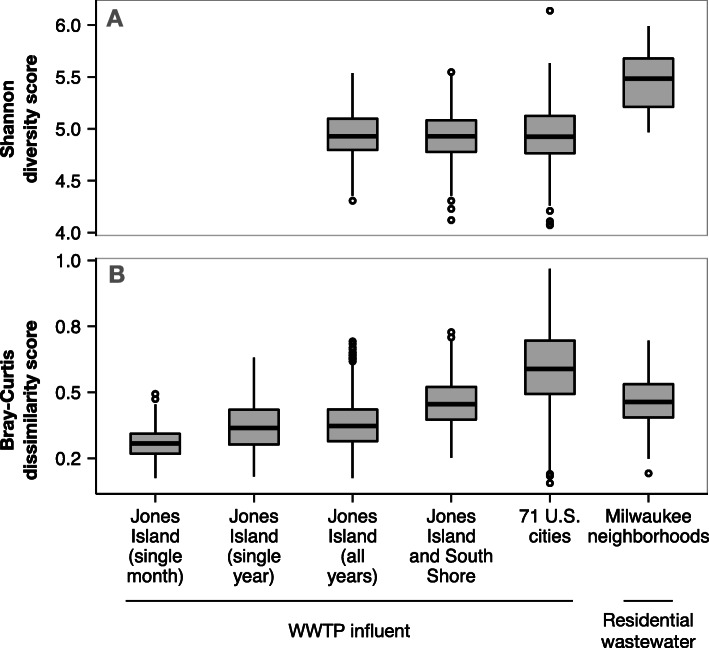
Microorganisms in urban sanitary sewers exhibit community properties that suggest sewers are a novel ecosystem. Sewer microorganisms present both an opportunity as a control point for wastewater treatment and a risk to human health. If treatment processes are to be improved and health risks quantified, then it is necessary to understand microbial distributions and dynamics within this community. Here, we use 16S rRNA gene sequencing to characterize raw influent wastewater bacterial communities in a 5-year time series from two wastewater treatment plants in Milwaukee, WI; influent wastewater from 77 treatment plants across the USA; and wastewater in 12 Milwaukee residential sewers.
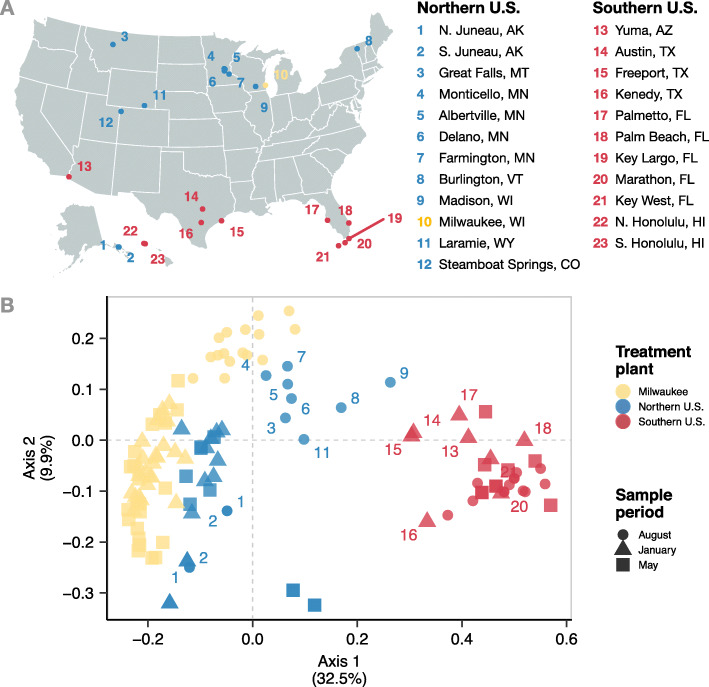
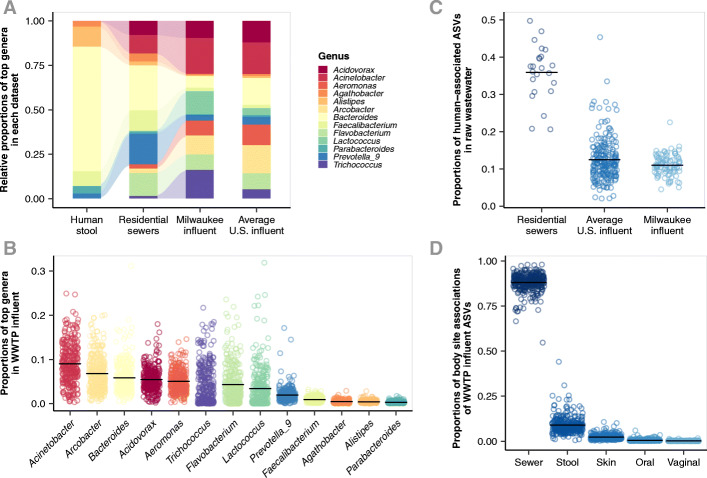
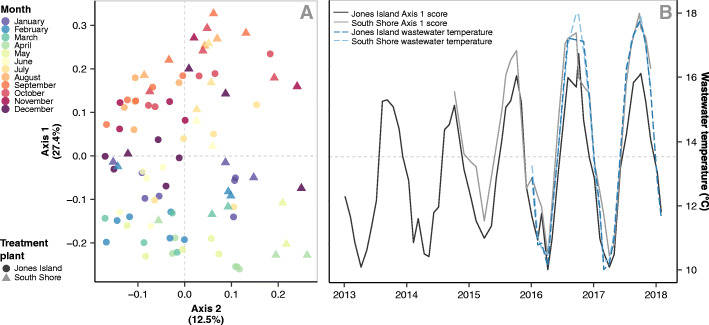
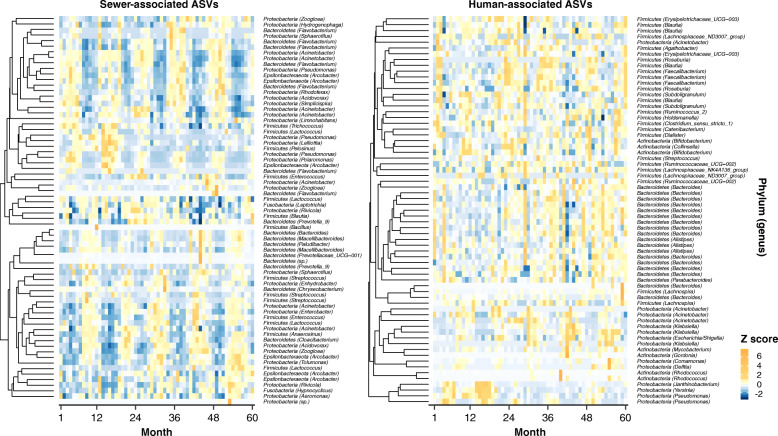
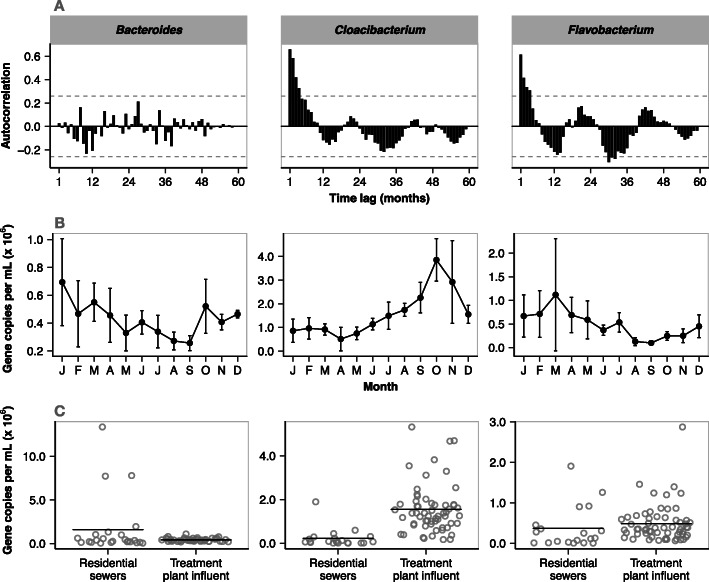
In Milwaukee, we find that in transit from residences to treatment plants, the human bacterial component of wastewater decreases in proportion and exhibits stochastic temporal variation. In contrast, the resident sewer community increases in abundance during transit and cycles seasonally according to changes in wastewater temperature. The result is a bacterial community that assembles into two distinct community states each year according to the extremes in wastewater temperature. Wastewater bacterial communities from other northern US cities follow temporal trends that mirror those in Milwaukee, but southern US cities have distinct community compositions and differ in their seasonal patterns.
Our findings provide evidence that environmental conditions associated with seasonal change and climatic differences related to geography predictably structure the bacterial communities residing in below-ground sewer pipes. Video abstract.
城市卫生下水道中的微生物具有群落特性,表明下水道是一种新型生态系统。下水道微生物既是污水处理的控制点,也是人类健康的潜在风险。如果要改进处理工艺并量化健康风险,就需要了解该群落中的微生物分布和动态。在这里,我们使用 16S rRNA 基因测序技术,对威斯康星州密尔沃基市的两个污水处理厂 5 年时间序列的原始进水污水细菌群落进行了表征;对美国 77 个污水处理厂的进水污水进行了表征;并对密尔沃基市 12 个住宅下水道污水进行了研究。
在密尔沃基,我们发现,从住宅到污水处理厂的运输过程中,污水中人类细菌的比例减少,并表现出随机的时间变化。相比之下,居民下水道群落的丰度在运输过程中增加,并根据污水温度的变化季节性循环。其结果是,根据污水温度的极端变化,每年细菌群落都会组装成两种截然不同的群落状态。来自美国其他北方城市的污水细菌群落遵循与密尔沃基相似的时间趋势,但南方城市的群落组成不同,季节性模式也不同。
我们的研究结果提供了证据,表明与季节性变化相关的环境条件和与地理位置相关的气候差异可预测地构建了存在于地下污水管道中的细菌群落。视频摘要。