Lv Yang, Ma Chenwei, Li Xiaohan, Wu Min
School of Public Administration, Sichuan University, China.
Arch Med Sci. 2021 Mar 20;17(3):829-837. doi: 10.5114/aoms/133522. eCollection 2021.
Information has the power to protect against unexpected events and control any crisis such as the COVID-19 pandemic. Since COVID-19 has already rapidly spread all over the world, only technology-driven data management can provide accurate information to manage the crisis. This study aims to explore the potential of big data technologies for controlling COVID-19 transmission and managing it effectively.
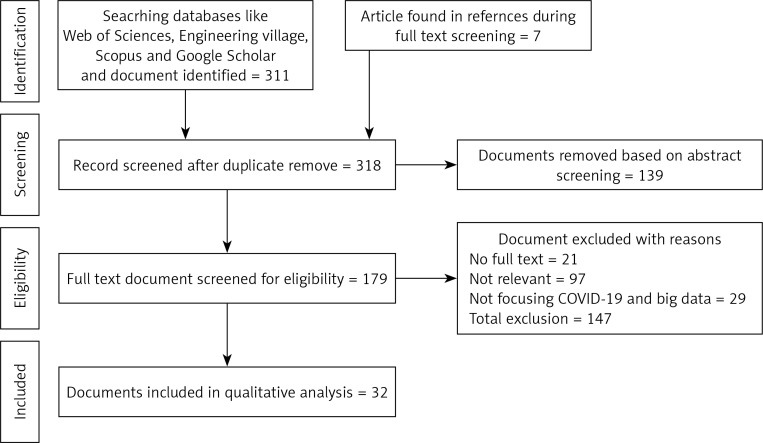
A systematic review guided by PRISMA guidelines has been performed to obtain the key elements.
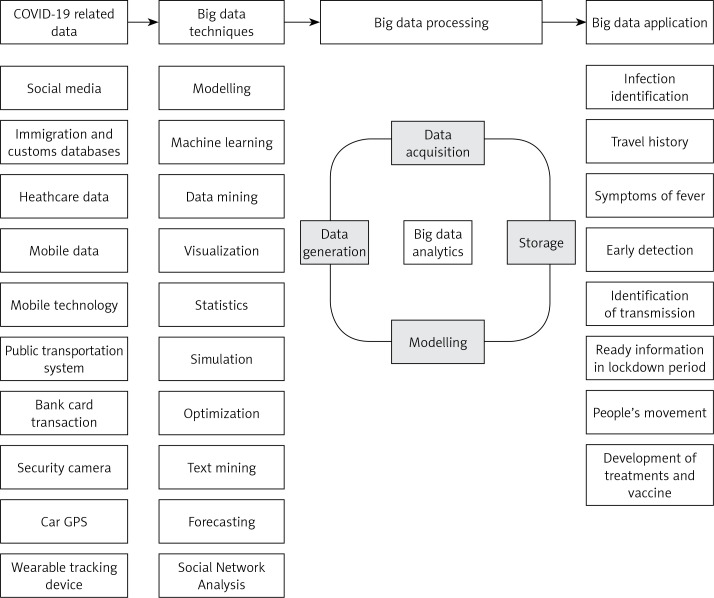
This study identified the thirty-two most relevant documents for qualitative analysis. This study also reveals 10 possible sources and 8 key applications of big data for analyzing the virus infection trend, transmission pattern, virus association, and differences of genetic modifications. It also explores several limitations of big data usage including unethical use, privacy, and exploitative use of data.
The findings of the study will provide new insight and help policymakers and administrators to develop data-driven initiatives to tackle and manage the COVID-19 crisis.
信息具有防范突发事件和控制诸如新冠疫情等任何危机的力量。由于新冠病毒已在全球迅速传播,只有技术驱动的数据管理才能提供准确信息来管理这场危机。本研究旨在探索大数据技术在控制新冠病毒传播及有效管理方面的潜力。
已按照PRISMA指南进行了系统综述以获取关键要素。
本研究确定了32篇最相关的文献进行定性分析。该研究还揭示了大数据用于分析病毒感染趋势、传播模式、病毒关联及基因修饰差异的10个可能来源和8个关键应用。它还探讨了大数据使用的若干局限性,包括数据的不道德使用、隐私问题和剥削性使用。
该研究结果将提供新的见解,并帮助政策制定者和管理人员制定以数据为驱动的举措来应对和管理新冠危机。