Brothwood Phillipa Louise, Baudinet Julian, Stewart Catherine S, Simic Mima
Maudsley Centre for Child and Adolescent Eating Disorders (MCCAED), Maudsley Hospital, De Crespigny Park, Denmark Hill, London, SE5 8AZ, UK.
Department of Psychological Medicine, Institute of Psychiatry, Psychology and Neuroscience, King's College London, De Crespigny Park, Denmark Hill, London, SE5 8AZ, UK.
J Eat Disord. 2021 May 24;9(1):62. doi: 10.1186/s40337-021-00418-4.
This study examined the experiences of young people and their parents who attended an intensive day treatment programme for eating disorders online during the global COVID-19 pandemic.
Online questionnaires were completed by 14 adolescents (12-18 years) and their parents (n = 19). The questionnaires included a mixture of rating questions (Likert scale) and free text responses. Free text responses were analysed using reflexive thematic analysis.
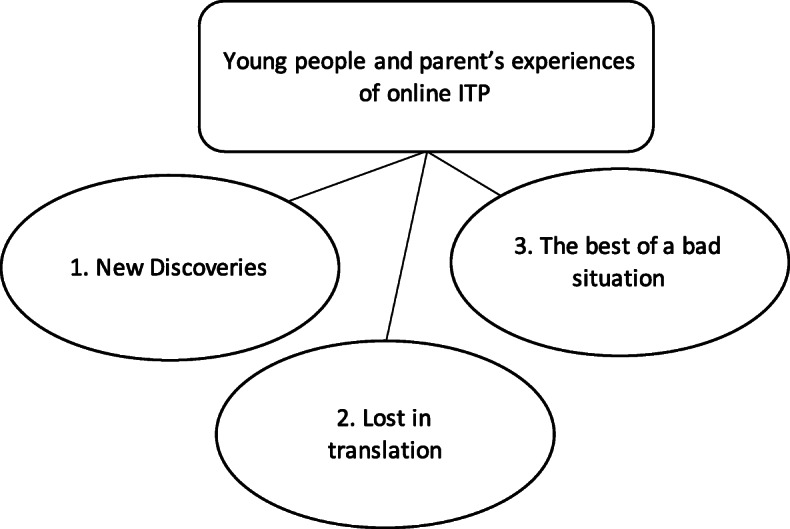
Three main themes were identified: 1) New discoveries, 2) Lost in translation and 3) The best of a bad situation. This study provides insight into the benefits and pitfalls of online treatment delivery in the adolescent day programme context, which has rapidly had to become part of the everyday therapeutic practice. Results indicate that there are advantages and disadvantages to this, and that parents and young people's views differed.
This study suggests that the increased accessibility provided by online working does not necessarily translate to increased connection. Given the importance of therapeutic alliance in treatment outcomes, this will be an important consideration for future developments of online intensive treatments.
本研究调查了在全球新冠疫情期间参加饮食失调在线强化日间治疗项目的年轻人及其父母的经历。
14名青少年(12 - 18岁)及其父母(n = 19)完成了在线问卷。问卷包括评分问题(李克特量表)和自由文本回答。使用反思性主题分析法对自由文本回答进行分析。
确定了三个主要主题:1)新发现,2)翻译中的失落,3)困境中的最佳选择。本研究深入了解了在青少年日间项目背景下在线治疗的益处和缺陷,而这已迅速成为日常治疗实践的一部分。结果表明这有优点也有缺点,且父母和年轻人的观点存在差异。
本研究表明,在线工作提供的更高可及性不一定转化为更强的联系。鉴于治疗联盟对治疗效果的重要性,这将是在线强化治疗未来发展的一个重要考量因素。