Ding Shanshan, Wang Weihao, Song Xujiao, Ma Hao
School of Chemical and Biological Engineering, Yichun University, Yichun, Jiangxi 336000, China.
School of Aesthetic Medicine, Yichun University, Yichun, Jiangxi 336000, China.
Evid Based Complement Alternat Med. 2021 May 6;2021:9928282. doi: 10.1155/2021/9928282. eCollection 2021.
Huangqi Gegen decoction (HGD), a Chinese herb formula, has been widely used to treat diabetic nephropathy in China, while the pharmacological mechanisms are still unclear. Therefore, the present study aims to explore the underlying mechanism of HGD for treating diabetic nephropathy (DN).
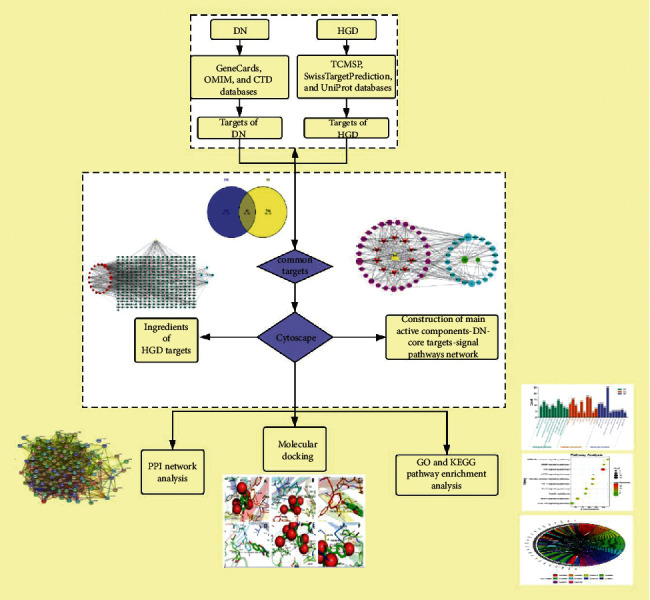
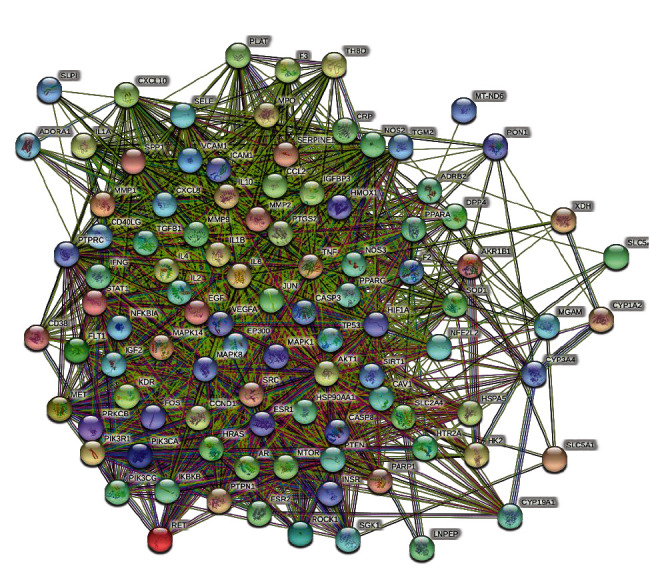
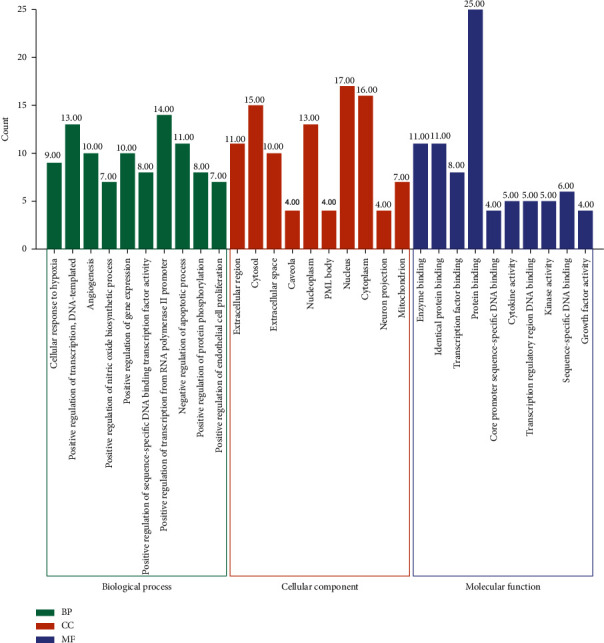
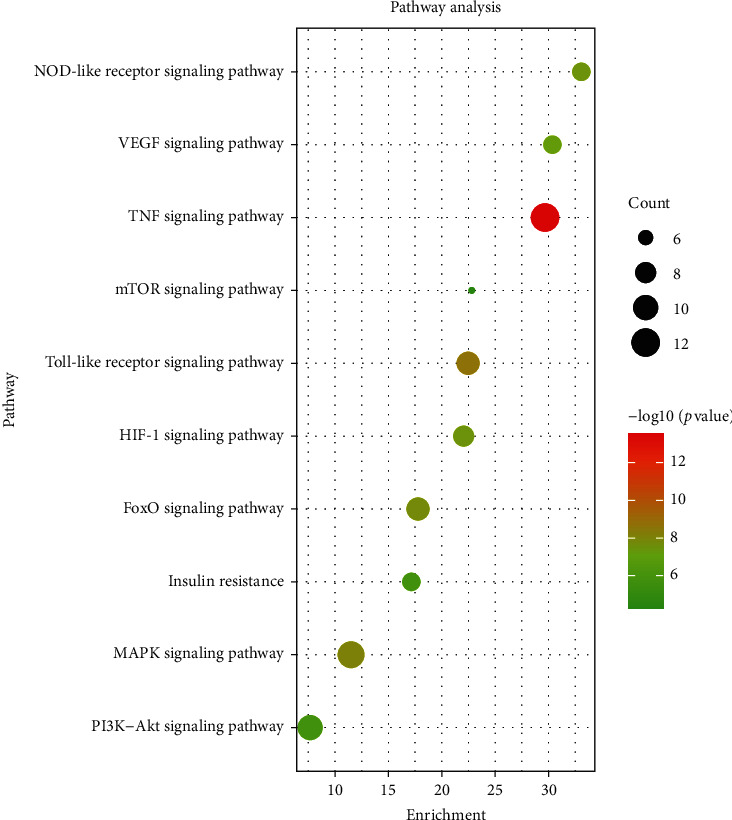
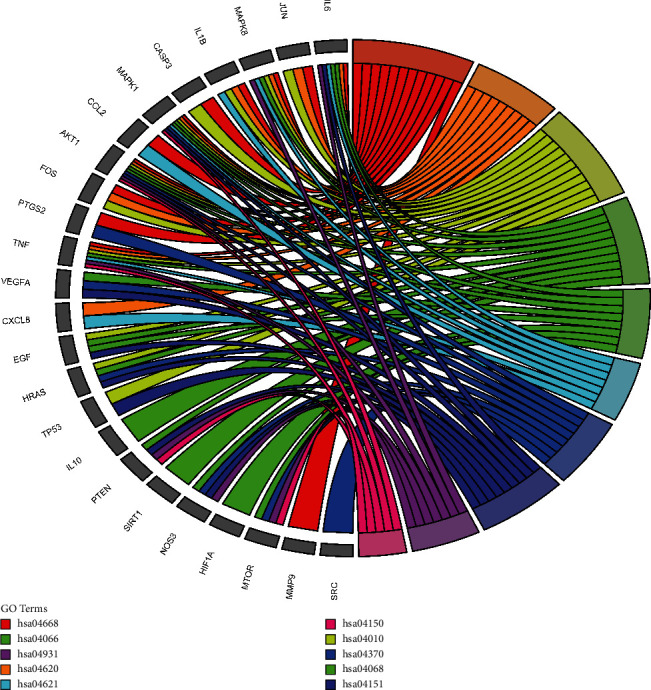
Traditional Chinese Medicine Systems Pharmacology Database (TCMSP), UniProt, and SwissTargetPrediction databases were used to search the active ingredients and potential targets of HGD. In addition, multiple disease-related databases were used to collect DN-related targets. Common targets of the protein-protein interaction (PPI) network were established using the STRING database. Gene Ontology (GO) and Kyoto Encyclopedia of Genes and Genomes (KEGG) pathway enrichment analyses were performed using the DAVID database. At last, AutoDockVina was used to conduct molecular docking verification for the core components and targets.
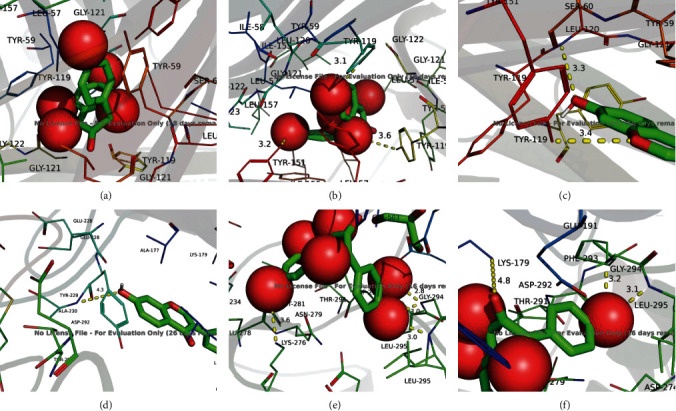
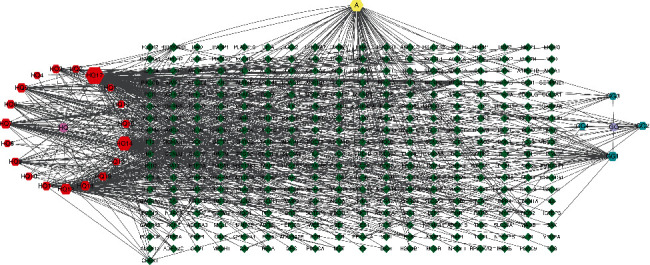
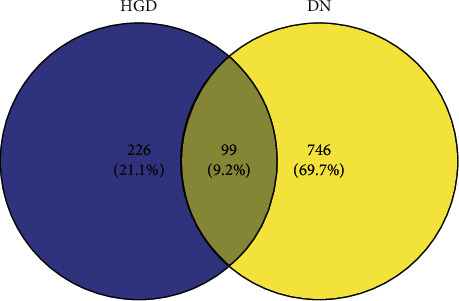
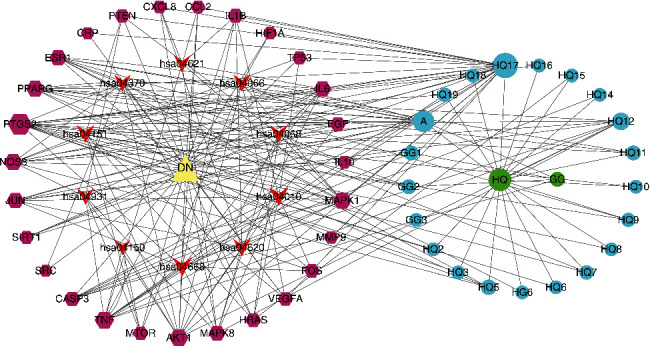
A total of 27 active ingredients and 354 putative identified target genes were screened from HGD, of which 99 overlapped with the targets of DN and were considered potential therapeutic targets. Further analysis showed that the HGD activity of quercetin, formononetin, kaempferol, isorhamnetin, and beta-sitosterol ingredients is possible through VEGFA, IL6, TNF, AKT1, and TP53 targets involved in TNF, toll-like receptors, and MAPK-related pathways, which have anti-inflammatory, antiapoptosis, antioxidation, and autophagy effects, relieve renal fibrosis and renal cortex injury, and improve renal function, thus delaying the development of DN. The molecular docking results showed that quercetin, formononetin, kaempferol, isorhamnetin, beta-sitosterol had a good binding activity with VEGFA, IL6, TNF, AKT1, and TP53.
This study demonstrated that HGD might take part in the treatment of DN through multicomponent, multitarget, and multichannel combined action.
黄芪葛根汤(HGD)是一种中药配方,在中国已被广泛用于治疗糖尿病肾病,但其药理机制仍不清楚。因此,本研究旨在探讨黄芪葛根汤治疗糖尿病肾病(DN)的潜在机制。
利用中药系统药理学数据库(TCMSP)、UniProt和瑞士靶点预测数据库搜索黄芪葛根汤的活性成分和潜在靶点。此外,使用多个疾病相关数据库收集糖尿病肾病相关靶点。利用STRING数据库建立蛋白质-蛋白质相互作用(PPI)网络的共同靶点。使用DAVID数据库进行基因本体(GO)和京都基因与基因组百科全书(KEGG)通路富集分析。最后,使用AutoDockVina对核心成分和靶点进行分子对接验证。
从黄芪葛根汤中筛选出27种活性成分和354个推定的靶基因,其中99个与糖尿病肾病的靶点重叠,被认为是潜在的治疗靶点。进一步分析表明,槲皮素、芒柄花素、山奈酚、异鼠李素和β-谷甾醇成分的黄芪葛根汤活性可能通过参与肿瘤坏死因子、Toll样受体和丝裂原活化蛋白激酶相关通路的血管内皮生长因子A(VEGFA)、白细胞介素6(IL6)、肿瘤坏死因子(TNF)、蛋白激酶B1(AKT1)和肿瘤蛋白p53(TP53)靶点实现,这些靶点具有抗炎、抗凋亡、抗氧化和自噬作用,可减轻肾纤维化和肾皮质损伤,改善肾功能,从而延缓糖尿病肾病的发展。分子对接结果表明,槲皮素、芒柄花素、山奈酚、异鼠李素、β-谷甾醇与VEGFA、IL6、TNF、AKT1和TP53具有良好的结合活性。
本研究表明,黄芪葛根汤可能通过多成分、多靶点、多途径联合作用参与糖尿病肾病的治疗。