Han Lu, Peng Ke, Qiu Li-Ying, Li Meng, Ruan Jing-Hua, He Li-Li, Yuan Zhi-Xiang
College of Pharmacy, Southwest Minzu University, Chengdu, China.
School of pharmacy, Queen's University Belfast, Belfast, United Kingdom.
Front Pharmacol. 2021 May 10;12:679602. doi: 10.3389/fphar.2021.679602. eCollection 2021.
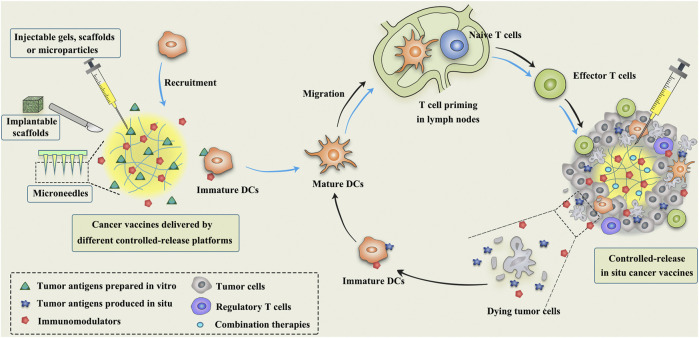
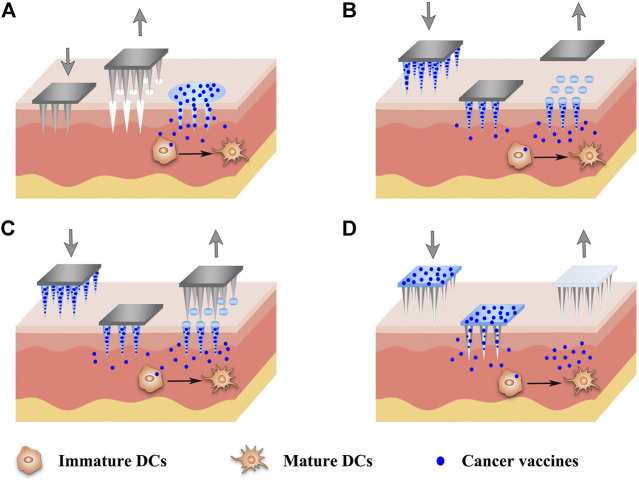
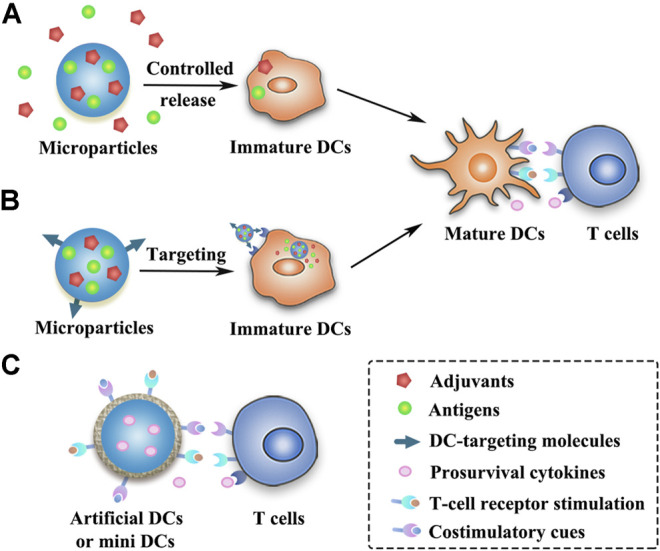
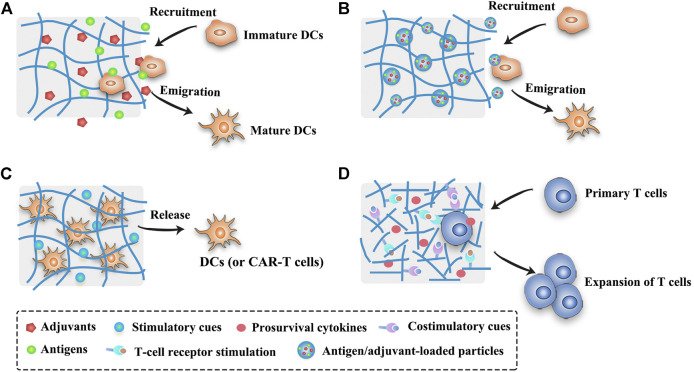
Cancer vaccines represent among the most promising strategies in the battle against cancers. However, the clinical efficacy of current cancer vaccines is largely limited by the lack of optimized delivery systems to generate strong and persistent antitumor immune responses. Moreover, most cancer vaccines require multiple injections to boost the immune responses, leading to poor patient compliance. Controlled-release drug delivery systems are able to address these issues by presenting drugs in a controlled spatiotemporal manner, which allows co-delivery of multiple drugs, reduction of dosing frequency and avoidance of significant systemic toxicities. In this review, we outline the recent progress in cancer vaccines including subunit vaccines, genetic vaccines, dendritic cell-based vaccines, tumor cell-based vaccines and vaccines. Furthermore, we highlight the efforts and challenges of controlled or sustained release drug delivery systems (e.g., microparticles, scaffolds, injectable gels, and microneedles) in ameliorating the safety, effectiveness and operability of cancer vaccines. Finally, we briefly discuss the correlations of vaccine release kinetics and the immune responses to enlighten the rational design of the next-generation platforms for cancer therapy.
癌症疫苗是对抗癌症最具前景的策略之一。然而,当前癌症疫苗的临床疗效在很大程度上受到缺乏优化递送系统的限制,难以产生强烈且持久的抗肿瘤免疫反应。此外,大多数癌症疫苗需要多次注射以增强免疫反应,导致患者依从性较差。控释药物递送系统能够通过以可控的时空方式呈现药物来解决这些问题,这允许多种药物的共同递送、给药频率的降低以及避免显著的全身毒性。在本综述中,我们概述了癌症疫苗的最新进展,包括亚单位疫苗、基因疫苗、基于树突状细胞的疫苗、基于肿瘤细胞的疫苗等。此外,我们强调了控释或缓释药物递送系统(如微粒、支架、可注射凝胶和微针)在改善癌症疫苗的安全性、有效性和可操作性方面所做的努力和面临的挑战。最后,我们简要讨论疫苗释放动力学与免疫反应的相关性,以启发下一代癌症治疗平台的合理设计。