Department of Biosciences, Università Degli Studi Di Milano, Via Celoria 26, 20133, Milan, Italy.
BMC Plant Biol. 2021 May 27;21(1):238. doi: 10.1186/s12870-021-03029-y.
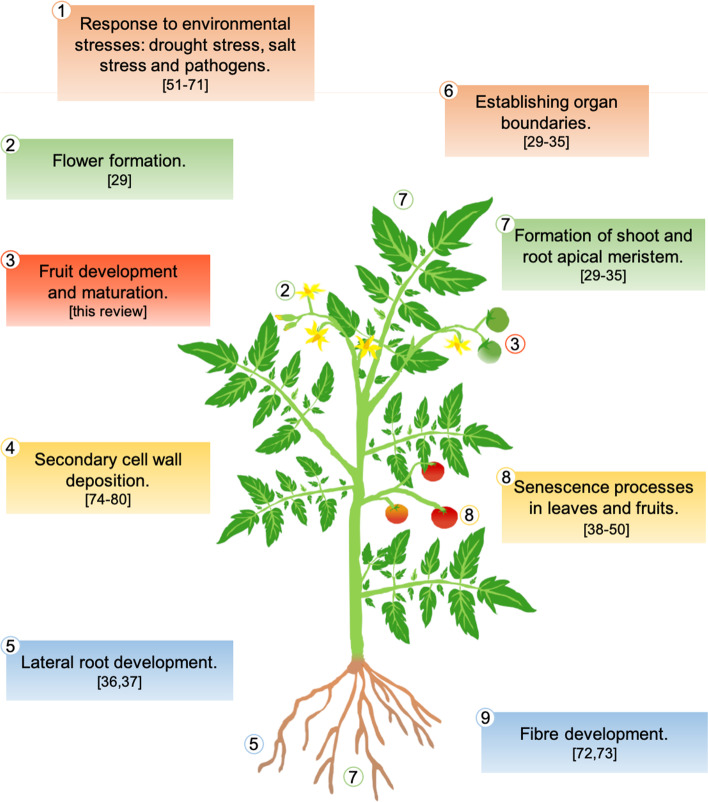
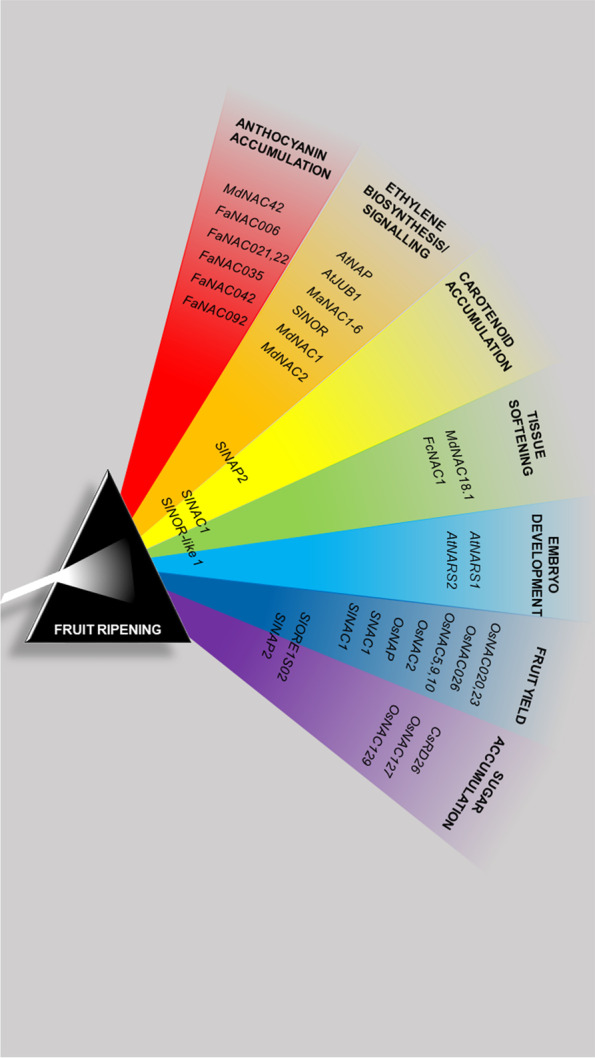
Fruits and seeds resulting from fertilization of flowers, represent an incredible evolutionary advantage in angiosperms and have seen them become a critical element in our food supply.Many studies have been conducted to reveal how fruit matures while protecting growing seeds and ensuring their dispersal. As result, several transcription factors involved in fruit maturation and senescence have been isolated both in model and crop plants. These regulators modulate several cellular processes that occur during fruit ripening such as chlorophyll breakdown, tissue softening, carbohydrates and pigments accumulation.The NAC superfamily of transcription factors is known to be involved in almost all these aspects of fruit development and maturation. In this review, we summarise the current knowledge regarding NACs that modulate fruit ripening in model species (Arabidopsis thaliana and Solanum lycopersicum) and in crops of commercial interest (Oryza sativa, Malus domestica, Fragaria genus, Citrus sinensis and Musa acuminata).
水果和种子是花受精的产物,这是被子植物令人难以置信的进化优势,它们已成为我们食物供应的关键元素。许多研究旨在揭示果实如何在保护生长中的种子并确保其传播的同时成熟。因此,已经在模式植物和作物植物中分离出了参与果实成熟和衰老的几个转录因子。这些调节剂调节果实成熟过程中发生的几个细胞过程,例如叶绿素分解、组织软化、碳水化合物和色素积累。NAC 转录因子超家族已知参与果实发育和成熟的几乎所有这些方面。在这篇综述中,我们总结了关于 NAC 的最新知识,这些 NAC 调节模式物种(拟南芥和番茄)和具有商业价值的作物(水稻、苹果、草莓属、柑橘属和香蕉)的果实成熟。