Systems Modelling, Simulation, and Data Science, Brain and Mind Centre, Faculty of Medicine and Health, University of Sydney, 94 Mallet Street, Camperdown, NSW, Australia.
Computer Simulation & Advanced Research Technologies (CSART), Sydney, Australia.
Sci Rep. 2021 May 27;11(1):11209. doi: 10.1038/s41598-021-90762-x.
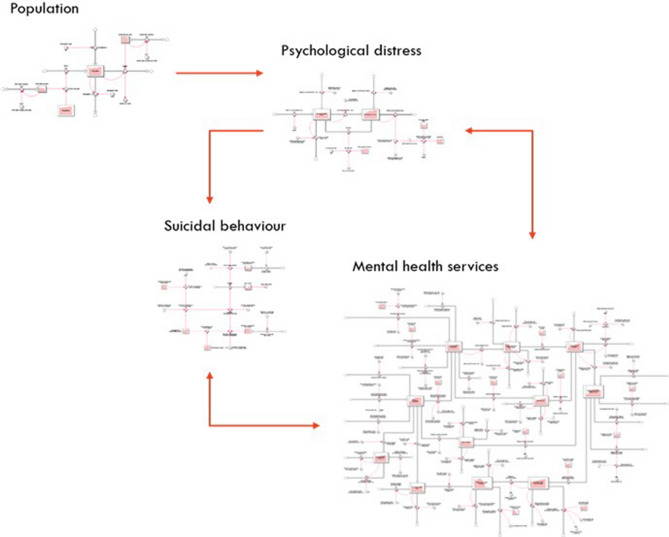
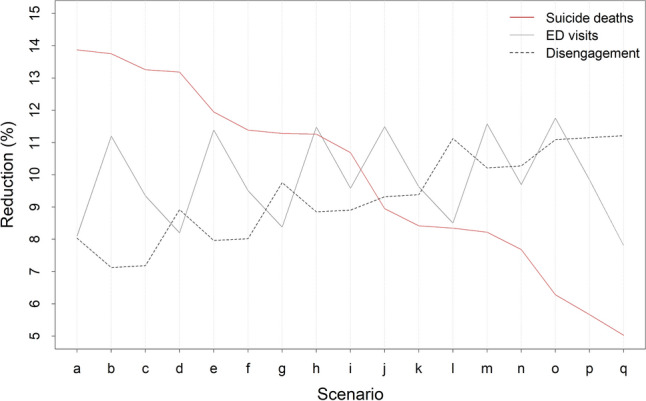
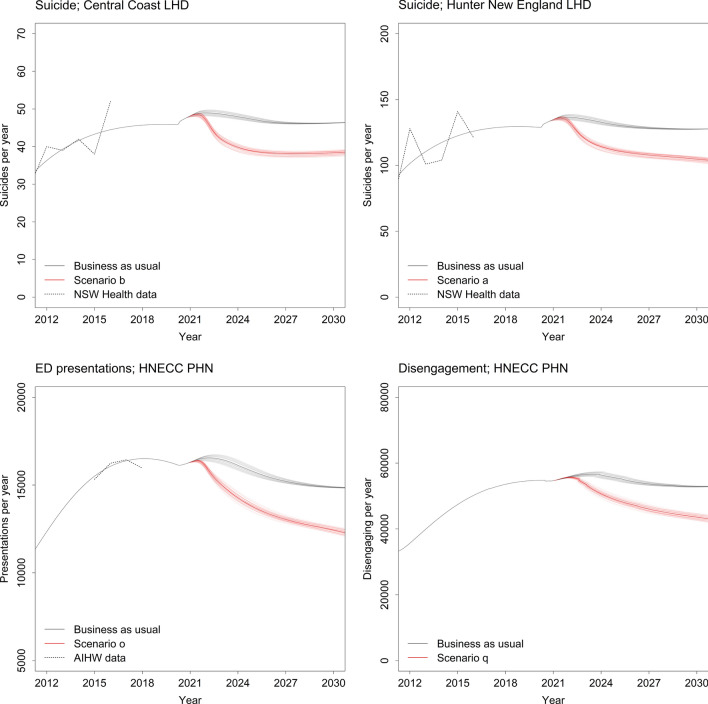
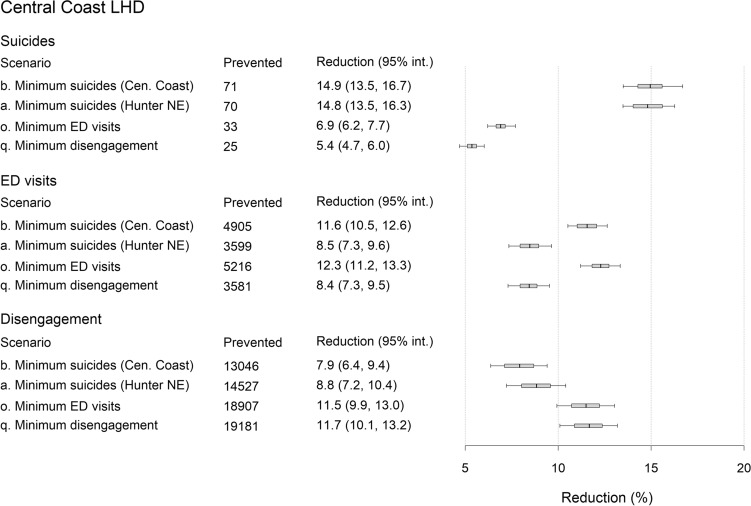
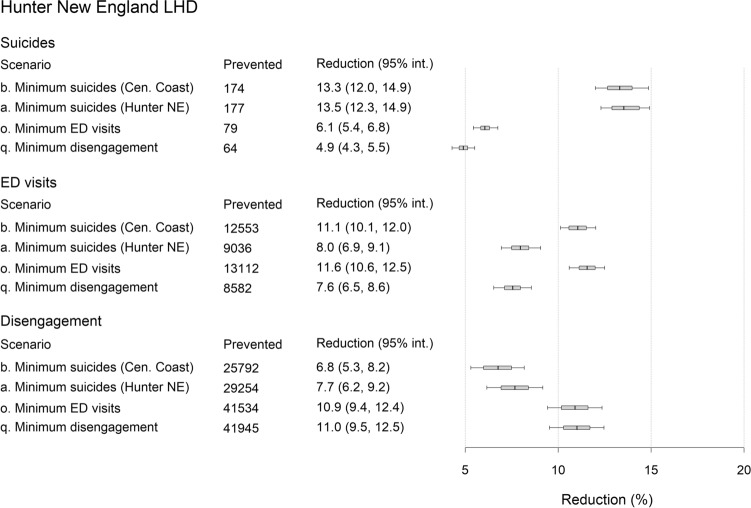
For more than a decade, suicide rates in Australia have shown no improvement despite significant investment in reforms to support regionally driven initiatives. Further recommended reforms by the Productivity Commission call for Federal and State and Territory Government funding for mental health to be pooled and new Regional Commissioning Authorities established to take responsibility for efficient and effective allocation of 'taxpayer money.' This study explores the sufficiency of this recommendation in preventing ongoing policy resistance. A system dynamics model of pathways between psychological distress, the mental health care system, suicidal behaviour and their drivers was developed, tested, and validated for a large, geographically diverse region of New South Wales; the Hunter New England and Central Coast Primary Health Network (PHN). Multi-objective optimisation was used to explore potential discordance in the best-performing programs and initiatives (simulated from 2021 to 2031) across mental health outcomes between the two state-governed Local Health Districts (LHDs) and the federally governed PHN. Impacts on suicide deaths, mental health-related emergency department presentations, and service disengagement were explored. A combination of family psychoeducation, post-attempt aftercare, and safety planning, and social connectedness programs minimises the number of suicides across the PHN and in the Hunter New England LHD (13.5% reduction; 95% interval, 12.3-14.9%), and performs well in the Central Coast LHD (14.8% reduction, 13.5-16.3%), suggesting that aligned strategic decision making between the PHN and LHDs would deliver substantial impacts on suicide. Results also highlighted a marked trade-off between minimising suicide deaths versus minimising service disengagement. This is explained in part by the additional demand placed on services of intensive suicide prevention programs leading to increases in service disengagement as wait times for specialist community based mental health services and dissatisfaction with quality of care increases. Competing priorities between the PHN and LHDs (each seeking to optimise the different outcomes they are responsible for) can undermine the optimal impact of investments for suicide prevention. Systems modelling provides essential regional decision analysis infrastructure to facilitate coordinated federal and state investments for optimal impacts.
十多年来,尽管澳大利亚在支持区域驱动倡议方面进行了大量投资,但自杀率仍未见改善。生产力委员会进一步建议的改革呼吁联邦和州及地区政府将心理健康资金集中起来,并设立新的区域委托管理局,负责“纳税人资金”的有效和高效分配。本研究探讨了这一建议在防止政策持续抵制方面的充分性。针对新南威尔士州一个大型、地理多样化的地区——亨特新英格兰和中海岸初级卫生网络(PHN),开发、测试和验证了一个用于心理困扰、心理健康护理系统、自杀行为及其驱动因素之间途径的系统动力学模型。多目标优化用于探索在两个州立地方卫生区(LHD)和联邦政府管理的 PHN 之间,心理健康结果最佳表现的方案和举措(模拟 2021 年至 2031 年)之间的潜在不一致性。探讨了对自杀死亡、心理健康相关急诊就诊和服务脱节的影响。家庭心理教育、未遂后护理、安全规划和社会联系计划的组合最大限度地减少了整个 PHN 和亨特新英格兰 LHD 的自杀人数(减少 13.5%;95%置信区间,12.3-14.9%),并且在中海岸 LHD 中表现良好(减少 14.8%,13.5-16.3%),这表明 PHN 和 LHD 之间的战略决策一致将对自杀产生重大影响。结果还突出了在最大限度地减少自杀死亡与最大限度地减少服务脱节之间存在显著的权衡。这部分是由于强化自杀预防计划对服务的额外需求导致服务脱节增加,同时也导致对专门社区心理健康服务的需求增加以及对护理质量的不满。PHN 和 LHD 之间的竞争优先事项(每个 LHD 都试图优化其负责的不同结果)可能会破坏预防自杀投资的最佳效果。系统建模为协调联邦和州的投资提供了必要的区域决策分析基础设施,以实现最佳效果。