Sudhakar Padhmanand, Machiels Kathleen, Verstockt Bram, Korcsmaros Tamas, Vermeire Séverine
Department of Chronic Diseases, Metabolism and Ageing, Translational Research Center for Gastrointestinal Disorders (TARGID), KU Leuven, Leuven, Belgium.
Earlham Institute, Norwich, United Kingdom.
Front Microbiol. 2021 May 11;12:618856. doi: 10.3389/fmicb.2021.618856. eCollection 2021.
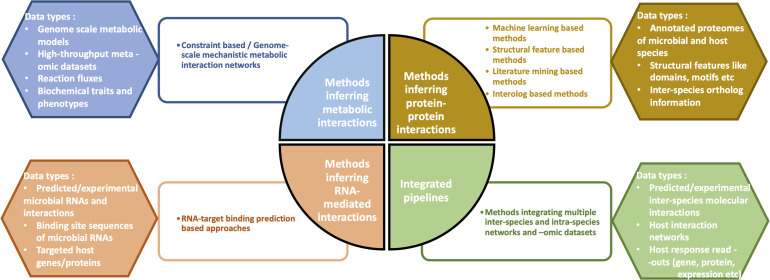
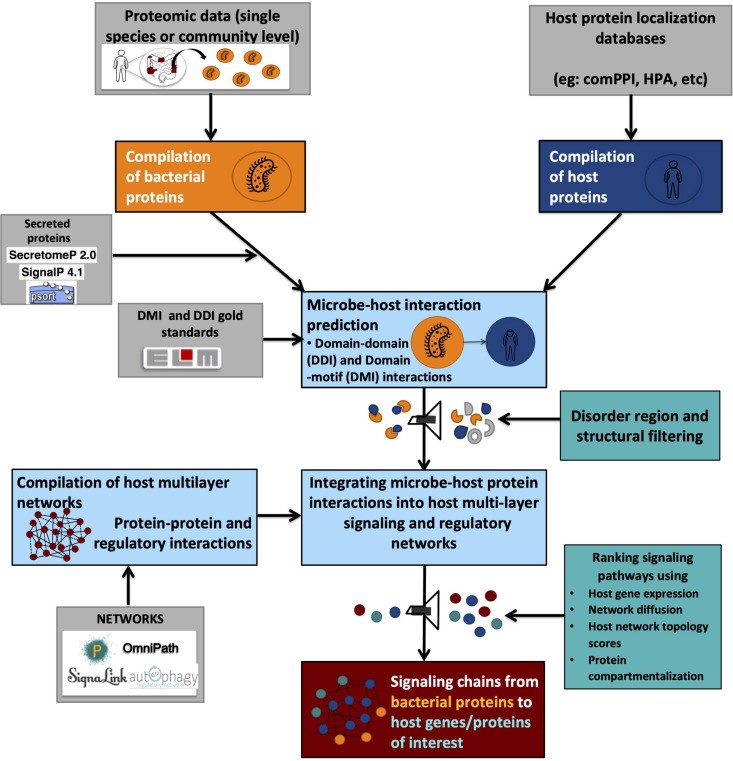
The microbiome, by virtue of its interactions with the host, is implicated in various host functions including its influence on nutrition and homeostasis. Many chronic diseases such as diabetes, cancer, inflammatory bowel diseases are characterized by a disruption of microbial communities in at least one biological niche/organ system. Various molecular mechanisms between microbial and host components such as proteins, RNAs, metabolites have recently been identified, thus filling many gaps in our understanding of how the microbiome modulates host processes. Concurrently, high-throughput technologies have enabled the profiling of heterogeneous datasets capturing community level changes in the microbiome as well as the host responses. However, due to limitations in parallel sampling and analytical procedures, big gaps still exist in terms of how the microbiome mechanistically influences host functions at a system and community level. In the past decade, computational biology and machine learning methodologies have been developed with the aim of filling the existing gaps. Due to the agnostic nature of the tools, they have been applied in diverse disease contexts to analyze and infer the interactions between the microbiome and host molecular components. Some of these approaches allow the identification and analysis of affected downstream host processes. Most of the tools statistically or mechanistically integrate different types of -omic and meta -omic datasets followed by functional/biological interpretation. In this review, we provide an overview of the landscape of computational approaches for investigating mechanistic interactions between individual microbes/microbiome and the host and the opportunities for basic and clinical research. These could include but are not limited to the development of activity- and mechanism-based biomarkers, uncovering mechanisms for therapeutic interventions and generating integrated signatures to stratify patients.
微生物组通过与宿主的相互作用,参与各种宿主功能,包括对营养和内环境稳态的影响。许多慢性疾病,如糖尿病、癌症、炎症性肠病,其特征在于至少一个生物龛位/器官系统中的微生物群落遭到破坏。最近已经确定了微生物与宿主成分(如蛋白质、RNA、代谢物)之间的各种分子机制,从而填补了我们在理解微生物组如何调节宿主过程方面的许多空白。同时,高通量技术能够对异质数据集进行分析,捕捉微生物组的群落水平变化以及宿主反应。然而,由于平行采样和分析程序的限制,在微生物组如何在系统和群落水平上机械地影响宿主功能方面仍然存在很大差距。在过去十年中,已经开发了计算生物学和机器学习方法,旨在填补现有空白。由于这些工具具有通用性,它们已被应用于各种疾病背景,以分析和推断微生物组与宿主分子成分之间的相互作用。其中一些方法允许识别和分析受影响的下游宿主过程。大多数工具通过统计或机械方式整合不同类型的组学和元组学数据集,然后进行功能/生物学解释。在这篇综述中,我们概述了用于研究单个微生物/微生物组与宿主之间机械相互作用的计算方法的概况,以及基础和临床研究的机会。这些可能包括但不限于基于活性和机制的生物标志物的开发、揭示治疗干预的机制以及生成综合特征以对患者进行分层。