Wang Min-Ge, Liu Zhi-Yong, Liao Xiao-Ping, Sun Ruan-Yang, Li Run-Bo, Liu Yan, Fang Liang-Xing, Sun Jian, Liu Ya-Hong, Zhang Rong-Min
National Risk Assessment Laboratory for Antimicrobial Resistance of Animal Original Bacteria, South China Agricultural University, Guangzhou 510642, China.
Laboratory of Veterinary Pharmacology, College of Veterinary Medicine, South China Agricultural University, Guangzhou 510642, China.
Antibiotics (Basel). 2021 May 9;10(5):548. doi: 10.3390/antibiotics10050548.
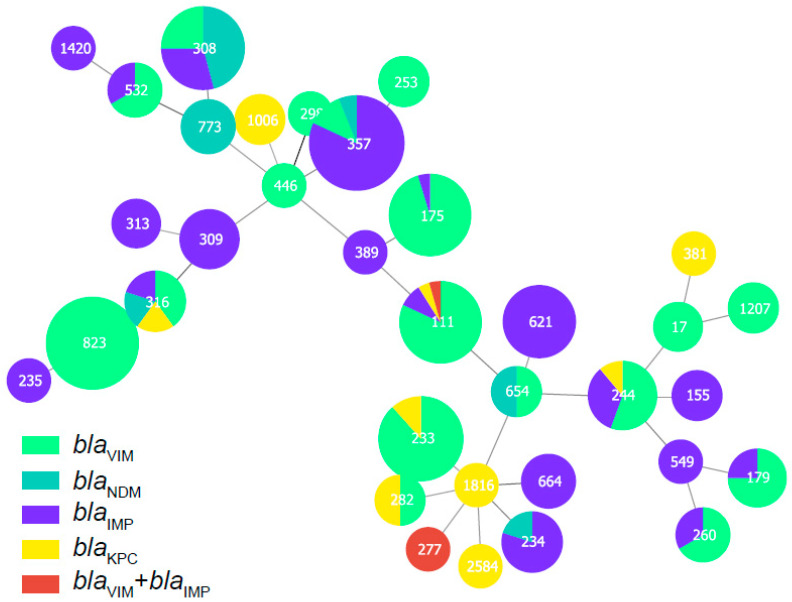
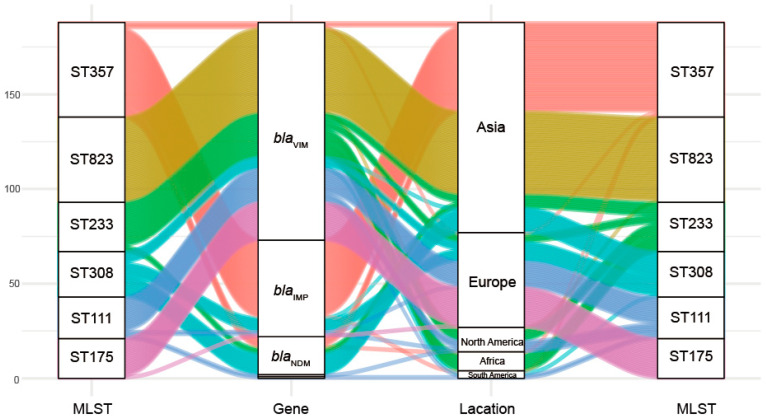
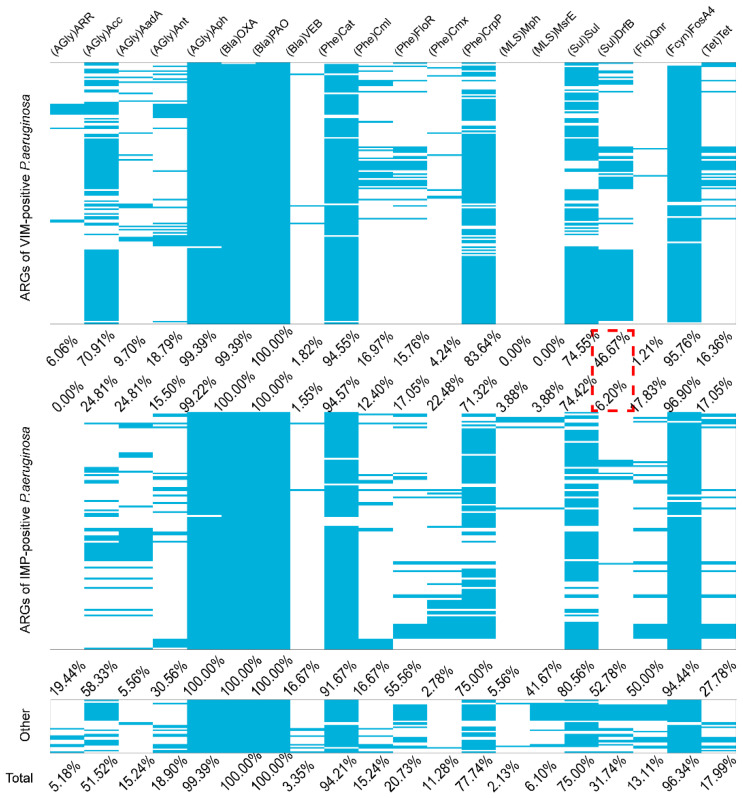
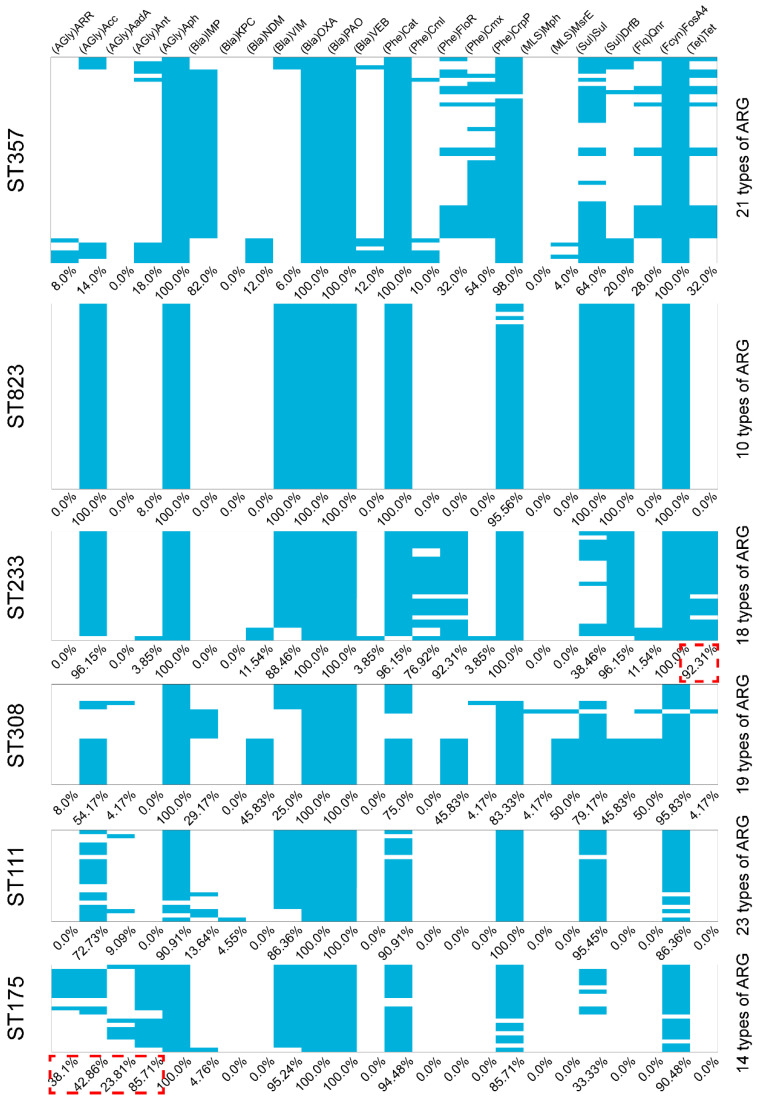
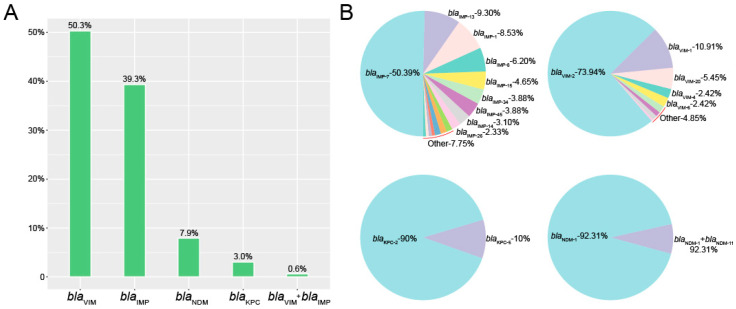
This study aimed to determine the global distribution and molecular characteristics of carbapenemase-producing isolates. A total of 328 (11.1%, 328/2953) carbapenemase-producing isolates from humans were obtained from public databases as of October 2019. Of which, the and genes were the most prevalent carbapenemases in the isolates. These carbapenemase-producing isolates possessed 34 distinct sequence types (STs) and six predominated: ST357, ST823, ST308, ST233, ST175 and ST111. The ST357 and ST823 isolates were primarily found detected in Asia and all ST175 isolates were found in Europe. The ST308, ST233 and ST111 isolates were spread worldwide. Further, all ST823 isolates and the majority of ST111, ST233 and ST175 isolates carried but ST357 isolates primarily carried . ST308 isolates provide a key reservoir for the spread of , and . WGS analysis revealed that ST111 carried a great diversity of ARG types (n = 23), followed by ST357 (n = 21), ST308 (n = 19), ST233 (n = 18), ST175 (n = 14) and ST823 (n = 10). The ST175 isolates carried a more diversity and frequent of aminoglycoside ARGs, and ST233 isolates harbored more tetracycline ARGs. Our findings revealed that different carbapenem resistance genes were distributed primarily in variant STs of isolates, these isolates also possessed an extensive geographical distribution that highlights the need for surveillance studies that detect carbapenemase-producing isolates in humans.
本研究旨在确定产碳青霉烯酶菌株的全球分布及分子特征。截至2019年10月,从公共数据库中获得了328株(11.1%,328/2953)来自人类的产碳青霉烯酶菌株。其中, 基因和 基因是这些菌株中最常见的碳青霉烯酶。这些产碳青霉烯酶菌株具有34种不同的序列类型(STs),其中六种占主导地位:ST357、ST823、ST308、ST233、ST175和ST111。ST357和ST823菌株主要在亚洲被检测到,所有ST175菌株均在欧洲被发现。ST308、ST233和ST111菌株在全球范围内传播。此外,所有ST823菌株以及大多数ST111、ST233和ST175菌株携带 ,但ST357菌株主要携带 。ST308菌株是 、 和 传播的关键储存库。全基因组测序(WGS)分析显示,ST111携带的抗菌耐药基因(ARG)类型最多样化(n = 23),其次是ST357(n = 21)、ST308(n = 19)、ST233(n = 18)、ST175(n = 14)和ST823(n = 10)。ST175菌株携带的氨基糖苷类ARG更多样化且更频繁,ST233菌株含有更多四环素类ARG。我们的研究结果表明,不同的碳青霉烯耐药基因主要分布在菌株的不同STs中,这些菌株还具有广泛的地理分布,这凸显了开展监测研究以检测人类中产碳青霉烯酶菌株的必要性。