Platzer Melanie, Kiese Sandra, Herfellner Thomas, Schweiggert-Weisz Ute, Eisner Peter
ZIEL-Institute for Food & Health, TUM School of Life Sciences Weihenstephan, Technical University of Munich, Weihenstephaner Berg 1, 85354 Freising, Germany.
Fraunhofer Institute for Process Engineering and Packaging IVV, Giggenhauser Str. 35, 85354 Freising, Germany.
Antioxidants (Basel). 2021 May 20;10(5):811. doi: 10.3390/antiox10050811.
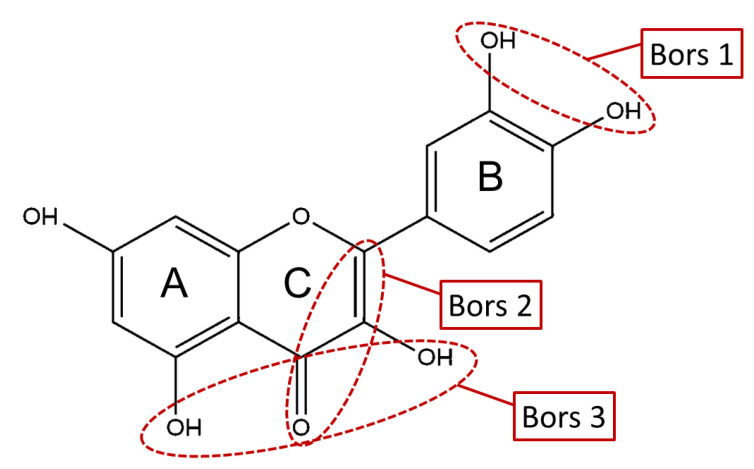
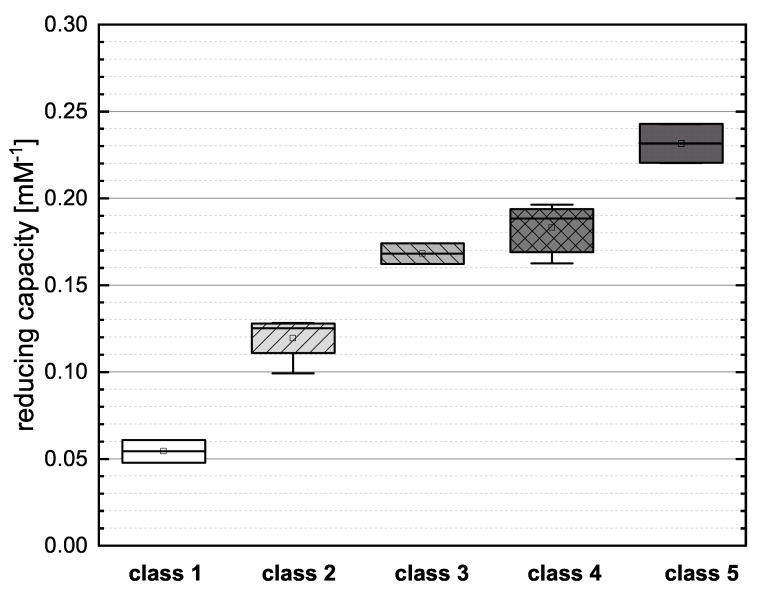
Plants produce a diverse array of secondary metabolites that are generally nonessential but facilitate ecological interactions. Fruits, vegetables, seeds and nuts can accumulate bioactive secondary metabolites with health-promoting properties, including the potent antioxidant activities of phenolic compounds. Several in vitro assays have been developed to measure the polyphenol content and antioxidant activity of plant extracts, e.g., the simple and highly popular Folin-Ciocalteu (FC) assay. However, the literature contains a number of different descriptions of the assay and it is unclear whether the assay measures the polyphenol content or reducing capacity of the sample. To determine the influence of phenolic structures on the outcome of the FC assay, we tested phenols representing different subgroups (phenolic acids, flavonols, flavanols, dihydrochalcones and flavanones). We observed different results for each reference substance and subgroup. Accordingly, we concluded that the FC assay does not measure the polyphenol content of a sample but determines its reducing capacity instead. Assigning the substances to five structural classes showed that the FC results depend on the number of fulfilled Bors criteria. If a molecule fulfills none of the Bors criteria, the FC results depend on the number of OH groups. We did not find a correlation with other single electron transfer assays (e.g., ABTS and DPPH assays). Furthermore, the FC assay was compatible with all five subgroups and should be preferred over the DPPH assay, which is specific for extracts rich in dihydrochalcones or flavanones.
植物产生各种各样的次生代谢产物,这些产物通常并非植物生存所必需,但有助于生态相互作用。水果、蔬菜、种子和坚果能够积累具有促进健康特性的生物活性次生代谢产物,包括酚类化合物强大的抗氧化活性。已经开发了几种体外测定方法来测量植物提取物中的多酚含量和抗氧化活性,例如简单且广受欢迎的福林-西奥卡勒法(FC法)。然而,文献中对该测定方法有多种不同描述,尚不清楚该测定方法测量的是样品中的多酚含量还是还原能力。为了确定酚类结构对FC测定结果的影响,我们测试了代表不同亚组的酚类(酚酸、黄酮醇、黄烷醇、二氢查耳酮和黄烷酮)。我们观察到每种参考物质和亚组都有不同的结果。因此,我们得出结论,FC测定法并非测量样品中的多酚含量,而是测定其还原能力。将这些物质分为五个结构类别表明,FC结果取决于满足博尔斯标准的数量。如果一个分子不满足任何博尔斯标准,FC结果则取决于羟基的数量。我们没有发现与其他单电子转移测定法(例如ABTS和DPPH测定法)存在相关性。此外,FC测定法与所有五个亚组都兼容,并且应该比DPPH测定法更受青睐,DPPH测定法对富含二氢查耳酮或黄烷酮的提取物具有特异性。