Kamdem Tamo Arnaud, Doench Ingo, Walter Lukas, Montembault Alexandra, Sudre Guillaume, David Laurent, Morales-Helguera Aliuska, Selig Mischa, Rolauffs Bernd, Bernstein Anke, Hoenders Daniel, Walther Andreas, Osorio-Madrazo Anayancy
Laboratory for Sensors, Institute of Microsystems Engineering IMTEK, University of Freiburg, 79110 Freiburg, Germany.
Freiburg Materials Research Center-FMF, University of Freiburg, 79104 Freiburg, Germany.
Polymers (Basel). 2021 May 20;13(10):1663. doi: 10.3390/polym13101663.
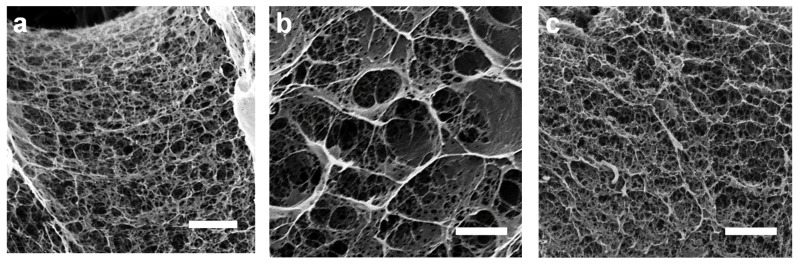
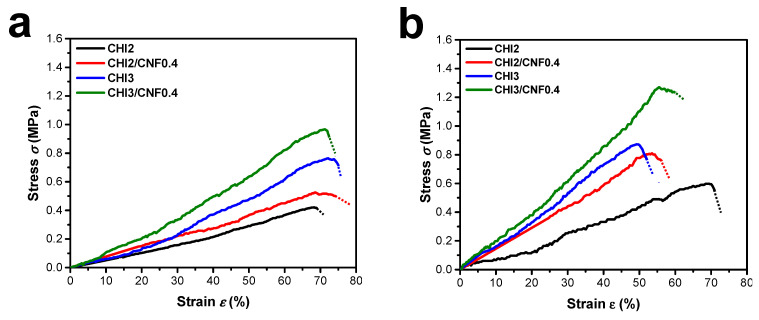
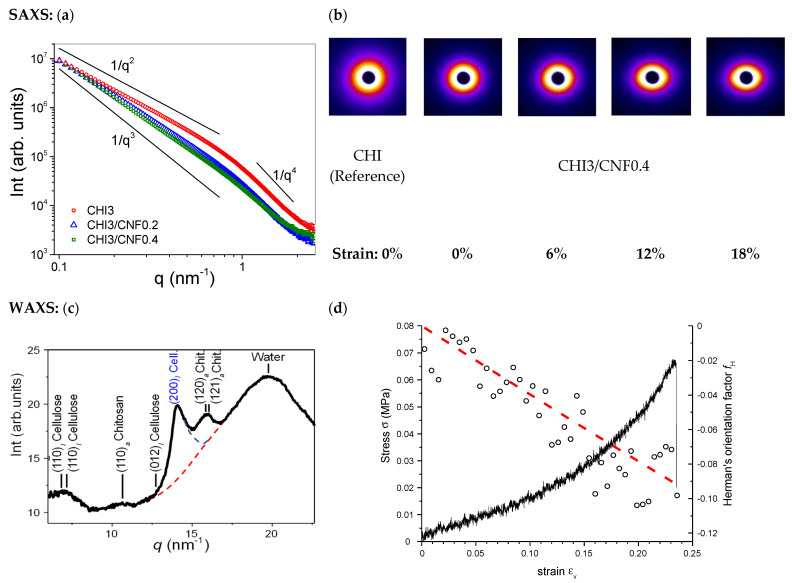
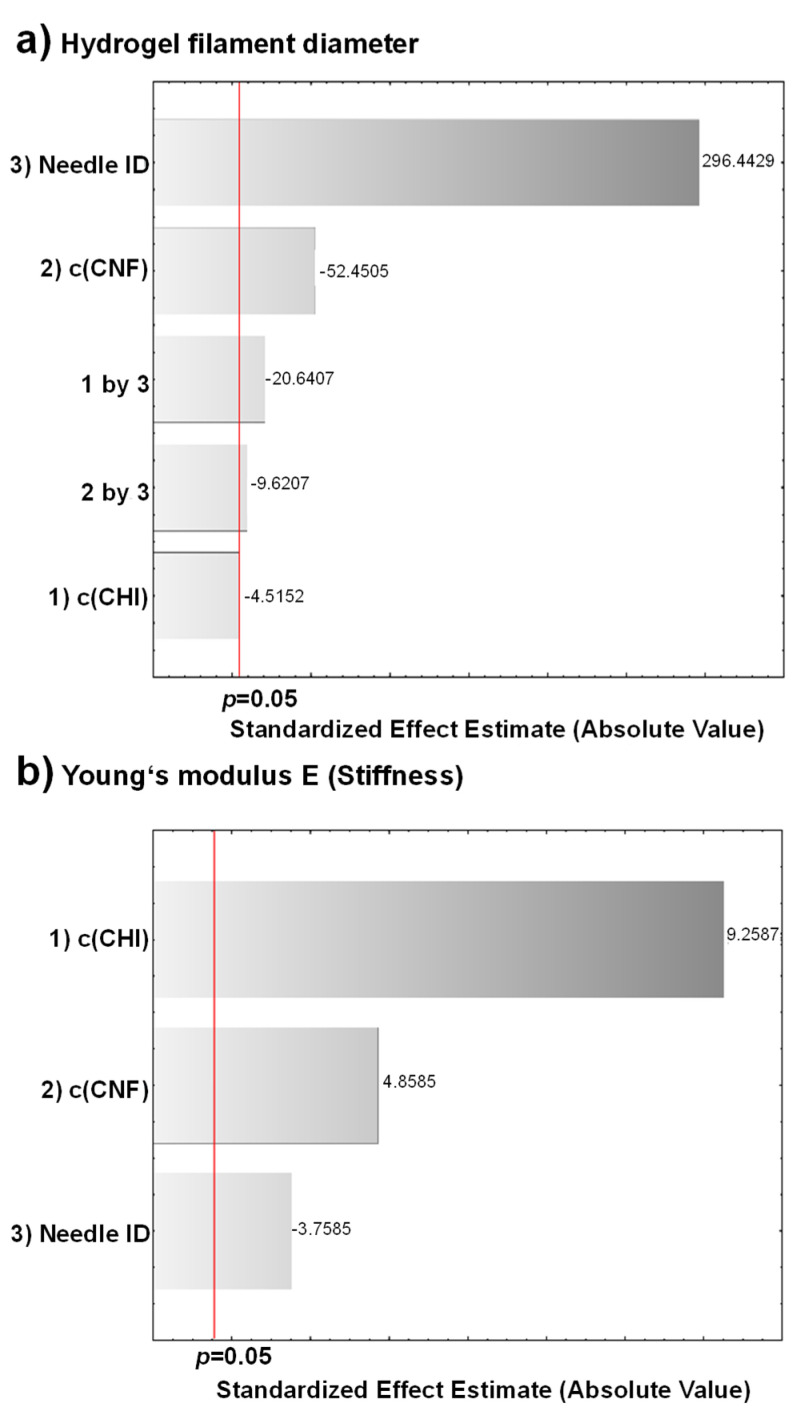
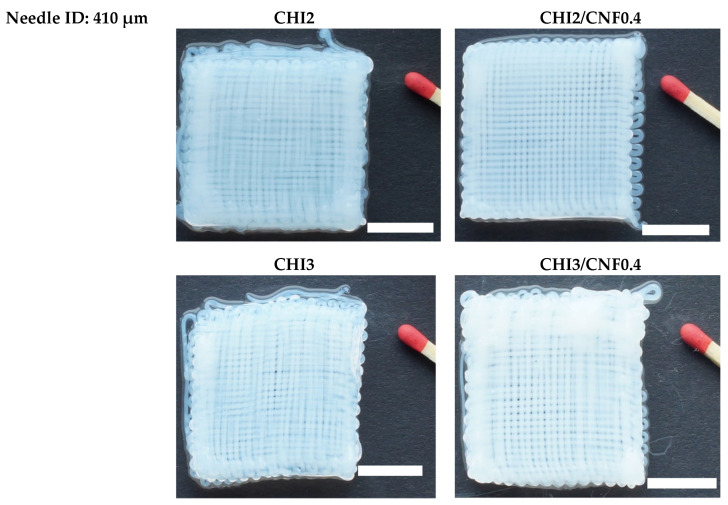
Soft tissues are commonly fiber-reinforced hydrogel composite structures, distinguishable from hard tissues by their low mineral and high water content. In this work, we proposed the development of 3D printed hydrogel constructs of the biopolymers chitosan (CHI) and cellulose nanofibers (CNFs), both without any chemical modification, which processing did not incorporate any chemical crosslinking. The unique mechanical properties of native cellulose nanofibers offer new strategies for the design of environmentally friendly high mechanical performance composites. In the here proposed 3D printed bioinspired CNF-filled CHI hydrogel biomaterials, the chitosan serves as a biocompatible matrix promoting cell growth with balanced hydrophilic properties, while the CNFs provide mechanical reinforcement to the CHI-based hydrogel. By means of extrusion-based printing (EBB), the design and development of 3D functional hydrogel scaffolds was achieved by using low concentrations of chitosan (2.0-3.0% ()) and cellulose nanofibers (0.2-0.4% ()). CHI/CNF printed hydrogels with good mechanical performance (Young's modulus 3.0 MPa, stress at break 1.5 MPa, and strain at break 75%), anisotropic microstructure and suitable biological response, were achieved. The CHI/CNF composition and processing parameters were optimized in terms of 3D printability, resolution, and quality of the constructs (microstructure and mechanical properties), resulting in good cell viability. This work allows expanding the library of the so far used biopolymer compositions for 3D printing of mechanically performant hydrogel constructs, purely based in the natural polymers chitosan and cellulose, offering new perspectives in the engineering of mechanically demanding hydrogel tissues like intervertebral disc (IVD), cartilage, meniscus, among others.
软组织通常是纤维增强水凝胶复合结构,因其低矿物质含量和高含水量而与硬组织区分开来。在这项工作中,我们提出开发由生物聚合物壳聚糖(CHI)和纤维素纳米纤维(CNF)组成的3D打印水凝胶结构,两者均未进行任何化学改性,其加工过程也未包含任何化学交联。天然纤维素纳米纤维独特的机械性能为设计环保型高机械性能复合材料提供了新策略。在本文提出的3D打印仿生CNF填充CHI水凝胶生物材料中,壳聚糖作为生物相容性基质,具有平衡的亲水性,促进细胞生长,而CNF为基于CHI的水凝胶提供机械增强作用。通过基于挤出的打印(EBB),使用低浓度的壳聚糖(2.0 - 3.0%())和纤维素纳米纤维(0.2 - 0.4%())实现了3D功能性水凝胶支架的设计和开发。获得了具有良好机械性能(杨氏模量3.0 MPa、断裂应力1.5 MPa和断裂应变75%)、各向异性微观结构和合适生物响应的CHI/CNF打印水凝胶。在3D可打印性、分辨率和构建体质量(微观结构和机械性能)方面对CHI/CNF组成和加工参数进行了优化,从而获得了良好的细胞活力。这项工作有助于扩展迄今为止用于3D打印具有机械性能的水凝胶构建体的生物聚合物组合物库,该库完全基于天然聚合物壳聚糖和纤维素,为工程化要求机械性能高的水凝胶组织(如椎间盘(IVD)、软骨、半月板等)提供了新的视角。