Hu Jin-Jia, Liu Chia-Chi, Lin Chih-Hsun, Tuan-Mu Ho-Yi
Department of Mechanical Engineering, National Yang Ming Chiao Tung University, Hsinchu 300, Taiwan.
Department of Biomedical Engineering, National Cheng Kung University, Tainan 701, Taiwan.
Polymers (Basel). 2021 May 10;13(9):1527. doi: 10.3390/polym13091527.
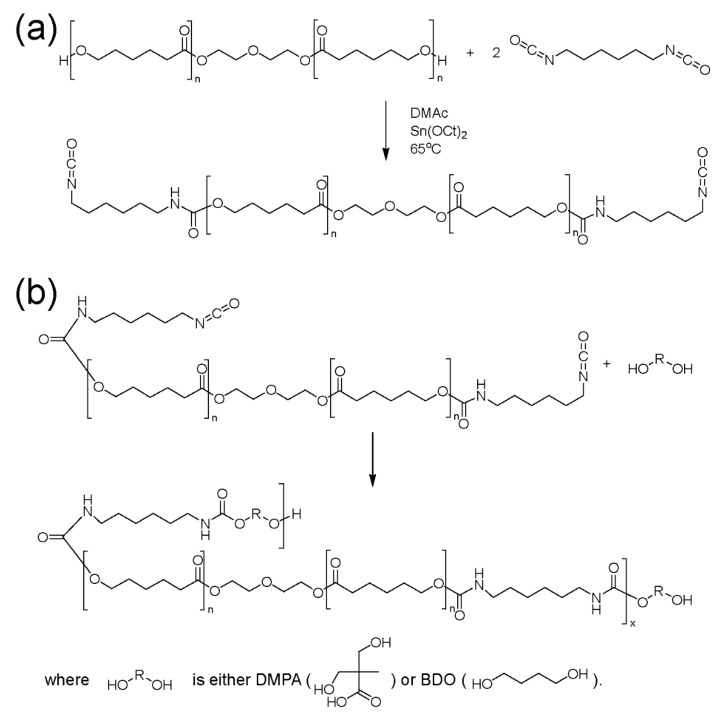
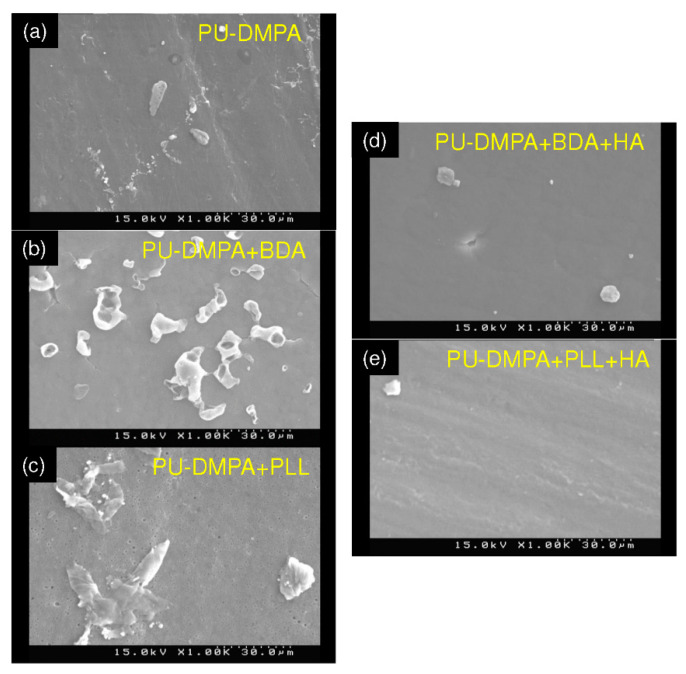
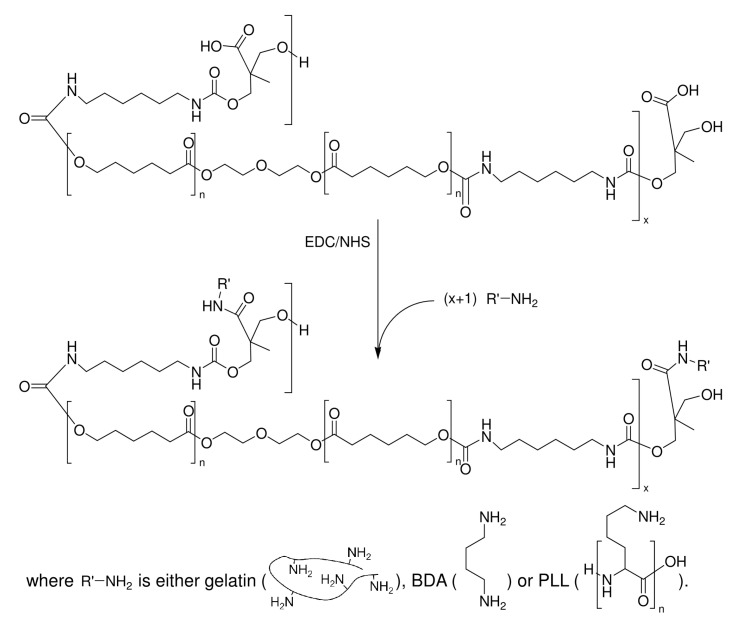
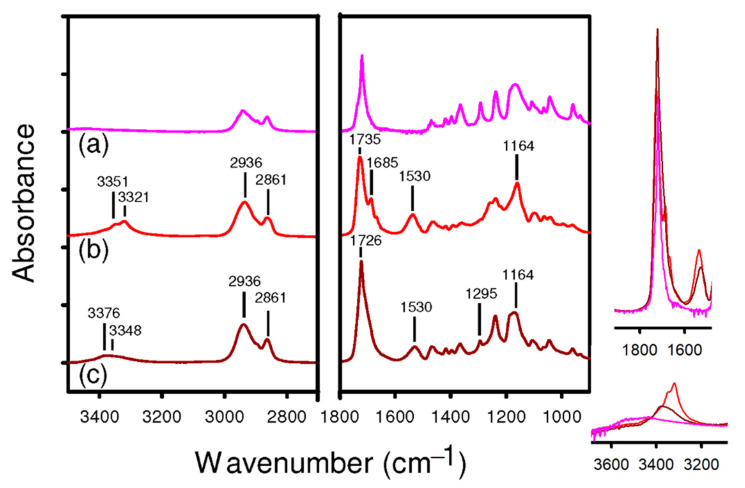
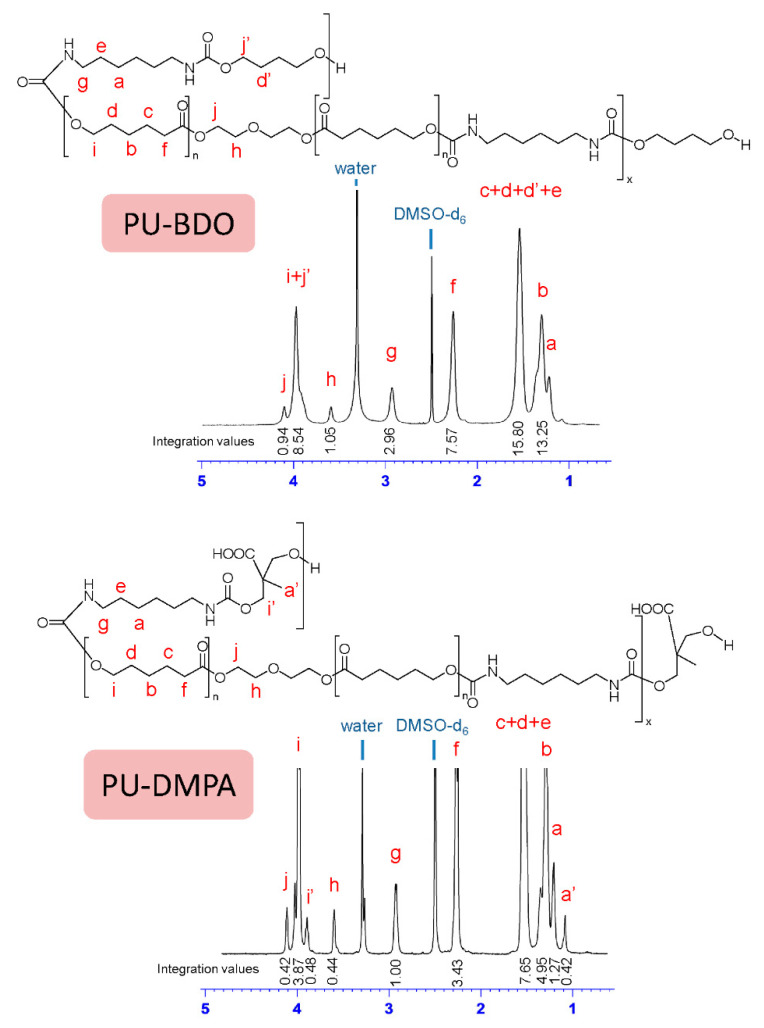
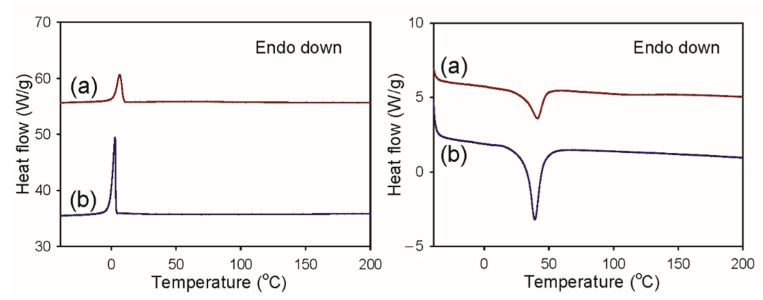
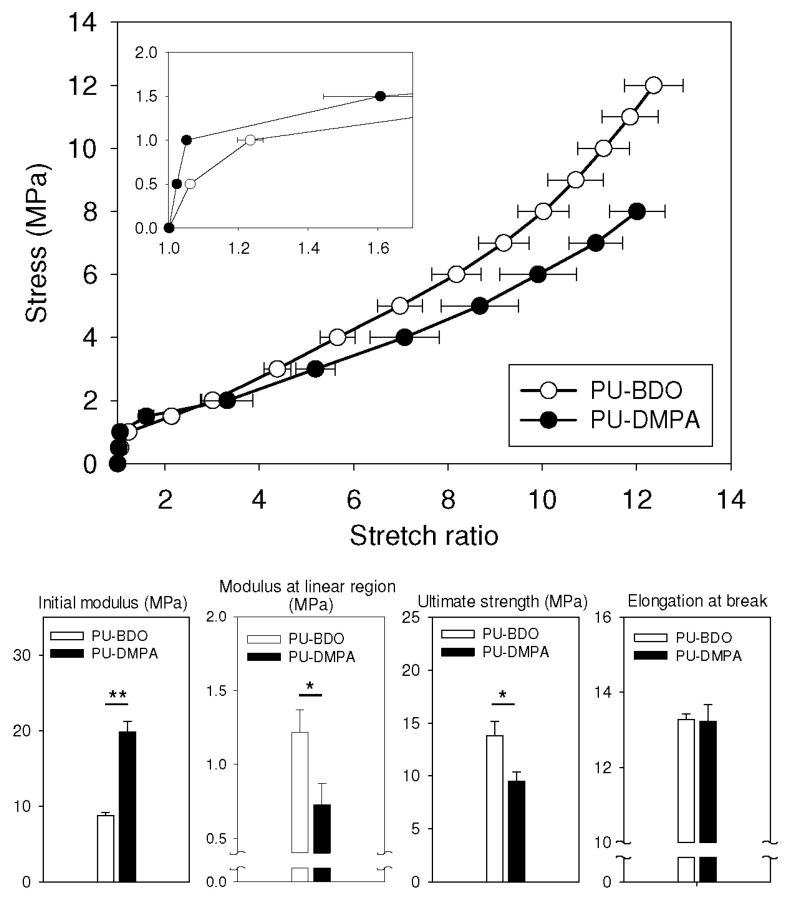
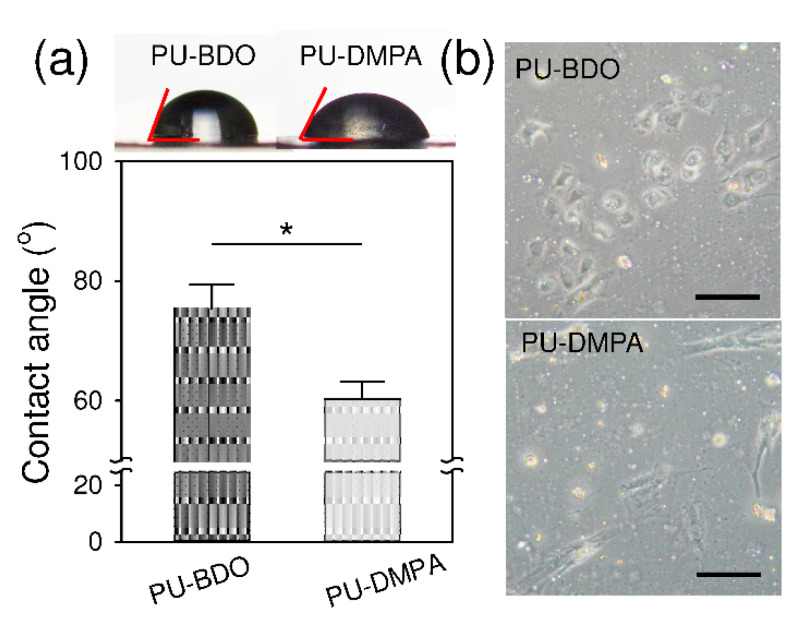
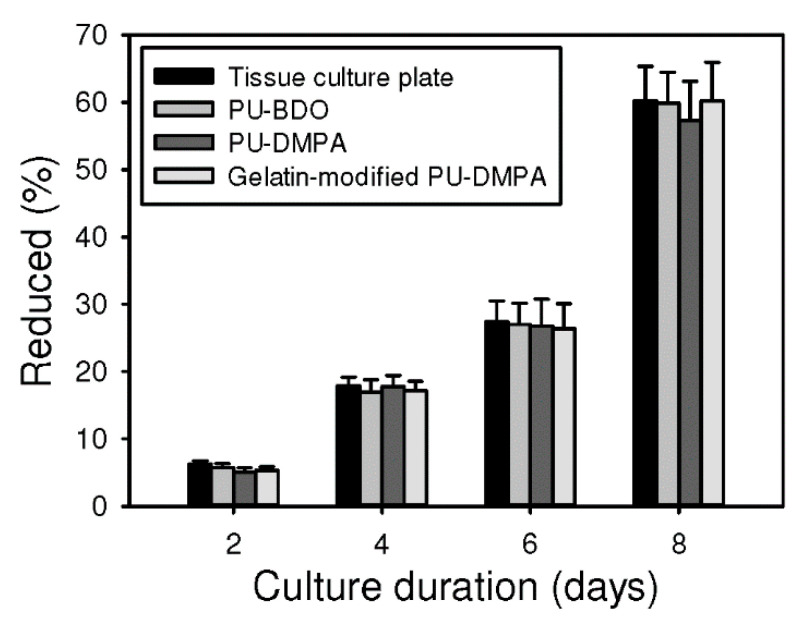
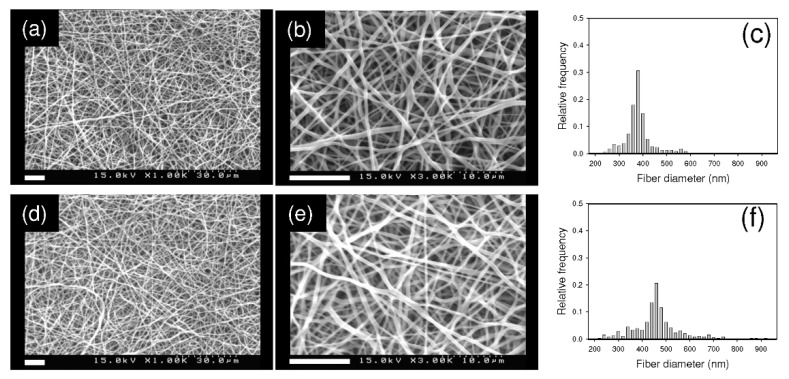
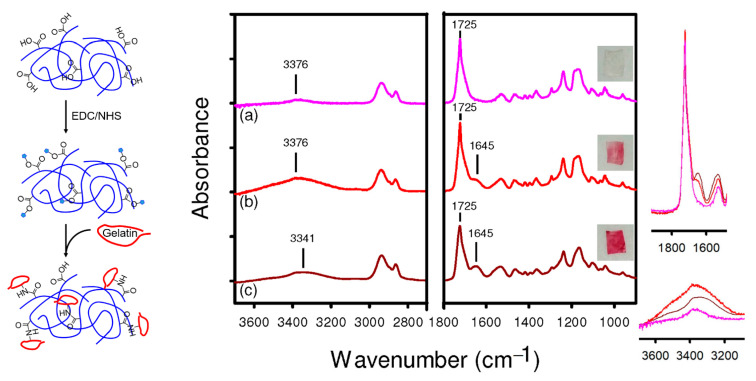
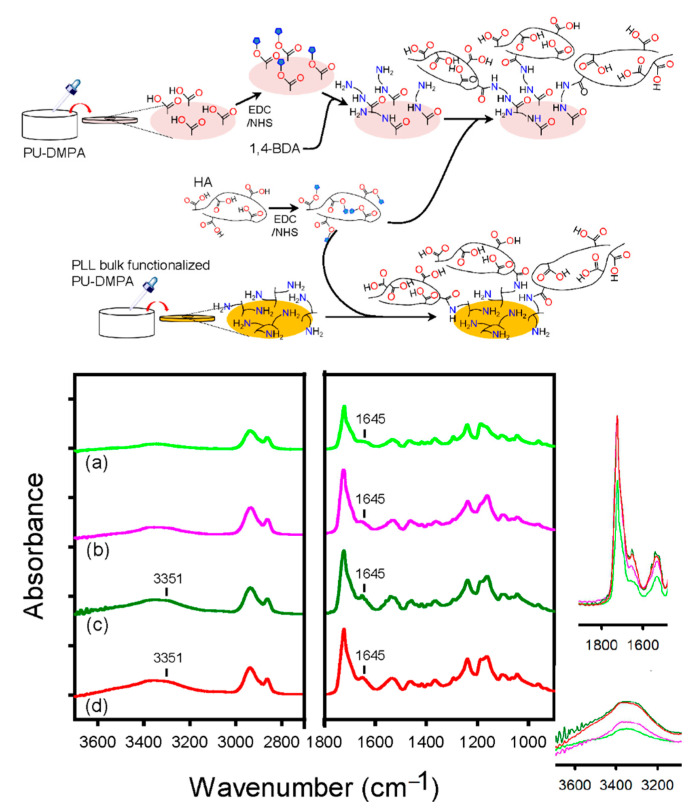
We synthesized a biodegradable, elastomeric, and functionalizable polyurethane (PU) that can be electrospun for use as a scaffold in soft tissue engineering. The PU was synthesized from polycaprolactone diol, hexamethylene diisocyanate, and dimethylolpropionic acid (DMPA) chain extender using two-step polymerization and designated as PU-DMPA. A control PU using 1,4-butanediol (1,4-BDO) as a chain extender was synthesized similarly and designated as PU-BDO. The chemical structure of the two PUs was verified by FT-IR and H-NMR. The PU-DMPA had a lower molecular weight than the PU-BDO (~16,700 Da vs. ~78,600 Da). The melting enthalpy of the PU-DMPA was greater than that of the PU-BDO. Both the PUs exhibited elastomeric behaviors with a comparable elongation at break (λ=L/L0= 13.2). The PU-DMPA had a higher initial modulus (19.8 MPa vs. 8.7 MPa) and a lower linear modulus (0.7 MPa vs. 1.2 MPa) and ultimate strength (9.5 MPa vs. 13.8 MPa) than the PU-BDO. The PU-DMPA had better hydrophilicity than the PU-BDO. Both the PUs displayed no cytotoxicity, although the adhesion of human umbilical artery smooth muscle cells on the PU-DMPA surface was better. Bead free electrospun PU-DMPA membranes with a narrow fiber diameter distribution were successfully fabricated. As a demonstration of its functionalizability, gelatin was conjugated to the electrospun PU-DMPA membrane using carbodiimide chemistry. Moreover, hyaluronic acid was immobilized on the amino-functionalized PU-DMPA. In conclusion, the PU-DMPA has the potential to be used as a scaffold material for soft tissue engineering.
我们合成了一种可生物降解、具有弹性且可功能化的聚氨酯(PU),它可以通过静电纺丝制成用于软组织工程的支架。该PU由聚己内酯二醇、六亚甲基二异氰酸酯和二羟甲基丙酸(DMPA)扩链剂通过两步聚合反应合成,命名为PU-DMPA。类似地,使用1,4-丁二醇(1,4-BDO)作为扩链剂合成了对照PU,命名为PU-BDO。通过傅里叶变换红外光谱(FT-IR)和氢核磁共振(H-NMR)对两种PU的化学结构进行了验证。PU-DMPA的分子量低于PU-BDO(约16,700 Da对约78,600 Da)。PU-DMPA的熔融焓大于PU-BDO。两种PU均表现出弹性行为,断裂伸长率相当(λ = L/L0 = 13.2)。PU-DMPA比PU-BDO具有更高的初始模量(19.8 MPa对8.7 MPa)、更低的线性模量(0.7 MPa对1.2 MPa)和极限强度(9.5 MPa对13.8 MPa)。PU-DMPA比PU-BDO具有更好的亲水性。两种PU均无细胞毒性,尽管人脐动脉平滑肌细胞在PU-DMPA表面的粘附性更好。成功制备了纤维直径分布窄的无珠静电纺PU-DMPA膜。作为其功能化的一个实例,使用碳二亚胺化学方法将明胶与静电纺PU-DMPA膜偶联。此外,透明质酸固定在氨基功能化的PU-DMPA上。总之,PU-DMPA有潜力用作软组织工程的支架材料。