Abu Hatab Assem, Liu Zhen, Nasser Asmaa, Esmat Abourehab
Department of Economics, Swedish University of Agricultural Sciences, 750 07 Uppsala, Sweden.
Department of Economics & Rural Development, Arish University, Al-Arish 45516, Egypt.
Animals (Basel). 2021 May 10;11(5):1354. doi: 10.3390/ani11051354.
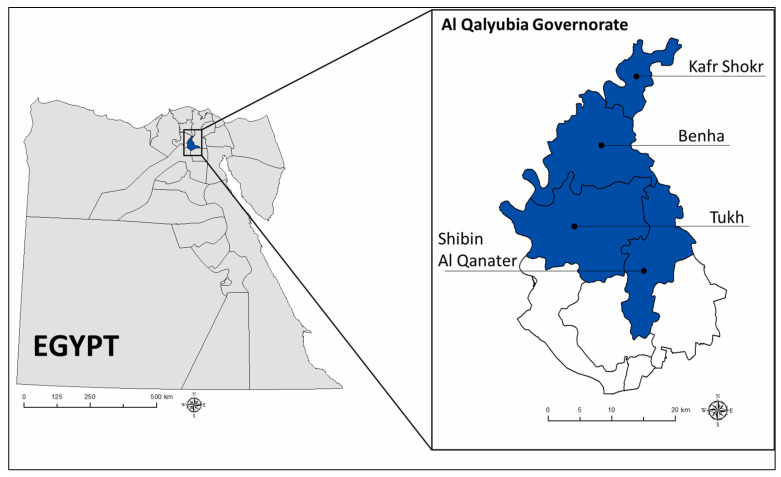
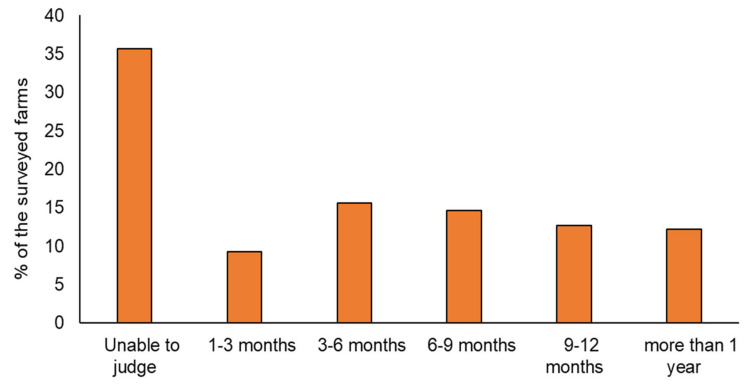
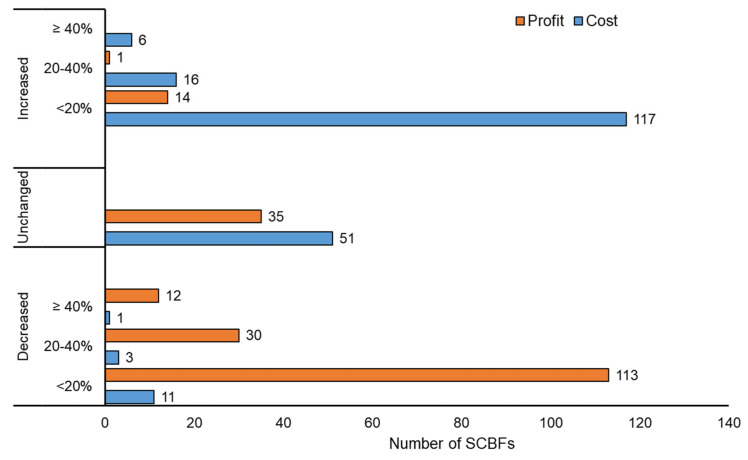
As in many other countries, the outbreak of the COVID-19 pandemic, together with subsequent government containment measures, posed significant challenges to small-scale broiler production systems in Egypt. Based on a survey of 205 specialist small-scale commercial broiler farms (SCBFs) consisting of both farm-based and household-based production systems, this study identifies the primary pathways through which COVID-19 has affected SCBFs and investigates the determinants of farm perception of these effects. A polychoric principal component analysis sorted the effects of the pandemic on the SCBFs surveyed into five categories, namely, input availability, production and operational costs, labor and human resources, consumer demand and sales, and farm finances. Next, five ordered logit models were constructed to examine the determinants of the SCBFs' perception of each category of these effects. Generally, the empirical results revealed that COVID-19 affected SCBFs heterogeneously based on their management and production systems and resource endowment. Female-led and household-based SCBFs perceived significantly greater COVID-19 effects. In contrast, individually owned farms and those with membership of poultry producer organizations and larger total asset values perceived fewer effects. In addition, SCBFs operating in both local and provincial markets were less likely to perceive negative effects from the pandemic on their broiler farming activities. Although the adoption of strict and immediate containment measures was essential for controlling the virus and protecting public health, our results indicate that policy responses to COVID-19 must consider the likely effects on small businesses such as SCBFs since disruptions to such socioeconomically important supply chains will intensify human suffering from the pandemic. Overall, our findings provide important implications for the formulation of effective strategies for mitigating the impact of COVID-19 on small-scale broiler production systems in Egypt and enhancing their preparedness and resilience to future pandemics, natural hazard risks, and market shocks.
与许多其他国家一样,新冠疫情的爆发以及随后政府的防控措施给埃及的小规模肉鸡生产系统带来了重大挑战。基于对205个专业小规模商业肉鸡养殖场(SCBFs)的调查,这些养殖场包括基于农场和基于家庭的生产系统,本研究确定了新冠疫情影响SCBFs的主要途径,并调查了农场对这些影响的认知的决定因素。多变量主成分分析将疫情对被调查的SCBFs的影响分为五类,即投入可得性、生产和运营成本、劳动力和人力资源、消费者需求和销售以及农场财务。接下来,构建了五个有序逻辑模型,以检验SCBFs对这些影响的每一类的认知的决定因素。总体而言,实证结果表明,新冠疫情根据SCBFs的管理和生产系统以及资源禀赋对其产生了不同程度的影响。由女性主导和基于家庭的SCBFs感受到的新冠疫情影响明显更大。相比之下,个体所有的农场以及那些加入了家禽生产者组织且总资产价值较大的农场感受到的影响较小。此外,在当地和省级市场运营的SCBFs不太可能感受到疫情对其肉鸡养殖活动的负面影响。尽管采取严格和立即的防控措施对于控制病毒和保护公众健康至关重要,但我们的结果表明,针对新冠疫情的政策应对必须考虑对诸如SCBFs这样的小企业可能产生的影响,因为对这种具有社会经济重要性的供应链的干扰将加剧疫情给人类带来的痛苦。总体而言,我们的研究结果为制定有效策略以减轻新冠疫情对埃及小规模肉鸡生产系统的影响,并增强其对未来疫情、自然灾害风险和市场冲击的准备和恢复能力提供了重要启示。