Department of Biology, College of Science, University of Bahrain, Sakhir 32038, Bahrain.
Int J Environ Res Public Health. 2021 May 18;18(10):5350. doi: 10.3390/ijerph18105350.
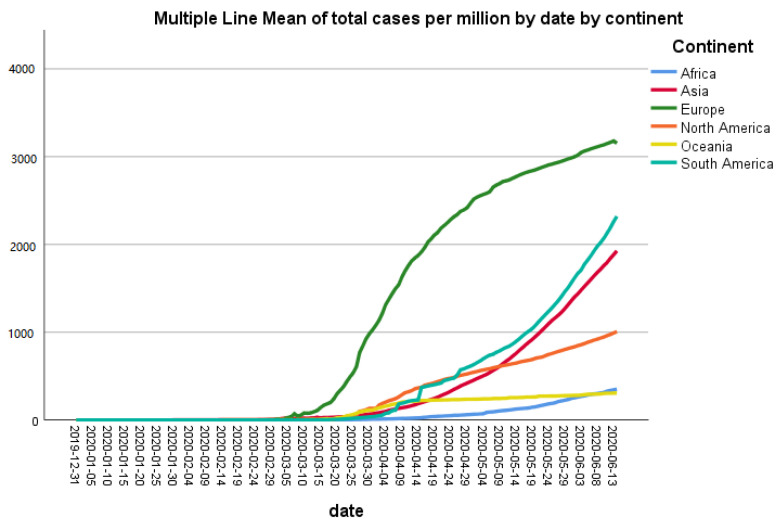
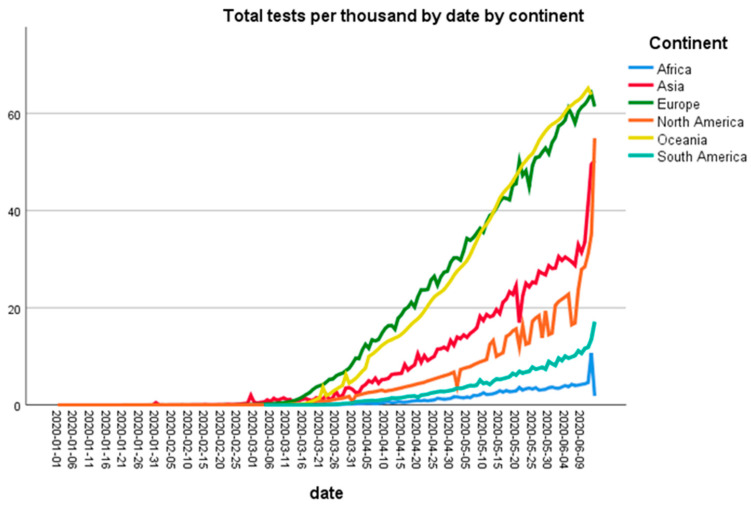
The severe acute respiratory syndrome coronavirus 2 (SARS-CoV-2) was first reported in China in December 2019 and has become a pandemic that resulted in more than one million deaths and infected over 35 million people worldwide. In this study, a continent-wide analysis of COVID-19 cases from 31st December 2019 to 14th June 2020 was performed along with socio-economic factors associated with mortality rates as well as a predicted future scenario of COVID-19 cases until the end of 2020.
Epidemiological and statistical tools such as linear regression, Pearson's correlation analysis, and the Auto Regressive Integrated Moving Average (ARIMA) model were used in this study.
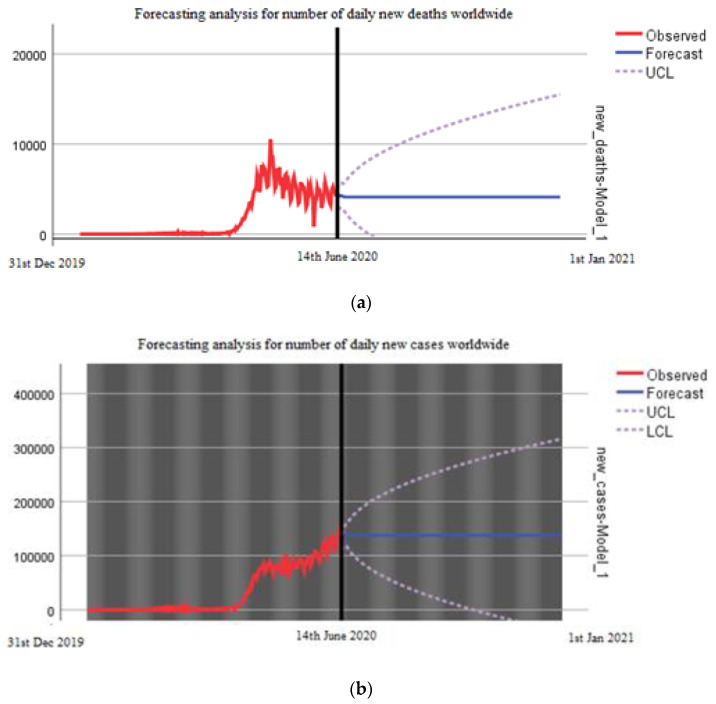
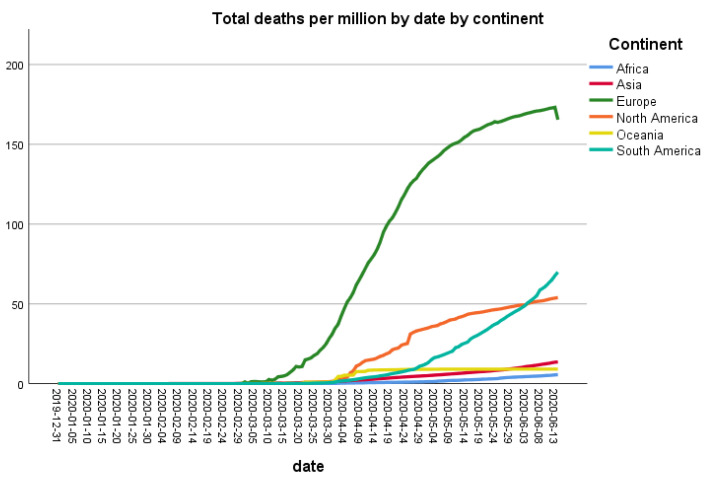
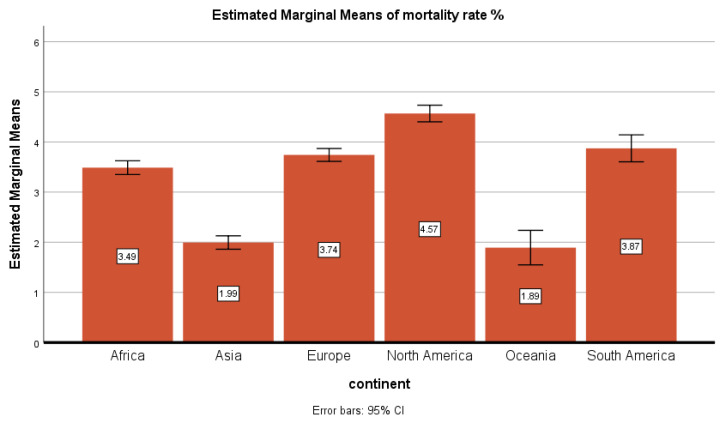
This study shows that the highest number of cases per million population was recorded in Europe, while the trend of new cases is lowest in Africa. The mortality rates in different continents were as follows: North America 4.57%, Europe 3.74%, South America 3.87%, Africa 3.49%, Oceania and Asia less than 2%. Linear regression analysis showed that hospital beds, GDP, diabetes, and higher average age were the significant risk factors for mortality in different continents. The forecasting analysis since the first case of COVID-19 until 1st January 2021 showed that the worst scenario at the end of 2020 predicts a range from 0 to 300,000 daily new cases and a range from 0 to 16,000 daily new deaths.
Epidemiological and clinical features of COVID-19 should be better defined, since they can play an import role in future strategies to control this pandemic.
严重急性呼吸综合征冠状病毒 2(SARS-CoV-2)于 2019 年 12 月在中国首次报告,并已成为一种大流行疾病,导致全球超过 100 万人死亡,超过 3500 万人感染。在这项研究中,对 2019 年 12 月 31 日至 2020 年 6 月 14 日期间的 COVID-19 病例进行了全大陆分析,并结合与死亡率相关的社会经济因素以及到 2020 年底 COVID-19 病例的预测未来情景。
本研究使用了流行病学和统计工具,如线性回归、皮尔逊相关分析和自回归综合移动平均(ARIMA)模型。
本研究表明,每百万人口的病例数最高的是欧洲,而非洲的新病例趋势最低。不同大陆的死亡率如下:北美 4.57%、欧洲 3.74%、南美 3.87%、非洲 3.49%、大洋洲和亚洲不到 2%。线性回归分析表明,医院床位、国内生产总值、糖尿病和较高的平均年龄是不同大陆死亡率的重要危险因素。自 COVID-19 首例病例至 2021 年 1 月 1 日的预测分析表明,2020 年底的最坏情景预测每日新增病例范围为 0 至 30 万,每日新增死亡人数范围为 0 至 1.6 万。
应更好地定义 COVID-19 的流行病学和临床特征,因为它们在未来控制这一大流行的策略中可以发挥重要作用。