Department of Clinical Medicine, Aarhus University Hospital, Palle Juul-Jensens Boulevard 165, 8200 Aarhus N, Denmark.
Department of Food Science, Faculty of Technical Sciences, Aarhus University, Agro Food Park 48, 8200 Aarhus N, Denmark.
Nutrients. 2021 May 26;13(6):1813. doi: 10.3390/nu13061813.
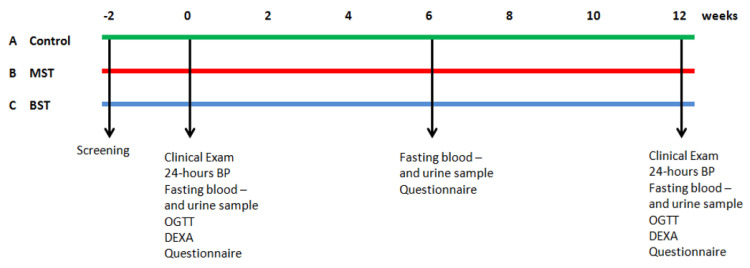
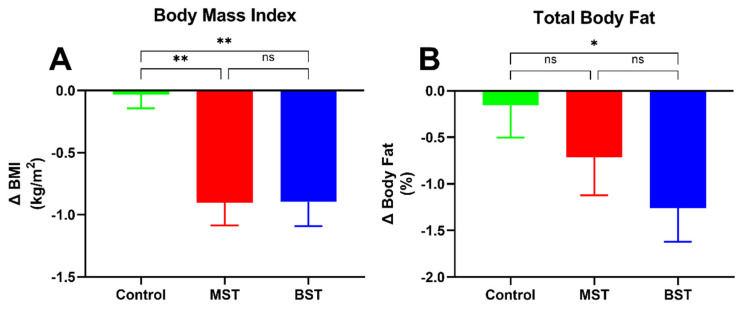
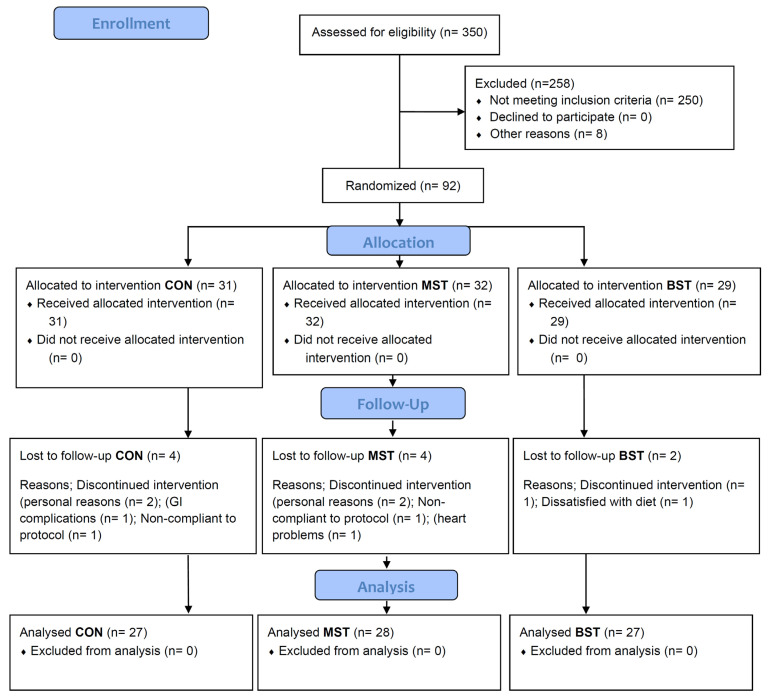
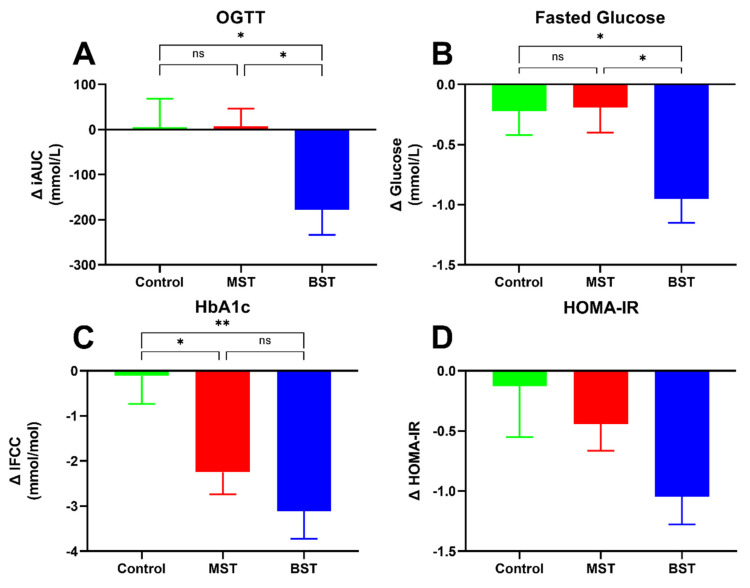
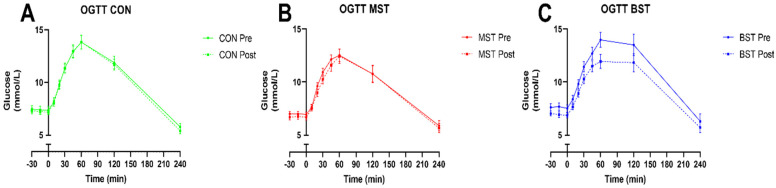
Vegetables rich in bitter-tasting phytochemicals may exert enhanced beneficial effects against key factors associated with type two diabetes (T2D). This study investigates whether selected cultivars of bitter and strong-tasting (BST) and root vegetables exert greater health benefits on T2D patients compared to equivalent modern mild and sweet tasting (MST) vegetables. A 12-week randomized, controlled, parallel intervention study involved 92 T2D patients, who were allocated three different diets: (1) 500 g daily of bitter and strong-tasting (BST) vegetables; (2) 500 g daily of mild and sweet-tasting (MST) vegetables; (3) 120 g daily MST normal diet (control). Both vegetable diets contained root vegetables and cabbages selected based on sensory differences and content of phytochemicals. Prior to and after the study, all participants underwent an oral glucose tolerance test (OGTT), 24 h blood pressure measurements, DEXA scans, and fasted blood samples. Both diets high in vegetables significantly reduced the participants' BMI, total body fat mass, and HbA1c levels compared to control, but in the BST group, significant differences were also found regarding incremental area under the curve glucose 240 min (OGTT) and fasting glucose levels. A high daily intake of root vegetables and cabbages showed significant health improvements in both vegetable groups. BST vegetables had the greatest impact on insulin sensitivity, body fat mass, and blood pressure compared to control; moreover, they further improved glycemic control compared to MST vegetables.
富含苦味植物化学物质的蔬菜可能对 2 型糖尿病(T2D)相关的关键因素产生更强的有益作用。本研究调查了与等效的现代淡而甜(MST)蔬菜相比,特定苦味和强烈味道(BST)蔬菜和根茎类蔬菜品种是否对 T2D 患者具有更大的健康益处。一项为期 12 周的随机、对照、平行干预研究涉及 92 名 T2D 患者,他们被分配到三种不同的饮食中:(1)每天 500 克苦味和强烈味道(BST)蔬菜;(2)每天 500 克淡而甜(MST)蔬菜;(3)每天 120 克 MST 正常饮食(对照)。两种蔬菜饮食均包含根茎类蔬菜和白菜,这些蔬菜是根据感官差异和植物化学物质含量选择的。在研究前后,所有参与者都进行了口服葡萄糖耐量试验(OGTT)、24 小时血压测量、DEXA 扫描和空腹血液样本采集。与对照相比,高蔬菜饮食均显著降低了参与者的 BMI、总体体脂肪量和 HbA1c 水平,但在 BST 组中,OGTT 240 分钟的血糖增量面积和空腹血糖水平也有显著差异。高每日根茎类蔬菜和白菜摄入量在两个蔬菜组中均显示出显著的健康改善。与对照相比,BST 蔬菜对胰岛素敏感性、体脂肪量和血压的影响最大;此外,与 MST 蔬菜相比,它们进一步改善了血糖控制。