Pakolpakçıl Ayben, Draczynski Zbigniew
Faculty of Material Technologies and Textile Design, Lodz University of Technology, 116 Żeromskiego Street, 90-924 Lodz, Poland.
Materials (Basel). 2021 May 24;14(11):2775. doi: 10.3390/ma14112775.
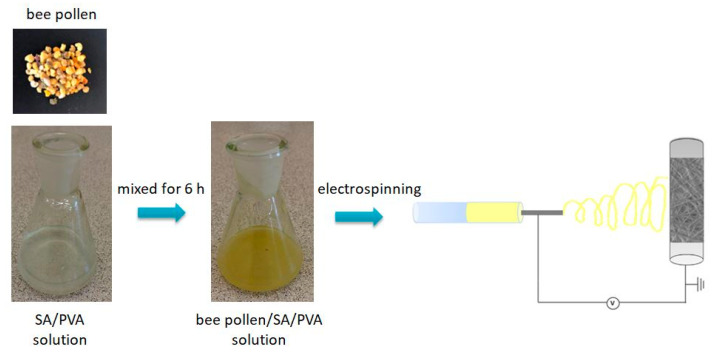
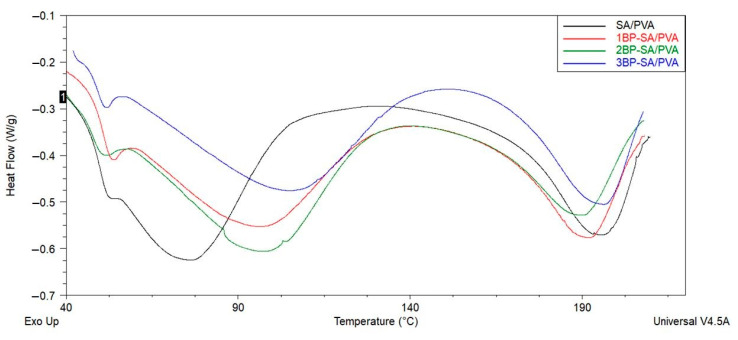
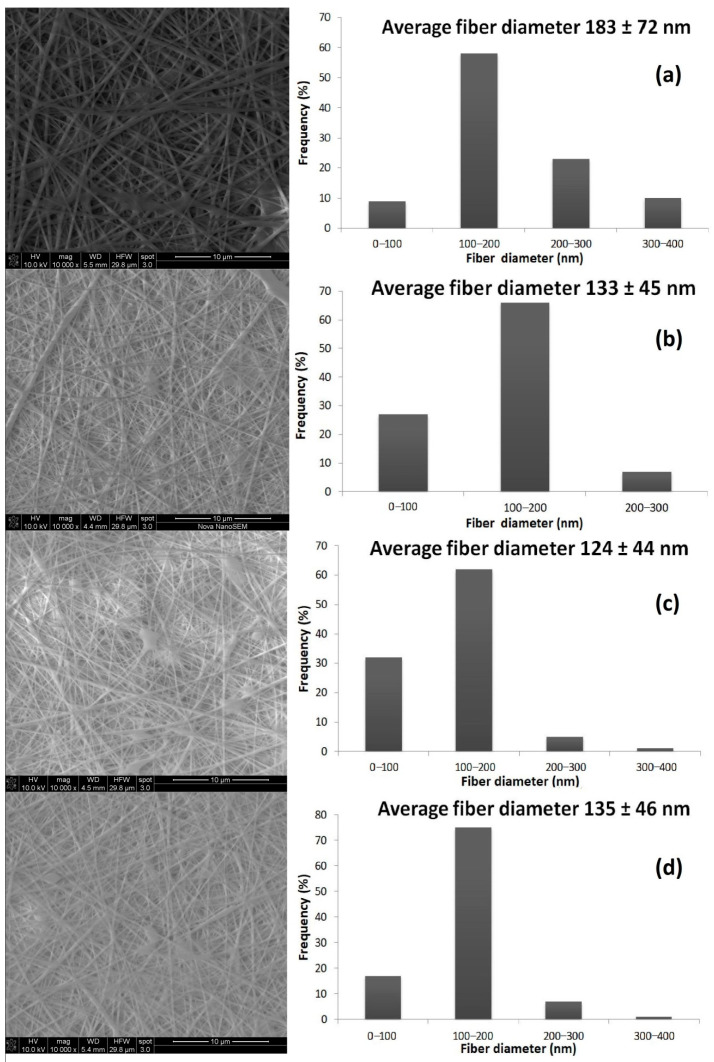
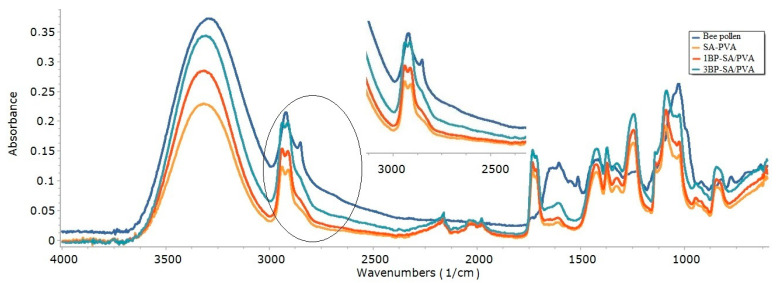
Green electrospun materials are gaining popularity in the quest for a more sustainable environment for human life. Bee pollen (BP) is a valuable apitherapeutic product and has many beneficial features such as antioxidant and antibacterial properties. Alginate is a natural and low-cost polymer. Both natural materials show good compatibility with human tissues for biomedical applications and have no toxic effect on the environment. In this study, bee pollen-loaded sodium alginate and polyvinyl alcohol (SA/PVA) nanofibrous mats were fabricated by the electrospinning technique. The green electrospun nanofibrous mats were analyzed by scanning electron microscopy (SEM), Fourier transforms infrared spectroscopy (FTIR), and differential scanning calorimeter (DSC). According to the findings of the study, the toxin-free electrospinning method is suitable for producing green nanomaterial. Because of the useful properties of the bee pollen and the favorable biocompatibility of the alginate fibers, the bee pollen-loaded SA/PVA electrospun mats have the potential for use in a variety of biomedical applications.
在寻求为人类生活创造更可持续环境的过程中,绿色电纺材料越来越受到关注。蜂花粉(BP)是一种有价值的蜂疗产品,具有许多有益特性,如抗氧化和抗菌性能。藻酸盐是一种天然且低成本的聚合物。这两种天然材料在生物医学应用中与人体组织都表现出良好的相容性,并且对环境没有毒性作用。在本研究中,通过静电纺丝技术制备了负载蜂花粉的海藻酸钠和聚乙烯醇(SA/PVA)纳米纤维垫。采用扫描电子显微镜(SEM)、傅里叶变换红外光谱(FTIR)和差示扫描量热仪(DSC)对绿色电纺纳米纤维垫进行了分析。根据该研究的结果,无毒的静电纺丝方法适用于生产绿色纳米材料。由于蜂花粉的有益特性以及藻酸盐纤维良好的生物相容性,负载蜂花粉的SA/PVA电纺垫具有在多种生物医学应用中使用的潜力。