Puppo Francesca, Sadegh Sanaz, Trujillo Cleber A, Thunemann Martin, Campbell Evan P, Vandenberghe Matthieu, Shan Xiwei, Akkouh Ibrahim A, Miller Evan W, Bloodgood Brenda L, Silva Gabriel A, Dale Anders M, Einevoll Gaute T, Djurovic Srdjan, Andreassen Ole A, Muotri Alysson R, Devor Anna
Department of Pediatrics/Rady Children's Hospital San Diego, School of Medicine, University of California, San Diego, La Jolla, CA, United States.
Department of Neurosciences, University of California, San Diego, La Jolla, CA, United States.
Front Cell Neurosci. 2021 May 28;15:671549. doi: 10.3389/fncel.2021.671549. eCollection 2021.
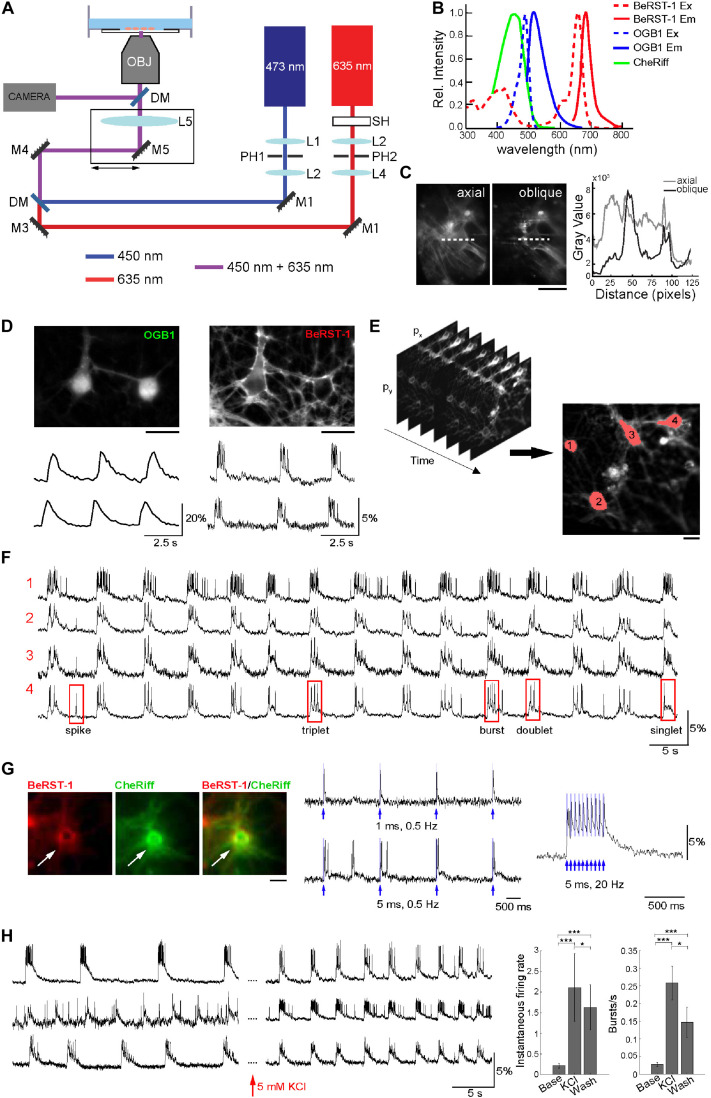
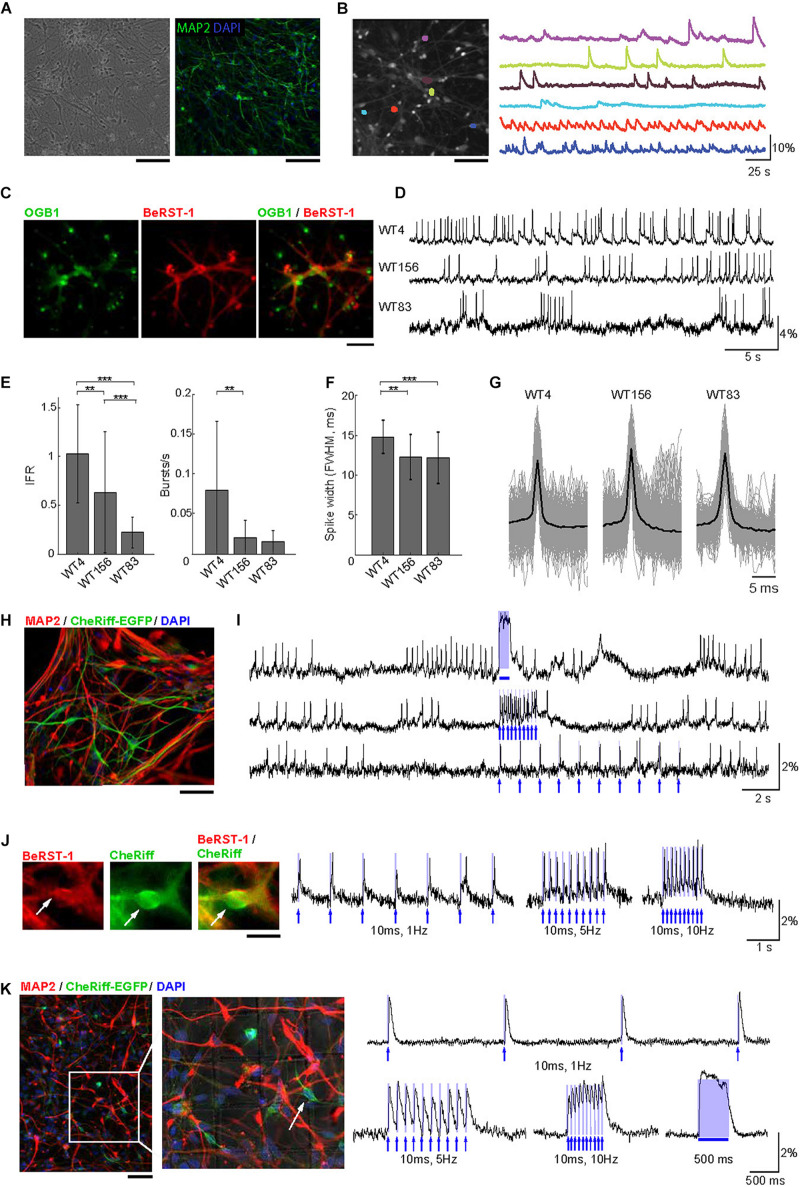
Voltage imaging and "all-optical electrophysiology" in human induced pluripotent stem cell (hiPSC)-derived neurons have opened unprecedented opportunities for high-throughput phenotyping of activity in neurons possessing unique genetic backgrounds of individual patients. While prior all-optical electrophysiology studies relied on genetically encoded voltage indicators, here, we demonstrate an alternative protocol using a synthetic voltage sensor and genetically encoded optogenetic actuator that generate robust and reproducible results. We demonstrate the functionality of this method by measuring spontaneous and evoked activity in three independent hiPSC-derived neuronal cell lines with distinct genetic backgrounds.
在人类诱导多能干细胞(hiPSC)衍生的神经元中进行电压成像和“全光学电生理学”,为对具有个体患者独特遗传背景的神经元活动进行高通量表型分析开辟了前所未有的机会。虽然先前的全光学电生理学研究依赖于基因编码电压指示剂,但在此我们展示了一种使用合成电压传感器和基因编码光遗传学致动器的替代方案,该方案能产生稳健且可重复的结果。我们通过测量三种具有不同遗传背景的独立hiPSC衍生神经元细胞系中的自发活动和诱发活动,证明了该方法的功能。