The Cardiovascular Center, First Hospital of Jilin University, Changchun, China.
Front Endocrinol (Lausanne). 2021 Jun 10;12:683151. doi: 10.3389/fendo.2021.683151. eCollection 2021.
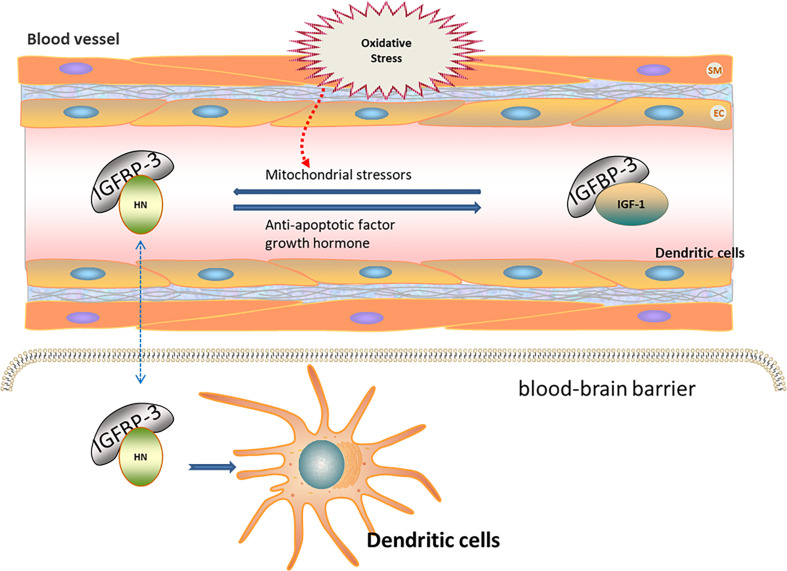
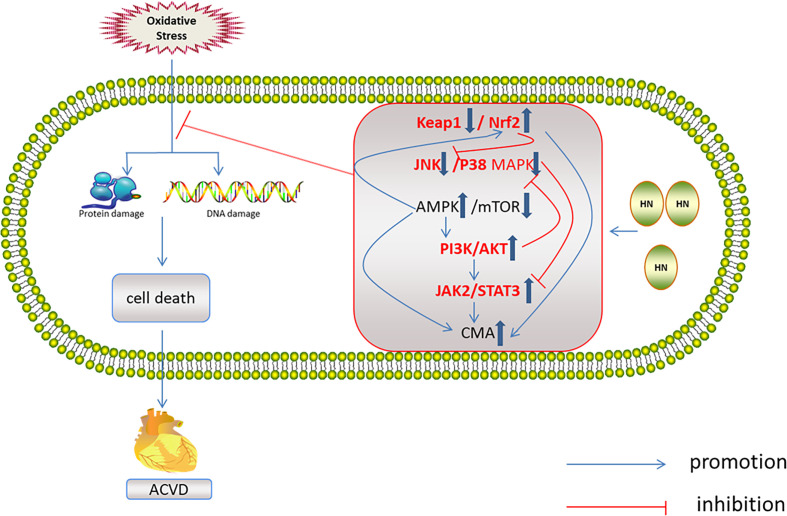
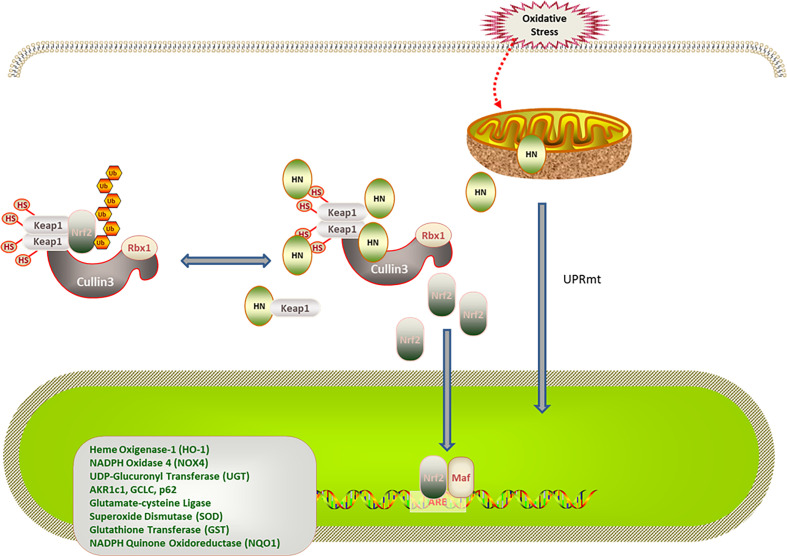
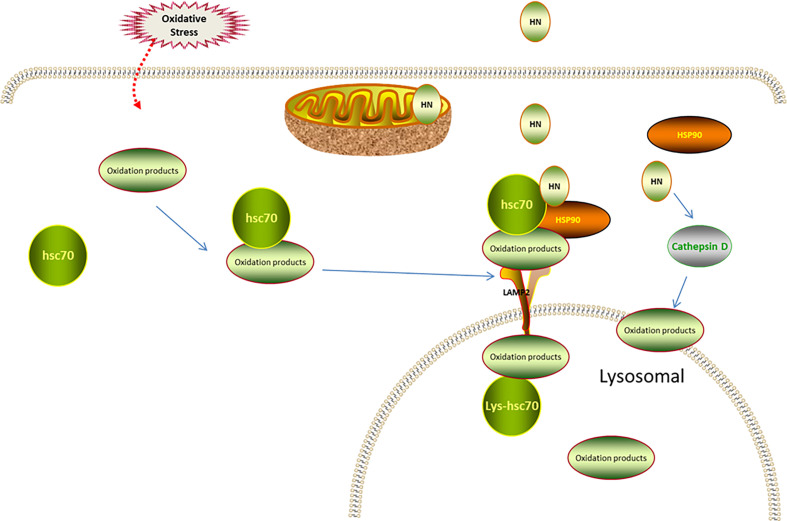
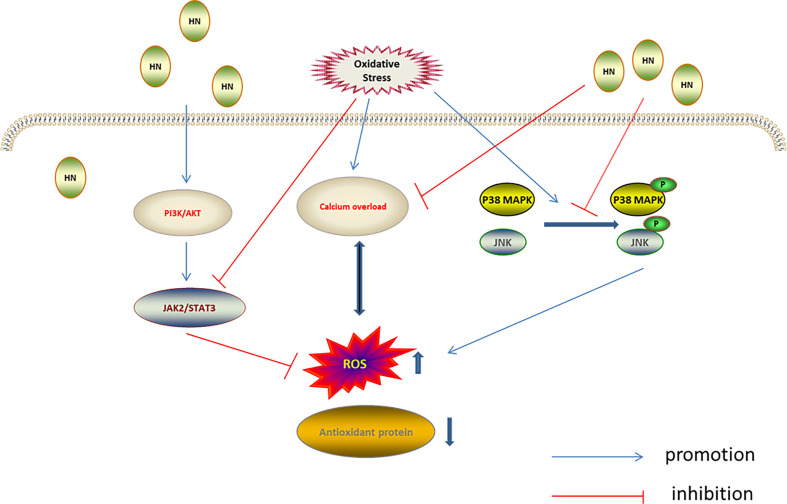
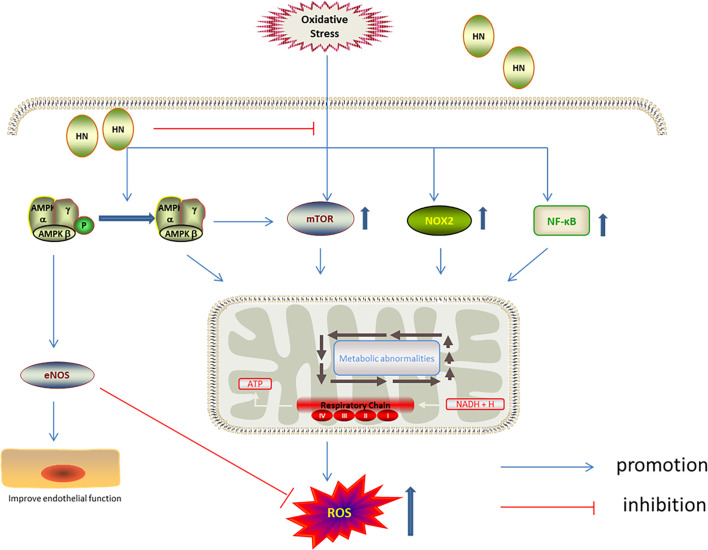
Physiological reactive oxygen species (ROS) are important regulators of intercellular signal transduction. Oxidative and antioxidation systems maintain a dynamic balance under physiological conditions. Increases in ROS levels destroy the dynamic balance, leading to oxidative stress damage. Oxidative stress is involved in the pathogenesis of aging-related cardiovascular diseases (ACVD), such as atherosclerosis, myocardial infarction, and heart failure, by contributing to apoptosis, hypertrophy, and fibrosis. Oxidative phosphorylation in mitochondria is the main source of ROS. Increasing evidence demonstrates the relationship between ACVD and humanin (HN), an endogenous peptide encoded by mitochondrial DNA. HN protects cardiomyocytes, endothelial cells, and fibroblasts from oxidative stress, highlighting its protective role in atherosclerosis, ischemia-reperfusion injury, and heart failure. Herein, we reviewed the signaling pathways associated with the HN effects on redox signals, including Kelch-like ECH-associated protein 1 (Keap1)/nuclear factor erythroid 2-related factor 2 (Nrf2), chaperone-mediated autophagy (CMA), c-jun NH2 terminal kinase (JNK)/p38 mitogen-activated protein kinase (p38 MAPK), adenosine monophosphate-activated protein kinase (AMPK), and phosphoinositide 3-kinase (PI3K)/protein kinase B (Akt)-Janus kinase 2 (JAK2)/signal transducer and activator of transcription 3 (STAT3). Furthermore, we discussed the relationship among HN, redox signaling pathways, and ACVD. Finally, we propose that HN may be a candidate drug for ACVD.
生理活性氧(ROS)是细胞间信号转导的重要调节因子。氧化和抗氧化系统在生理条件下维持着动态平衡。ROS 水平的升高破坏了这种动态平衡,导致氧化应激损伤。氧化应激通过促进细胞凋亡、肥大和纤维化,参与了与衰老相关的心血管疾病(ACVD)的发病机制,如动脉粥样硬化、心肌梗死和心力衰竭。线粒体中的氧化磷酸化是 ROS 的主要来源。越来越多的证据表明,ACVD 与人源素(HN)之间存在关联,HN 是一种由线粒体 DNA 编码的内源性肽。HN 可保护心肌细胞、内皮细胞和成纤维细胞免受氧化应激,突出了其在动脉粥样硬化、缺血再灌注损伤和心力衰竭中的保护作用。在此,我们综述了与 HN 对氧化还原信号的作用相关的信号通路,包括 Kelch 样 ECH 相关蛋白 1(Keap1)/核因子红细胞 2 相关因子 2(Nrf2)、伴侣介导的自噬(CMA)、c-jun NH2 末端激酶(JNK)/p38 丝裂原活化蛋白激酶(p38 MAPK)、腺苷单磷酸激活蛋白激酶(AMPK)和磷酸肌醇 3-激酶(PI3K)/蛋白激酶 B(Akt)-Janus 激酶 2(JAK2)/信号转导和转录激活因子 3(STAT3)。此外,我们讨论了 HN、氧化还原信号通路和 ACVD 之间的关系。最后,我们提出 HN 可能是 ACVD 的候选药物。