Casey-Bryars Miriam, Griffin John, McAloon Conor, Byrne Andrew, Madden Jamie, Mc Evoy David, Collins Áine, Hunt Kevin, Barber Ann, Butler Francis, Lane Elizabeth Ann, O'Brien Kirsty, Wall Patrick, Walsh Kieran, More Simon John
Centre for Veterinary Epidemiology and Risk Analysis, University College Dublin, Dublin, Ireland
Centre for Veterinary Epidemiology and Risk Analysis, University College Dublin, Dublin, Ireland.
BMJ Open. 2021 Jun 28;11(6):e041240. doi: 10.1136/bmjopen-2020-041240.
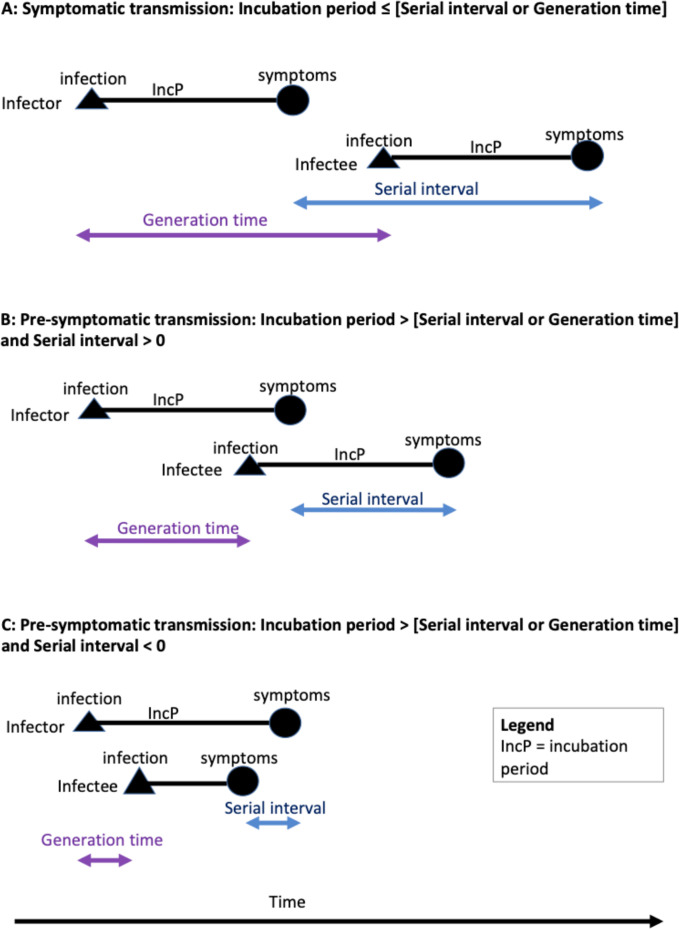
To estimate the proportion of presymptomatic transmission of SARS-CoV-2 infection that can occur, and the timing of transmission relative to symptom onset.
SETTING/DESIGN: Secondary analysis of international published data.
Meta-analysis of COVID-19 incubation period and a rapid review of serial interval and generation time, which are published separately.
Data from China, the Islamic Republic of Iran, Italy, Republic of Korea, Singapore and Vietnam from December 2019 to May 2020.
Simulations were generated of incubation period and of serial interval or generation time. From these, transmission times relative to symptom onset, and the proportion of presymptomatic transmission, were estimated.
Transmission time of SARS-CoV-2 relative to symptom onset and proportion of presymptomatic transmission.
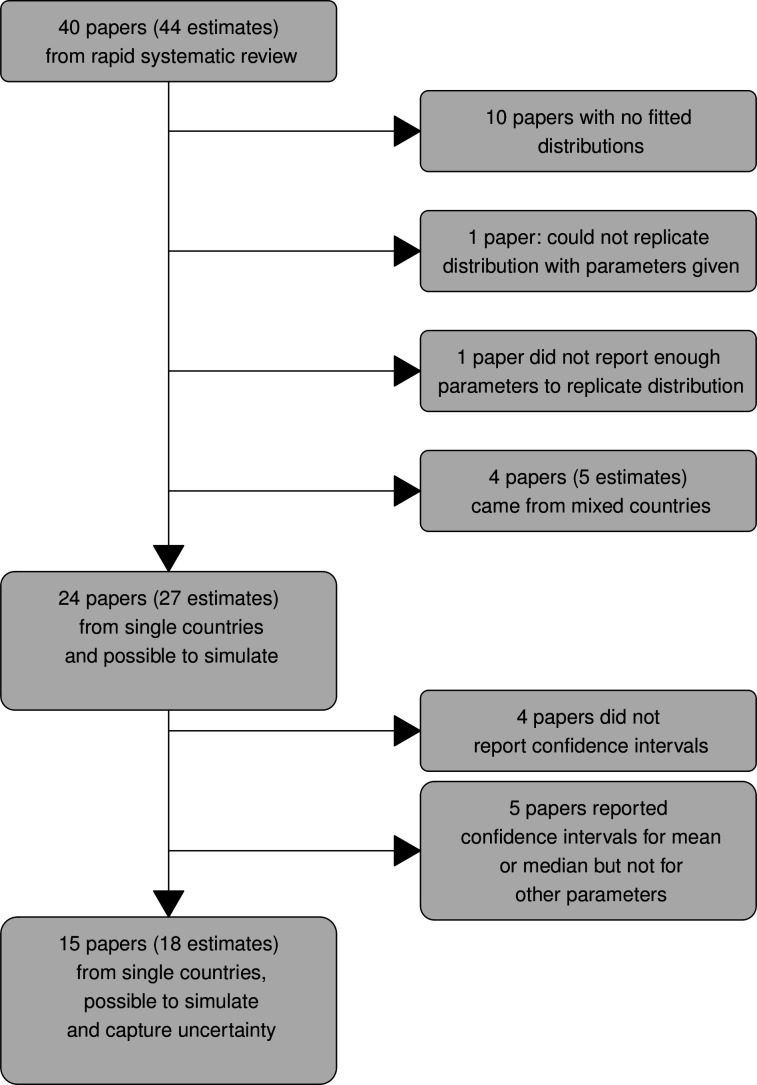
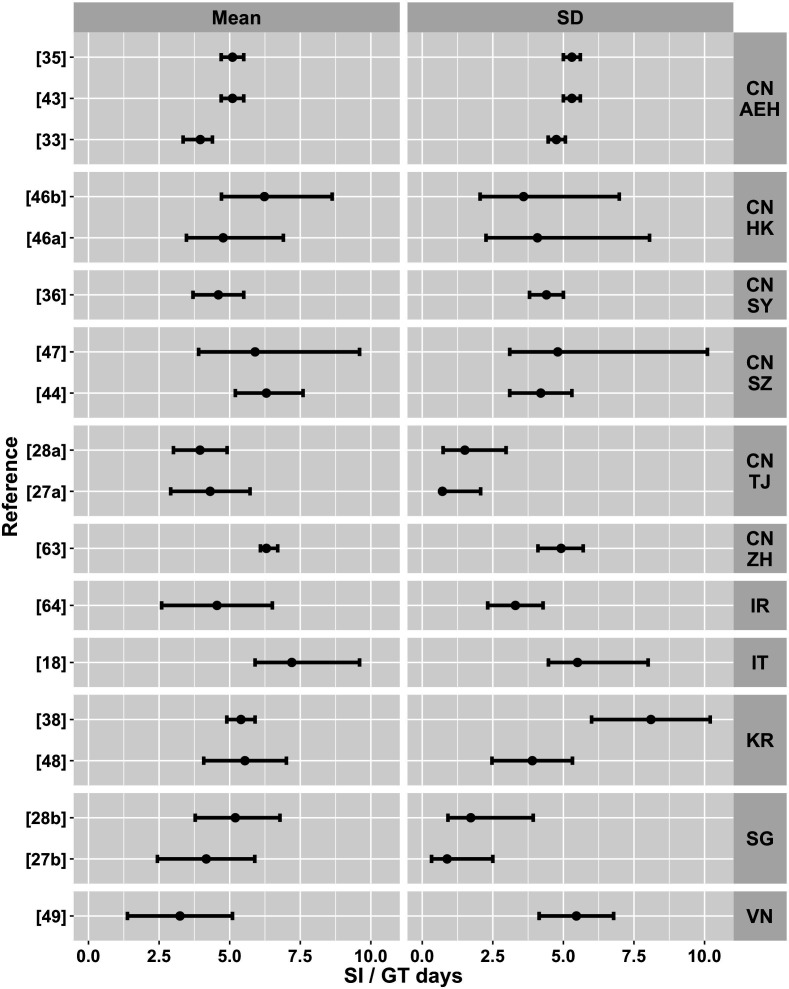
Based on 18 serial interval/generation time estimates from 15 papers, mean transmission time relative to symptom onset ranged from -2.6 (95% CI -3.0 to -2.1) days before infector symptom onset to 1.4 (95% CI 1.0 to 1.8) days after symptom onset. The proportion of presymptomatic transmission ranged from 45.9% (95% CI 42.9% to 49.0%) to 69.1% (95% CI 66.2% to 71.9%).
There is substantial potential for presymptomatic transmission of SARS-CoV-2 across a range of different contexts. This highlights the need for rapid case detection, contact tracing and quarantine. The transmission patterns that we report reflect the combination of biological infectiousness and transmission opportunities which vary according to context.
估计新冠病毒感染无症状传播的比例以及相对于症状出现的传播时间。
设置/设计:对国际已发表数据进行二次分析。
对新冠病毒潜伏期的荟萃分析以及对系列间隔时间和代际时间的快速综述,二者分别发表。
2019年12月至2020年5月来自中国、伊朗伊斯兰共和国、意大利、韩国、新加坡和越南的数据。
对潜伏期以及系列间隔时间或代际时间进行模拟。据此估计相对于症状出现的传播时间以及无症状传播的比例。
新冠病毒相对于症状出现的传播时间以及无症状传播的比例。
基于15篇论文中的18个系列间隔时间/代际时间估计值,相对于感染症状出现的平均传播时间范围为感染前2.6天(95%置信区间 -3.0至 -2.1)至感染症状出现后1.4天(95%置信区间1.0至1.8)。无症状传播的比例范围为45.9%(95%置信区间42.9%至49.0%)至69.1%(95%置信区间66.2%至71.9%)。
在一系列不同情况下,新冠病毒无症状传播具有很大可能性。这凸显了快速病例检测、接触者追踪和隔离的必要性。我们报告的传播模式反映了生物传染性和传播机会的综合情况,而这会因情况而异。