Small Michael, Cavanagh David
Integrated Energy Pty Ltd.ComoWA6152Australia.
Complex Systems GroupDepartment of Mathematics and StatisticsThe University of Western AustraliaPerthWA6009Australia.
IEEE Access. 2020 Jun 10;8:109719-109731. doi: 10.1109/ACCESS.2020.3001298. eCollection 2020.
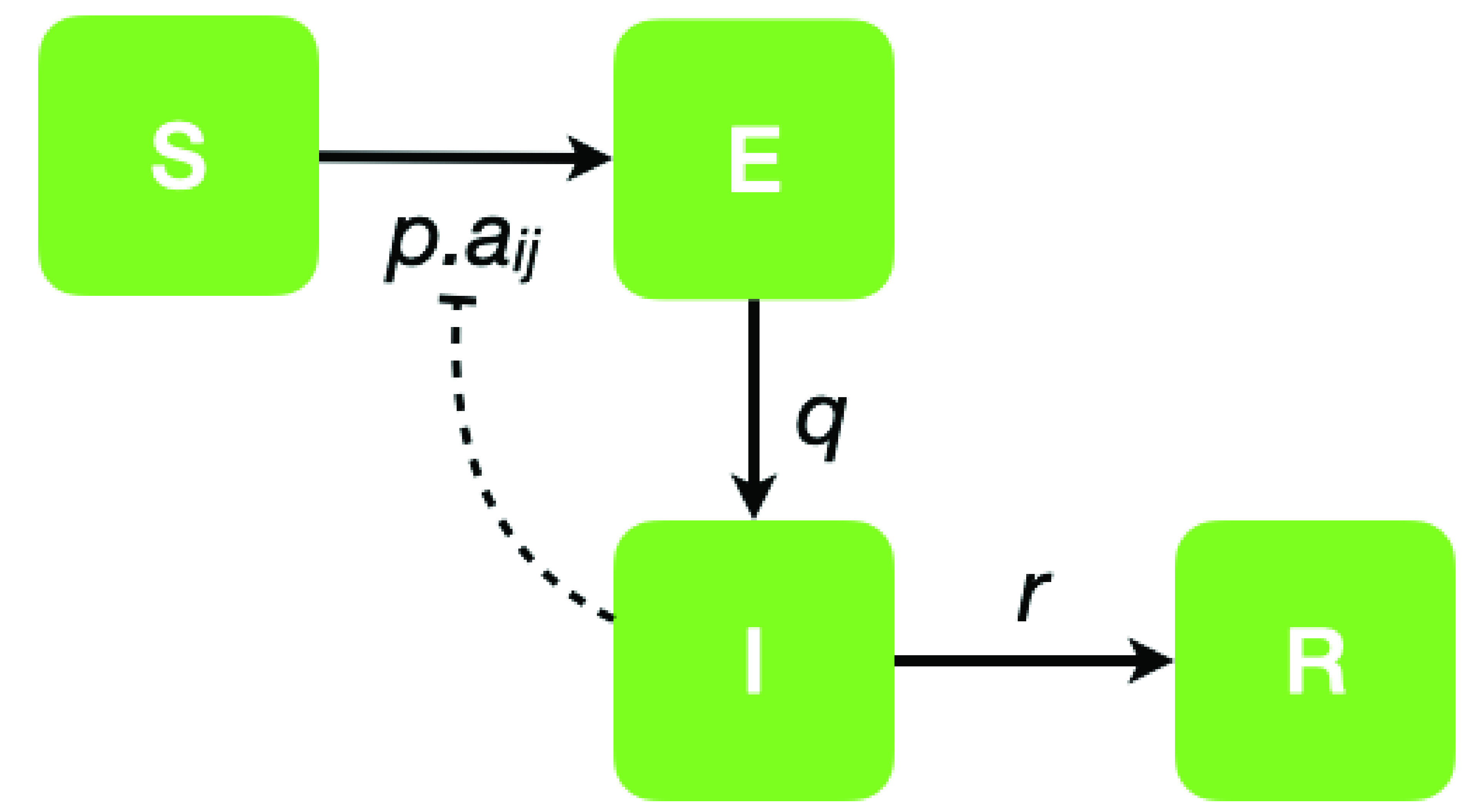
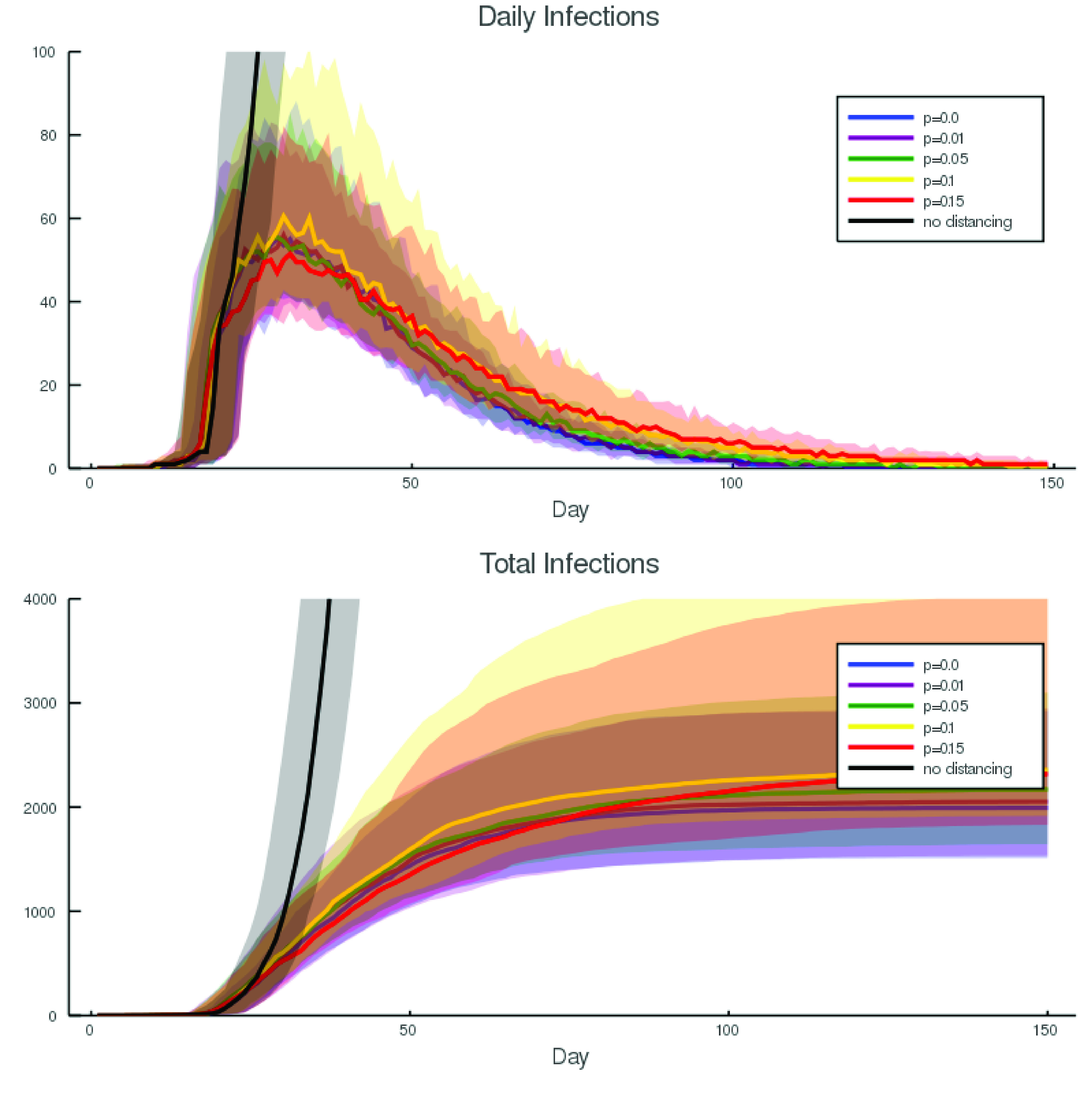
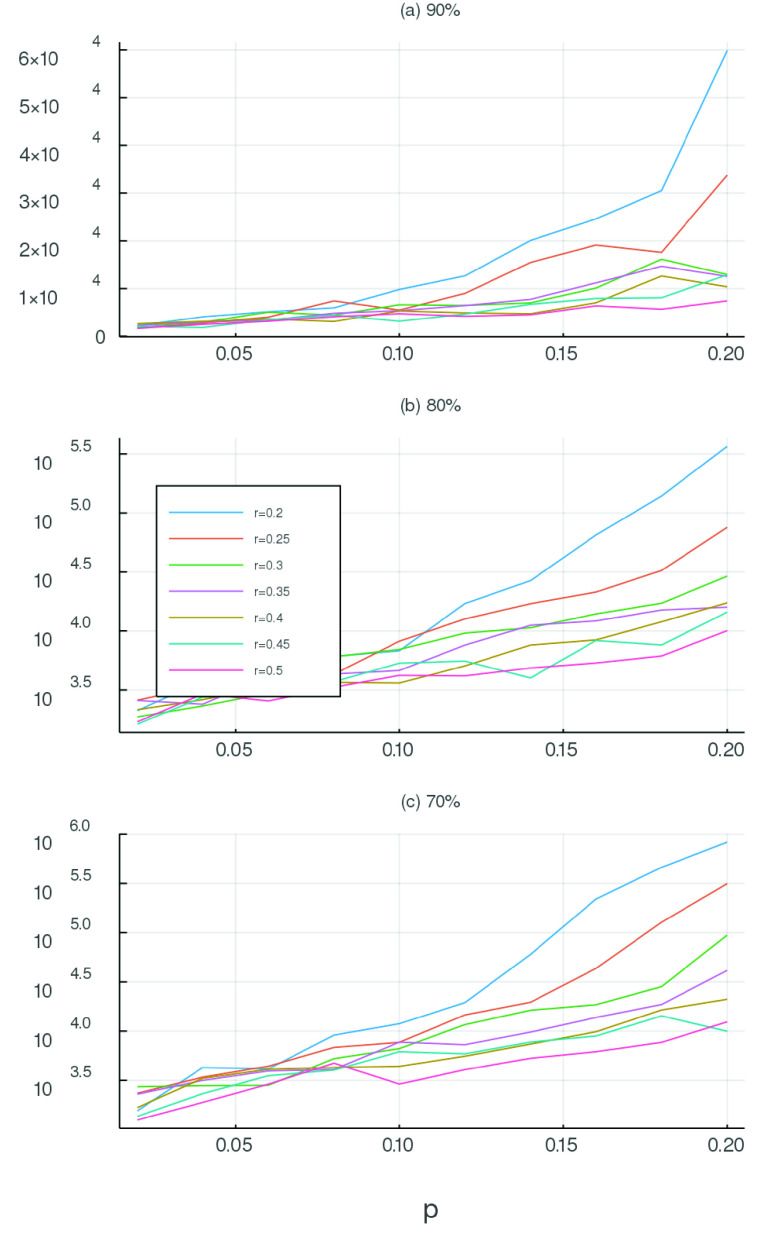
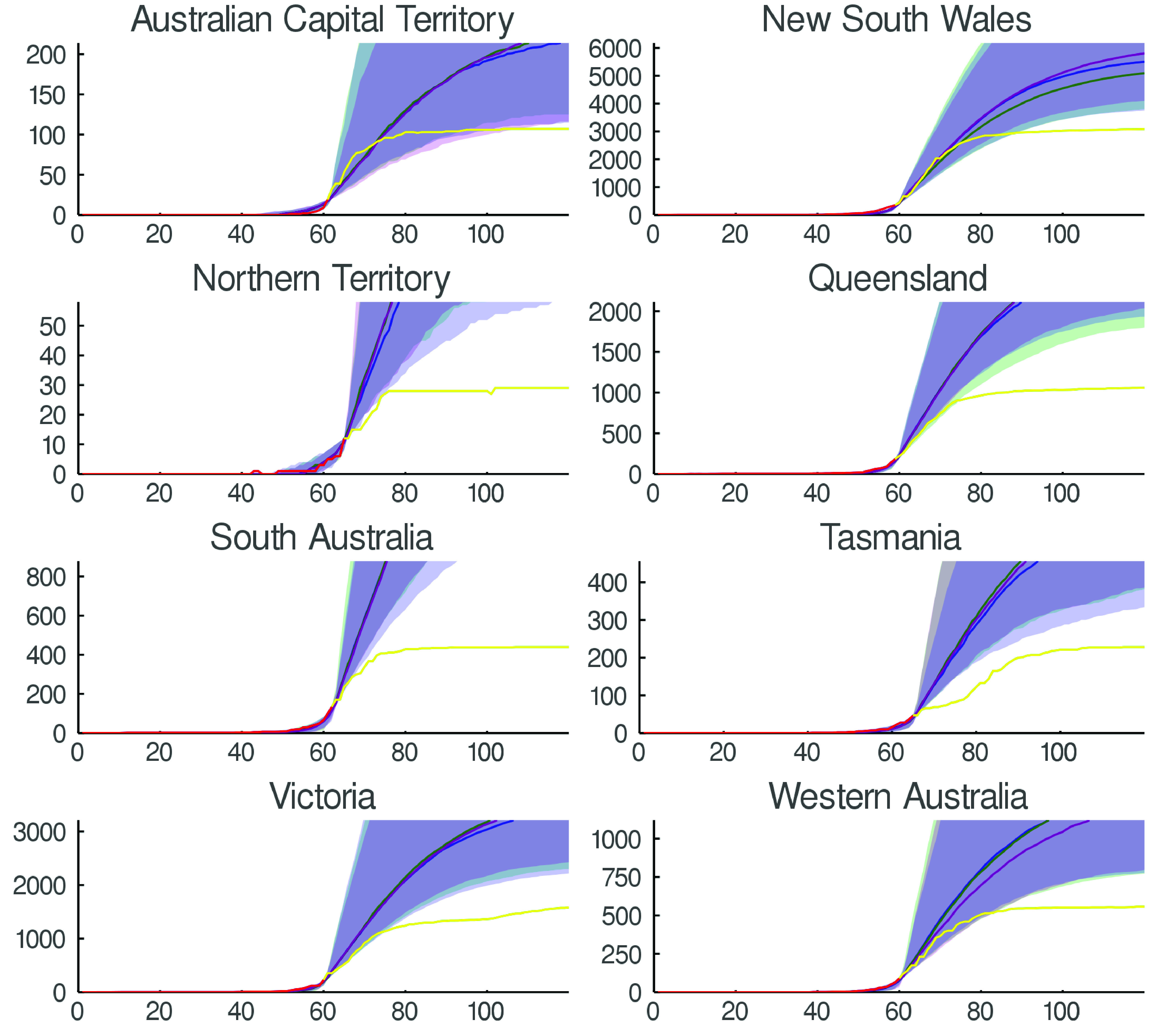
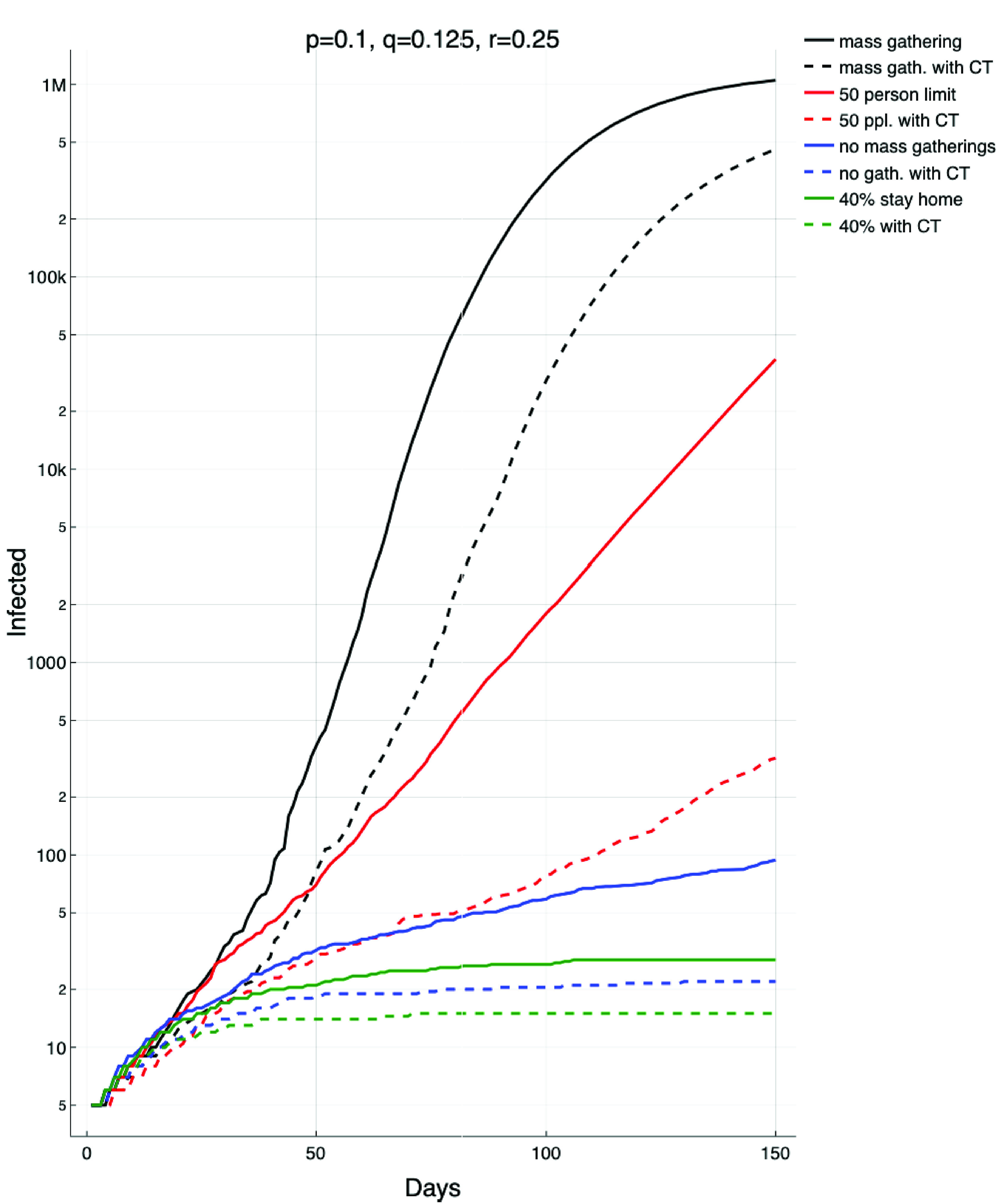
We show that precise knowledge of epidemic transmission parameters is not required to build an informative model of the spread of disease. We propose a detailed model of the topology of the contact network under various external control regimes and demonstrate that this is sufficient to capture the salient dynamical characteristics and to inform decisions. Contact between individuals in the community is characterised by a contact graph, the structure of that contact graph is selected to mimic community control measures. Our model of city-level transmission of an infectious agent (SEIR model) characterises spread via a (a) scale-free contact network (no control); (b) a random graph (elimination of mass gatherings); and (c) small world lattice (partial to full lockdown-"social" distancing). This model exhibits good qualitative agreement between simulation and data from the 2020 pandemic spread of a novel coronavirus. Estimates of the relevant rate parameters of the SEIR model are obtained and we demonstrate the robustness of our model predictions under uncertainty of those estimates. The social context and utility of this work is identified, contributing to a highly effective pandemic response in Western Australia.
我们表明,构建疾病传播的信息模型并不需要精确了解疫情传播参数。我们提出了一个在各种外部控制机制下接触网络拓扑结构的详细模型,并证明这足以捕捉显著的动态特征并为决策提供信息。社区中个体之间的接触由接触图来表征,该接触图的结构被选择用来模拟社区控制措施。我们的传染性病原体城市层面传播模型(SEIR模型)通过以下方式来表征传播:(a) 无标度接触网络(无控制);(b) 随机图(取消大规模聚集);以及 (c) 小世界晶格(部分到完全封锁——“社交”距离)。该模型在模拟结果与2020年新型冠状病毒大流行传播数据之间展现出良好的定性一致性。获得了SEIR模型相关速率参数的估计值,并且我们证明了在这些估计值存在不确定性的情况下我们模型预测的稳健性。确定了这项工作的社会背景和效用,为西澳大利亚州高效应对疫情做出了贡献。