Poh Ashleigh R, Ernst Matthias
Olivia Newton-John Cancer Research Institute and La Trobe University School of Cancer Medicine, Heidelberg, VIC 3084, Australia.
Cancers (Basel). 2021 Jun 8;13(12):2860. doi: 10.3390/cancers13122860.
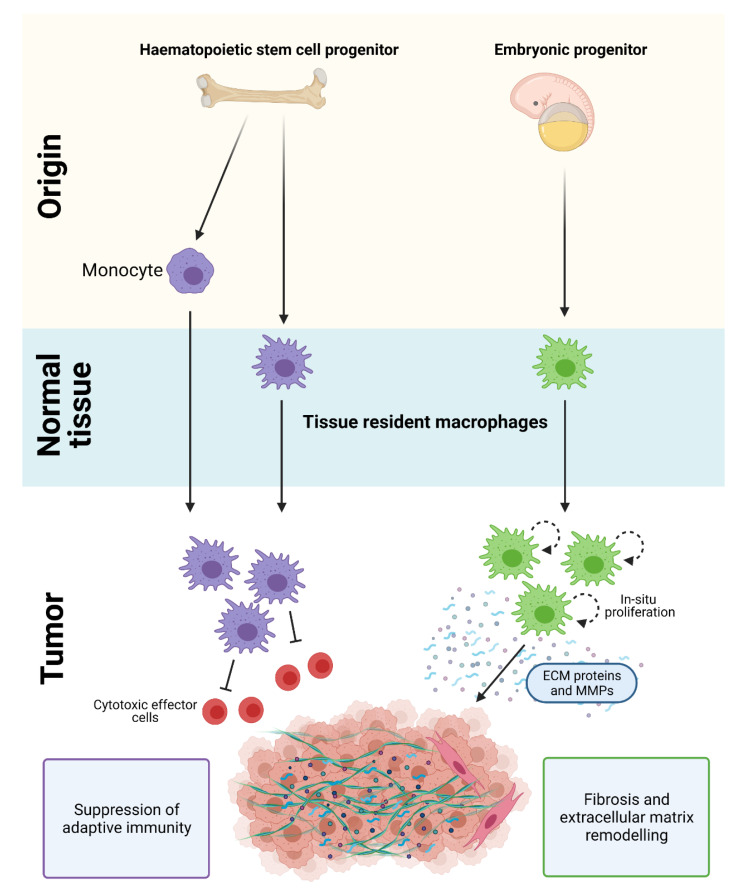
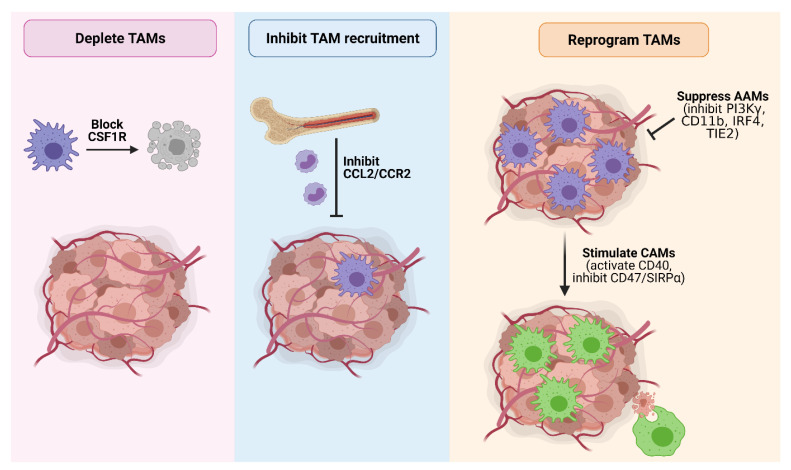
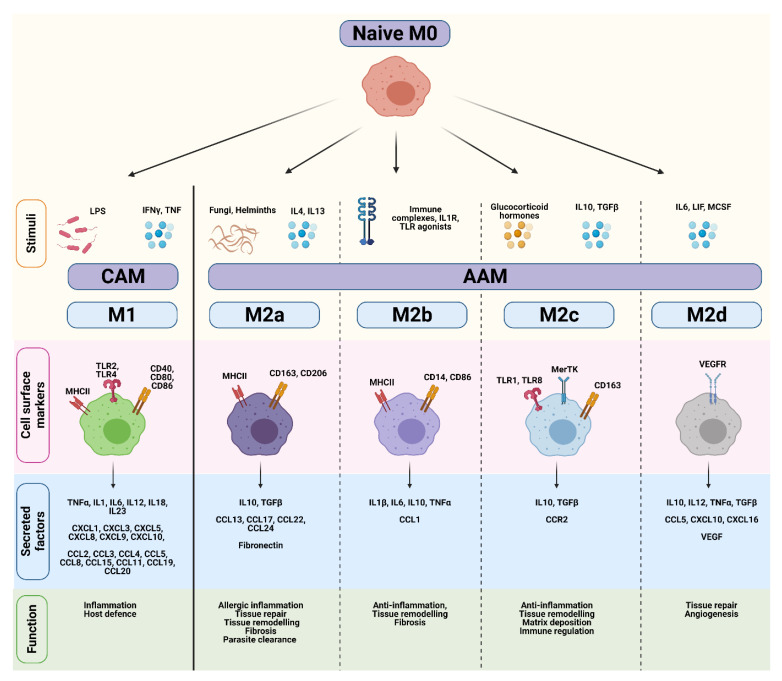
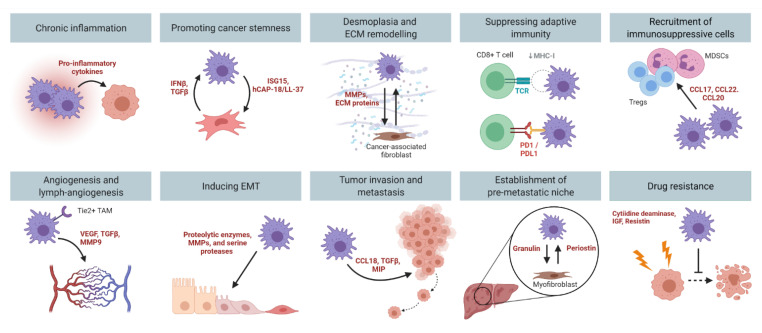
Pancreatic ductal adenocarcinoma (PDAC) is an aggressive malignant disease with a 5-year survival rate of less than 10%. Macrophages are one of the earliest infiltrating cells in the pancreatic tumor microenvironment, and are associated with an increased risk of disease progression, recurrence, metastasis, and shorter overall survival. Pre-clinical studies have demonstrated an unequivocal role of macrophages in PDAC by contributing to chronic inflammation, cancer cell stemness, desmoplasia, immune suppression, angiogenesis, invasion, metastasis, and drug resistance. Several macrophage-targeting therapies have also been investigated in pre-clinical models, and include macrophage depletion, inhibiting macrophage recruitment, and macrophage reprogramming. However, the effectiveness of these drugs in pre-clinical models has not always translated into clinical trials. In this review, we discuss the molecular mechanisms that underpin macrophage heterogeneity within the pancreatic tumor microenvironment, and examine the contribution of macrophages at various stages of PDAC progression. We also provide a comprehensive update of macrophage-targeting therapies that are currently undergoing clinical evaluation, and discuss clinical challenges associated with these treatment modalities in human PDAC patients.
胰腺导管腺癌(PDAC)是一种侵袭性恶性疾病,5年生存率低于10%。巨噬细胞是胰腺肿瘤微环境中最早浸润的细胞之一,与疾病进展、复发、转移风险增加以及总生存期缩短相关。临床前研究已明确巨噬细胞在PDAC中发挥的作用,包括促成慢性炎症、癌细胞干性、促纤维增生、免疫抑制、血管生成、侵袭、转移和耐药性。在临床前模型中也对几种靶向巨噬细胞的疗法进行了研究,包括巨噬细胞清除、抑制巨噬细胞募集和巨噬细胞重编程。然而,这些药物在临床前模型中的有效性并不总能转化为临床试验的成功。在本综述中,我们讨论了胰腺肿瘤微环境中巨噬细胞异质性的分子机制,并研究了巨噬细胞在PDAC进展各个阶段的作用。我们还全面更新了目前正在进行临床评估的靶向巨噬细胞疗法,并讨论了这些治疗方式在人类PDAC患者中面临的临床挑战。