• 文献检索
  • 文档翻译
  • 深度研究
  • 学术资讯
  • Suppr Zotero 插件Zotero 插件
  • 邀请有礼
  • 套餐&价格
  • 历史记录
应用&插件
Suppr Zotero 插件Zotero 插件浏览器插件Mac 客户端Windows 客户端微信小程序
定价
高级版会员购买积分包购买API积分包
服务
文献检索文档翻译深度研究API 文档MCP 服务
关于我们
关于 Suppr公司介绍联系我们用户协议隐私条款
关注我们

Suppr 超能文献

核心技术专利:CN118964589B侵权必究
粤ICP备2023148730 号-1Suppr @ 2026

文献检索

告别复杂PubMed语法,用中文像聊天一样搜索,搜遍4000万医学文献。AI智能推荐,让科研检索更轻松。

立即免费搜索

文件翻译

保留排版,准确专业,支持PDF/Word/PPT等文件格式,支持 12+语言互译。

免费翻译文档

深度研究

AI帮你快速写综述,25分钟生成高质量综述,智能提取关键信息,辅助科研写作。

立即免费体验

通过物联网和深度神经网络实现心电图监测和分类。

Integrating ECG Monitoring and Classification via IoT and Deep Neural Networks.

机构信息

Department of Anesthesiology, E-DA Cancer Hospital, I-Shou University, No. 65, Yida Road, Jiao-su Village, Yan-chao District, Kaohsiung City 82445, Taiwan.

Department of Health and Beauty, Shu-Zen Junior College of Medicine and Management, No. 452, Huanqiu Road, Luzhu District, Kaohsiung City 82144, Taiwan.

出版信息

Biosensors (Basel). 2021 Jun 8;11(6):188. doi: 10.3390/bios11060188.

DOI:10.3390/bios11060188
PMID:34201215
原文链接:https://pmc.ncbi.nlm.nih.gov/articles/PMC8226863/
Abstract

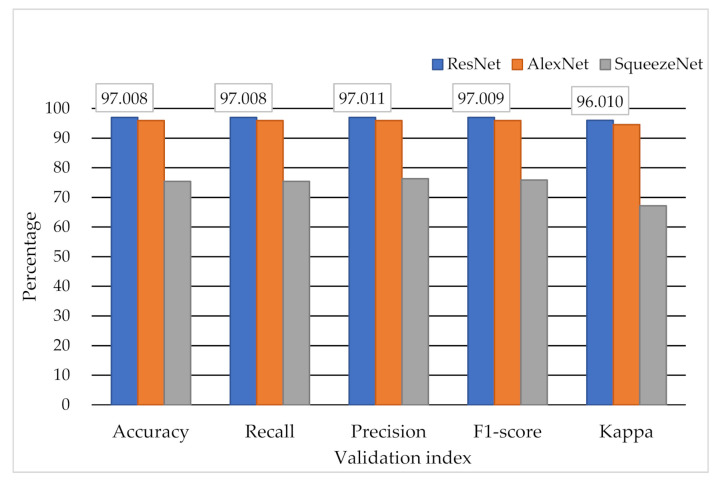
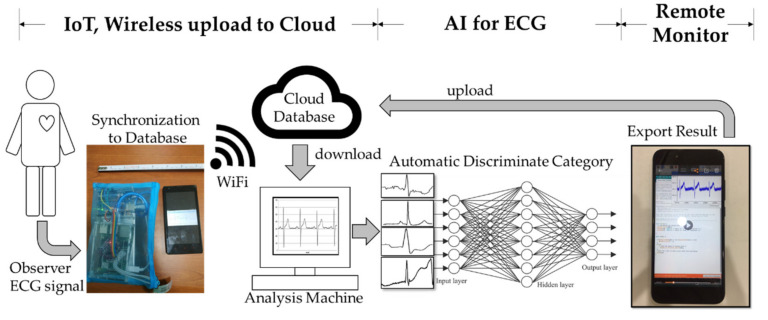
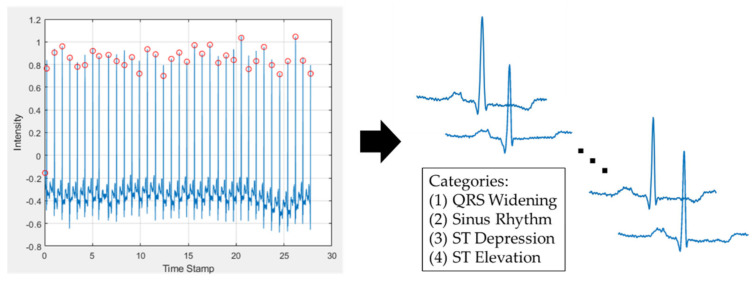
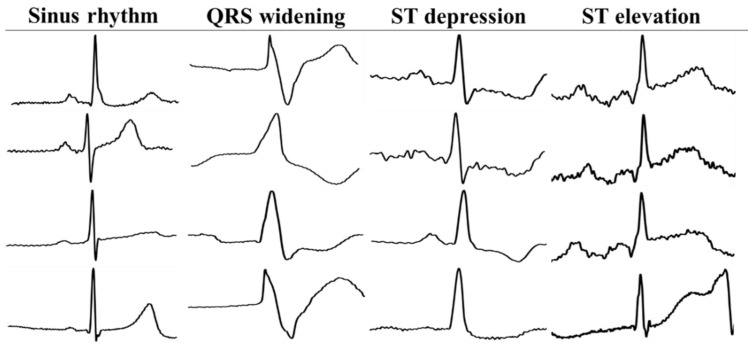
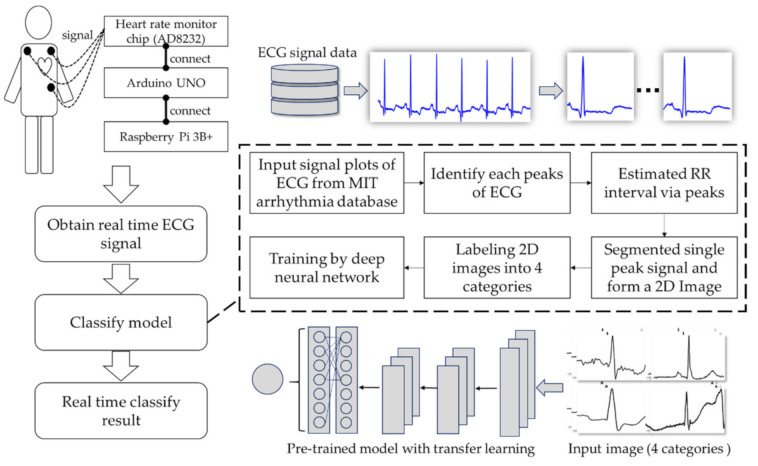
Anesthesia assessment is most important during surgery. Anesthesiologists use electrocardiogram (ECG) signals to assess the patient's condition and give appropriate medications. However, it is not easy to interpret the ECG signals. Even physicians with more than 10 years of clinical experience may still misjudge. Therefore, this study uses convolutional neural networks to classify ECG image types to assist in anesthesia assessment. The research uses Internet of Things (IoT) technology to develop ECG signal measurement prototypes. At the same time, it classifies signal types through deep neural networks, divided into QRS widening, sinus rhythm, ST depression, and ST elevation. Three models, ResNet, AlexNet, and SqueezeNet, are developed with 50% of the training set and test set. Finally, the accuracy and kappa statistics of ResNet, AlexNet, and SqueezeNet in ECG waveform classification were (0.97, 0.96), (0.96, 0.95), and (0.75, 0.67), respectively. This research shows that it is feasible to measure ECG in real time through IoT and then distinguish four types through deep neural network models. In the future, more types of ECG images will be added, which can improve the real-time classification practicality of the deep model.

摘要

麻醉评估在手术过程中最为重要。麻醉师使用心电图 (ECG) 信号来评估患者的状况并给予适当的药物。然而,解释 ECG 信号并不容易。即使是拥有超过 10 年临床经验的医生也可能会误判。因此,本研究使用卷积神经网络对 ECG 图像类型进行分类,以协助麻醉评估。研究使用物联网 (IoT) 技术开发 ECG 信号测量原型。同时,通过深度神经网络对信号类型进行分类,分为 QRS 增宽、窦性节律、ST 段压低和 ST 段抬高。使用 50%的训练集和测试集开发了 ResNet、AlexNet 和 SqueezeNet 三个模型。最后,ResNet、AlexNet 和 SqueezeNet 在 ECG 波形分类中的准确率和 Kappa 统计分别为(0.97,0.96)、(0.96,0.95)和(0.75,0.67)。本研究表明,通过物联网实时测量 ECG,然后通过深度神经网络模型区分四种类型是可行的。未来,将添加更多类型的 ECG 图像,以提高深度模型的实时分类实用性。
https://cdn.ncbi.nlm.nih.gov/pmc/blobs/b419/8226863/18eafd2b4239/biosensors-11-00188-g005.jpg
https://cdn.ncbi.nlm.nih.gov/pmc/blobs/b419/8226863/c753536f5911/biosensors-11-00188-g001.jpg
https://cdn.ncbi.nlm.nih.gov/pmc/blobs/b419/8226863/1e2494635e32/biosensors-11-00188-g002.jpg
https://cdn.ncbi.nlm.nih.gov/pmc/blobs/b419/8226863/b9dd2795735c/biosensors-11-00188-g003.jpg
https://cdn.ncbi.nlm.nih.gov/pmc/blobs/b419/8226863/e5b9c36a42d2/biosensors-11-00188-g004.jpg
https://cdn.ncbi.nlm.nih.gov/pmc/blobs/b419/8226863/18eafd2b4239/biosensors-11-00188-g005.jpg
https://cdn.ncbi.nlm.nih.gov/pmc/blobs/b419/8226863/c753536f5911/biosensors-11-00188-g001.jpg
https://cdn.ncbi.nlm.nih.gov/pmc/blobs/b419/8226863/1e2494635e32/biosensors-11-00188-g002.jpg
https://cdn.ncbi.nlm.nih.gov/pmc/blobs/b419/8226863/b9dd2795735c/biosensors-11-00188-g003.jpg
https://cdn.ncbi.nlm.nih.gov/pmc/blobs/b419/8226863/e5b9c36a42d2/biosensors-11-00188-g004.jpg
https://cdn.ncbi.nlm.nih.gov/pmc/blobs/b419/8226863/18eafd2b4239/biosensors-11-00188-g005.jpg

相似文献

1
Integrating ECG Monitoring and Classification via IoT and Deep Neural Networks.通过物联网和深度神经网络实现心电图监测和分类。
Biosensors (Basel). 2021 Jun 8;11(6):188. doi: 10.3390/bios11060188.
2
An IoT and Fog Computing-Based Monitoring System for Cardiovascular Patients with Automatic ECG Classification Using Deep Neural Networks.基于物联网和雾计算的心血管病患者监测系统,使用深度神经网络进行自动心电图分类。
Sensors (Basel). 2020 Dec 21;20(24):7353. doi: 10.3390/s20247353.
3
Robustness of Deep Learning models in electrocardiogram noise detection and classification.深度学习模型在心电图噪声检测和分类中的稳健性。
Comput Methods Programs Biomed. 2024 Aug;253:108249. doi: 10.1016/j.cmpb.2024.108249. Epub 2024 May 24.
4
Flamingo-Optimization-Based Deep Convolutional Neural Network for IoT-Based Arrhythmia Classification.基于火烈鸟优化的深度卷积神经网络在基于物联网的心律失常分类中的应用。
Sensors (Basel). 2023 Apr 28;23(9):4353. doi: 10.3390/s23094353.
5
Heartbeat classification using deep residual convolutional neural network from 2-lead electrocardiogram.基于双导联心电图,使用深度残差卷积神经网络进行心跳分类。
J Electrocardiol. 2020 Jan-Feb;58:105-112. doi: 10.1016/j.jelectrocard.2019.11.046. Epub 2019 Nov 22.
6
Detection of shockable ventricular cardiac arrhythmias from ECG signals using FFREWT filter-bank and deep convolutional neural network.使用 FFREWT 滤波器组和深度卷积神经网络从 ECG 信号中检测可电击性室性心律失常。
Comput Biol Med. 2020 Sep;124:103939. doi: 10.1016/j.compbiomed.2020.103939. Epub 2020 Jul 29.
7
Classification of normal sinus rhythm, abnormal arrhythmia and congestive heart failure ECG signals using LSTM and hybrid CNN-SVM deep neural networks.使用 LSTM 和混合 CNN-SVM 深度神经网络对正常窦性节律、异常心律失常和充血性心力衰竭 ECG 信号进行分类。
Comput Methods Biomech Biomed Engin. 2021 Feb;24(2):203-214. doi: 10.1080/10255842.2020.1821192. Epub 2020 Sep 21.
8
ECG classification using 1-D convolutional deep residual neural network.基于一维卷积深度残差神经网络的心电信号分类。
PLoS One. 2023 Apr 25;18(4):e0284791. doi: 10.1371/journal.pone.0284791. eCollection 2023.
9
A visually interpretable detection method combines 3-D ECG with a multi-VGG neural network for myocardial infarction identification.一种基于 3-D ECG 与多 VGG 神经网络的可视觉解释的心肌梗死检测方法。
Comput Methods Programs Biomed. 2022 Jun;219:106762. doi: 10.1016/j.cmpb.2022.106762. Epub 2022 Mar 23.
10
A novel P-QRS-T wave localization method in ECG signals based on hybrid neural networks.基于混合神经网络的 ECG 信号中新的 P-QRS-T 波定位方法。
Comput Biol Med. 2022 Nov;150:106110. doi: 10.1016/j.compbiomed.2022.106110. Epub 2022 Sep 21.

引用本文的文献

1
Artificial intelligence revolutionizing anesthesia management: advances and prospects in intelligent anesthesia technology.人工智能革新麻醉管理:智能麻醉技术的进展与前景
Front Med (Lausanne). 2025 Aug 6;12:1571725. doi: 10.3389/fmed.2025.1571725. eCollection 2025.
2
The Role of Artificial Intelligence in Advancing Biosensor Technology: Past, Present, and Future Perspectives.人工智能在推动生物传感器技术发展中的作用:过去、现在和未来展望。
Adv Mater. 2025 Aug;37(34):e2504796. doi: 10.1002/adma.202504796. Epub 2025 Jun 16.
3
AI-Driven Real-Time Classification of ECG Signals for Cardiac Monitoring Using i-AlexNet Architecture.

本文引用的文献

1
Perioperative Cardiovascular Risk Assessment and Management for Noncardiac Surgery: A Review.非心脏手术的围手术期心血管风险评估与管理:综述。
JAMA. 2020 Jul 21;324(3):279-290. doi: 10.1001/jama.2020.7840.
2
Opportunities and challenges of deep learning methods for electrocardiogram data: A systematic review.深度学习方法在心电图数据中的机遇与挑战:一项系统综述。
Comput Biol Med. 2020 Jul;122:103801. doi: 10.1016/j.compbiomed.2020.103801. Epub 2020 Jun 7.
3
Convolutional-Neural Network-Based Image Crowd Counting: Review, Categorization, Analysis, and Performance Evaluation.
使用i-AlexNet架构进行心脏监测的心电图信号的人工智能驱动实时分类
Diagnostics (Basel). 2024 Jun 25;14(13):1344. doi: 10.3390/diagnostics14131344.
4
Electrocardiogram Heartbeat Classification for Arrhythmias and Myocardial Infarction.心电图心律失常和心肌梗死的心跳分类。
Sensors (Basel). 2023 Mar 9;23(6):2993. doi: 10.3390/s23062993.
5
Development and Validation of Embedded Device for Electrocardiogram Arrhythmia Empowered with Transfer Learning.基于迁移学习的心电图心律失常嵌入式设备的开发与验证。
Comput Intell Neurosci. 2022 Oct 7;2022:5054641. doi: 10.1155/2022/5054641. eCollection 2022.
6
Internet of things-based health monitoring system for early detection of cardiovascular events during COVID-19 pandemic.基于物联网的健康监测系统,用于在新冠疫情期间早期检测心血管事件
World J Clin Cases. 2022 Sep 16;10(26):9207-9218. doi: 10.12998/wjcc.v10.i26.9207.
7
ECG Classification for Detecting ECG Arrhythmia Empowered with Deep Learning Approaches.基于深度学习方法的心电图心律失常检测中的 ECG 分类。
Comput Intell Neurosci. 2022 Jul 31;2022:6852845. doi: 10.1155/2022/6852845. eCollection 2022.
8
Smart Electronic Textiles for Wearable Sensing and Display.用于可穿戴传感与显示的智能电子织物
Biosensors (Basel). 2022 Apr 8;12(4):222. doi: 10.3390/bios12040222.
基于卷积神经网络的图像人群计数:综述、分类、分析和性能评估。
Sensors (Basel). 2019 Dec 19;20(1):43. doi: 10.3390/s20010043.
4
A deep learning framework for neuroscience.深度学习在神经科学中的应用框架。
Nat Neurosci. 2019 Nov;22(11):1761-1770. doi: 10.1038/s41593-019-0520-2. Epub 2019 Oct 28.
5
Cardiologist-level arrhythmia detection and classification in ambulatory electrocardiograms using a deep neural network.使用深度神经网络在动态心电图中进行心脏病学家级别的心律失常检测和分类。
Nat Med. 2019 Jan;25(1):65-69. doi: 10.1038/s41591-018-0268-3. Epub 2019 Jan 7.
6
The ASA Physical Status Classification: What Is the Evidence for Recommending Its Use in Veterinary Anesthesia?-A Systematic Review.美国麻醉医师协会(ASA)身体状况分类:在兽医麻醉中推荐使用该分类的证据是什么?——一项系统评价
Front Vet Sci. 2018 Aug 31;5:204. doi: 10.3389/fvets.2018.00204. eCollection 2018.
7
Ventricular fibrillation waveform characteristics of the surface ECG: Impact of the left ventricular diameter and mass.心室内颤动的体表心电图波形特征:左心室直径和质量的影响。
Resuscitation. 2017 Jun;115:82-89. doi: 10.1016/j.resuscitation.2017.03.029. Epub 2017 Mar 29.
8
An IoT-cloud Based Wearable ECG Monitoring System for Smart Healthcare.一种用于智能医疗保健的基于物联网云的可穿戴式心电图监测系统。
J Med Syst. 2016 Dec;40(12):286. doi: 10.1007/s10916-016-0644-9. Epub 2016 Oct 29.
9
Deep Convolutional Neural Networks for Computer-Aided Detection: CNN Architectures, Dataset Characteristics and Transfer Learning.用于计算机辅助检测的深度卷积神经网络:卷积神经网络架构、数据集特征与迁移学习
IEEE Trans Med Imaging. 2016 May;35(5):1285-98. doi: 10.1109/TMI.2016.2528162. Epub 2016 Feb 11.
10
Ventricular fibrillation waveform characteristics differ according to the presence of a previous myocardial infarction: A surface ECG study in ICD-patients.根据既往心肌梗死情况,心室颤动波形特征有所不同:一项针对植入式心律转复除颤器患者的体表心电图研究。
Resuscitation. 2015 Nov;96:239-45. doi: 10.1016/j.resuscitation.2015.08.014. Epub 2015 Aug 29.