IOM, Research Avenue North, Riccarton, Edinburgh EH14 4AP, UK.
Nickel Institute, Rue Belliard 12, 3rd Floor, B-1040 Brussels, Belgium.
Int J Environ Res Public Health. 2021 Jun 25;18(13):6819. doi: 10.3390/ijerph18136819.
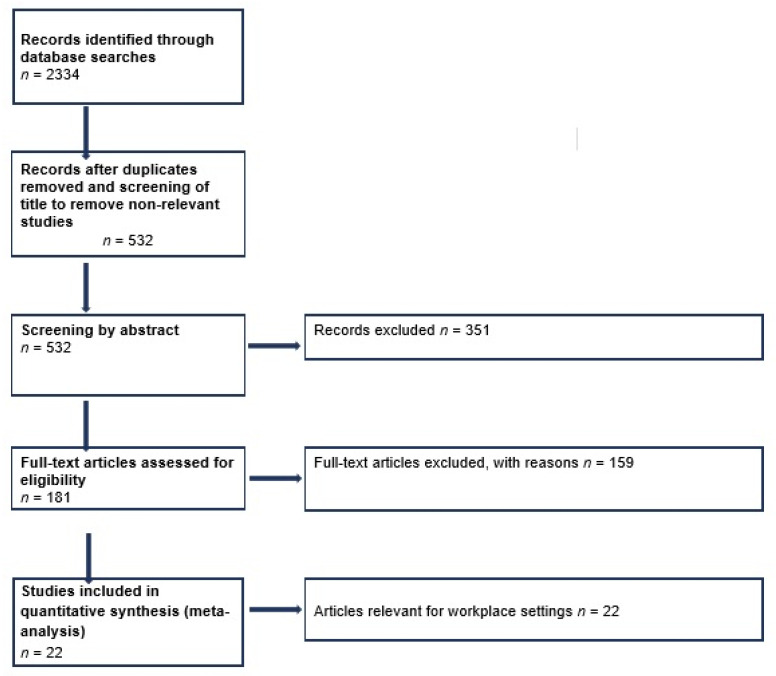
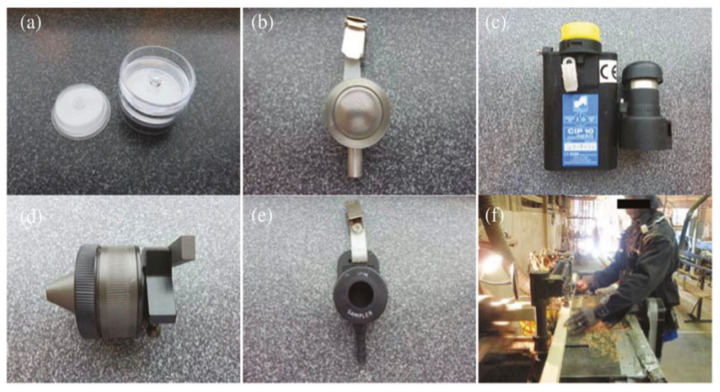
We provide a narrative review on published peer-reviewed scientific literature reporting comparisons of personal samplers in workplace settings published between 2004 and 2020. Search terms were developed for Web of Science and PubMed bibliographic databases. The retrieved studies were then screened for relevance, with those studies meeting the inclusion criteria being taken forward to data extraction (22 studies). The inhalable fraction was the most common fraction assessed with the IOM sampler being the most studied sampler. The most common workplace environment where samplers had been compared was that where metals/metalloids were present. The requirements of EN13205 standard (Workplace exposure. Assessment of sampler performance for measurement of airborne particle concentrations) have also been considered, with these requirements not currently being met, or at least referred to, in the included published literature. A number of conclusions have been drawn from this narrative review. For studies that reported correction factors, no discernible trends could be identified. Correction factors also varied between samplers and settings, with correction factors varying from 0.67 for Button/IOM in agriculture settings to a correction factor of 4.2 for the closed face cassette/IOM samplers in aluminium smelters. The need for more detailed and informative data sharing from authors is highlighted, providing more context to both the sampling strategy and methodology, as well as the data analysis. It is recommended that the requirements of EN13205 are taken into account when designing sampler comparison studies at the workplace and that these are also reported. It is also considered that there is a need for a clear standardized workplace sampler comparison protocol to be developed, which can be used by the research and occupational hygiene community to allow more robust and transparent assessment of aerosol samplers and better-quality evidence for use by industrial hygienists, epidemiologists, and occupational safety specialists alike.
我们提供了一篇已发表的同行评议科学文献的叙述性综述,该文献报告了 2004 年至 2020 年间在工作场所环境中比较个人采样器的研究。为 Web of Science 和 PubMed 书目数据库开发了检索词。然后对检索到的研究进行相关性筛选,符合纳入标准的研究被纳入数据提取(22 项研究)。可吸入部分是使用 IOM 采样器评估的最常见部分,而 IOM 采样器是研究最多的采样器。采样器比较最常见的工作场所环境是存在金属/类金属的环境。还考虑了 EN13205 标准(工作场所暴露。测量空气中颗粒物浓度用采样器性能评估)的要求,但这些要求在纳入的已发表文献中尚未得到满足,或者至少没有提及。从这个叙述性综述中得出了一些结论。对于报告校正因子的研究,没有发现明显的趋势。校正因子也因采样器和设置而异,从农业环境中 Button/IOM 的校正因子 0.67 到铝冶炼厂中封闭式滤盒/IOM 采样器的校正因子 4.2 不等。强调了作者更详细和信息丰富的数据共享的必要性,为采样策略和方法以及数据分析提供了更多背景信息。建议在工作场所设计采样器比较研究时考虑 EN13205 的要求,并报告这些要求。还认为需要制定一个明确的标准化工作场所采样器比较协议,供研究和职业卫生界使用,以便对气溶胶采样器进行更稳健和透明的评估,并为工业卫生学家、流行病学家和职业安全专家提供更好质量的证据。