State Key Laboratory for Modification of Chemical Fibers and Polymer Materials, College of Chemistry, Chemical Engineering and Biotechnology and Center for Advanced Low-dimension Materials, Donghua University, Shanghai, China.
Jülich Centre for Neutron Science (JCNS) at Heinz Maier-Leibnitz Zentrum (MLZ) Forschungszentrum Jülich, Garching, Germany.
Nat Commun. 2021 Jul 2;12(1):4082. doi: 10.1038/s41467-021-24382-4.
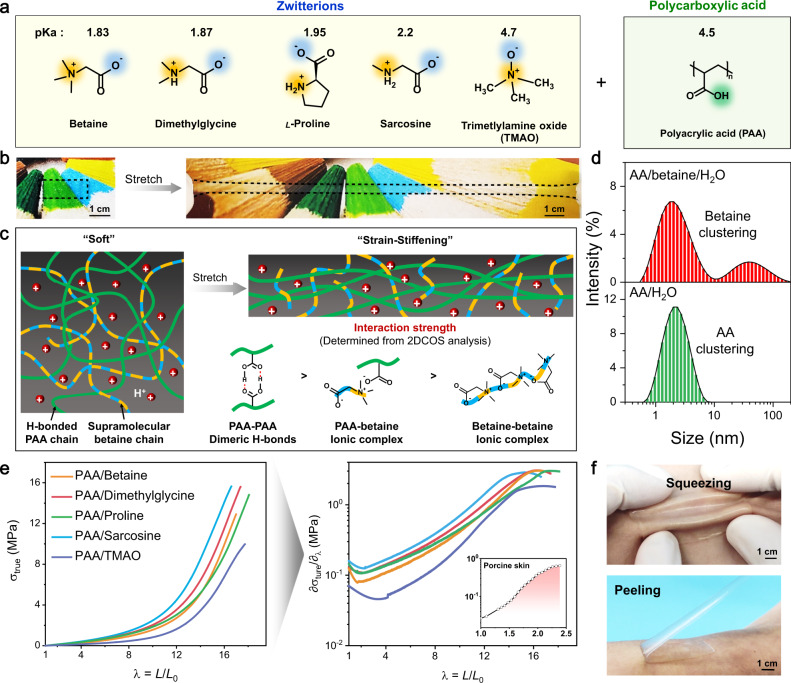
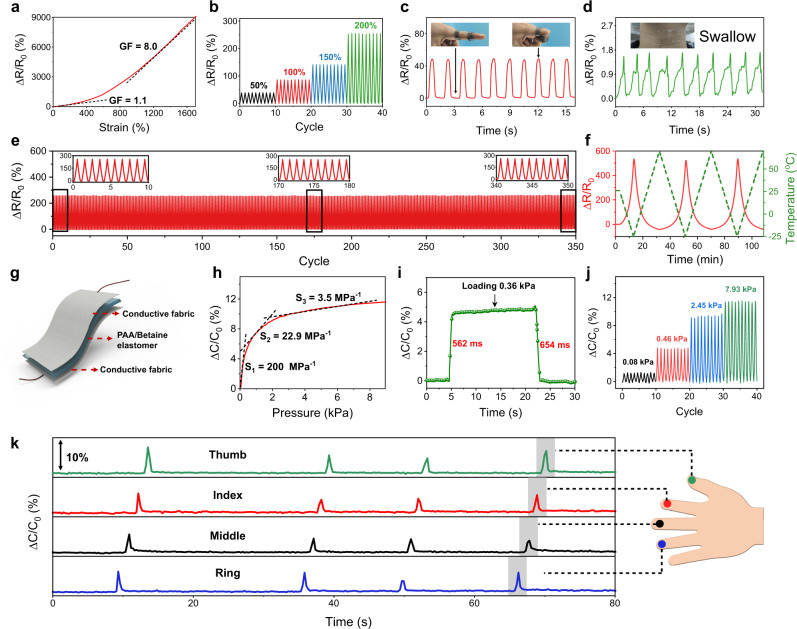
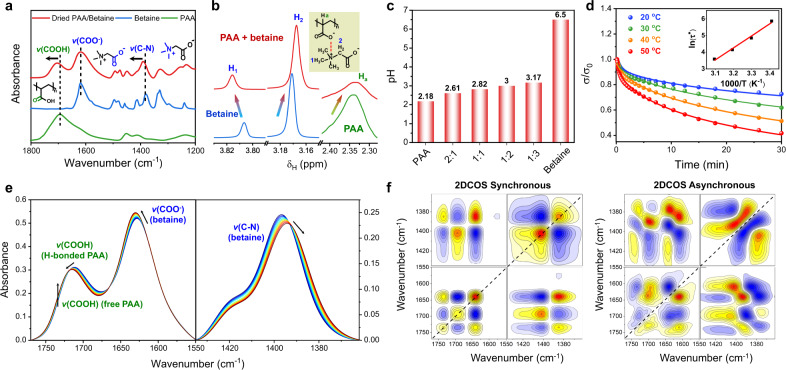
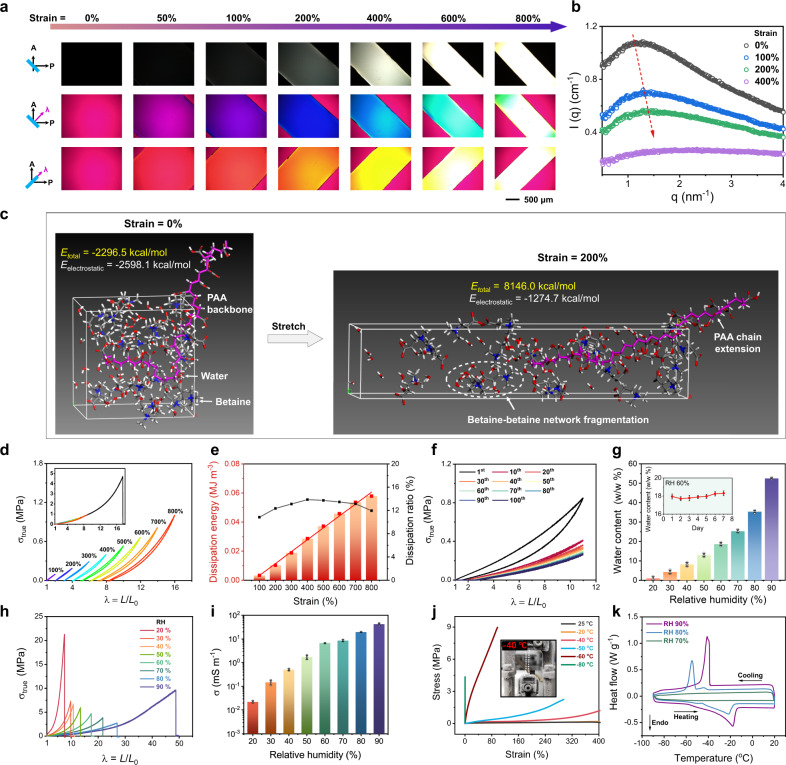
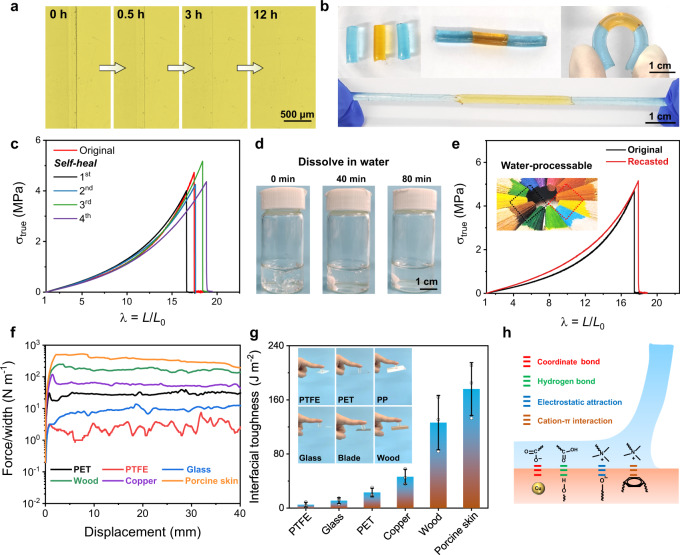
Stretchable ionic skins are intriguing in mimicking the versatile sensations of natural skins. However, for their applications in advanced electronics, good elastic recovery, self-healing, and more importantly, skin-like nonlinear mechanoresponse (strain-stiffening) are essential but can be rarely met in one material. Here we demonstrate a robust proton-conductive ionic skin design via introducing an entropy-driven supramolecular zwitterionic reorganizable network to the hydrogen-bonded polycarboxylic acid network. The design allows two dynamic networks with distinct interacting strength to sequentially debond with stretch, and the conflict among elasticity, self-healing, and strain-stiffening can be thus defeated. The representative polyacrylic acid/betaine elastomer exhibits high stretchability (1600% elongation), immense strain-stiffening (24-fold modulus enhancement), ~100% self-healing, excellent elasticity (97.9 ± 1.1% recovery ratio, <14% hysteresis), high transparency (99.7 ± 0.1%), moisture-preserving, anti-freezing (elastic at -40 °C), water reprocessibility, as well as easy-to-peel adhesion. The combined advantages make the present ionic elastomer very promising in wearable iontronic sensors for human-machine interfacing.
可拉伸离子皮肤在模拟天然皮肤的多功能感觉方面非常有趣。然而,对于其在先进电子学中的应用,良好的弹性恢复、自修复,更重要的是,类似皮肤的非线性机械响应(应变硬化)是必不可少的,但在一种材料中很少能同时满足这些要求。在这里,我们通过向氢键型多羧酸网络中引入熵驱动的超分子两性离子可重排网络,展示了一种稳健的质子传导离子皮肤设计。该设计允许两个具有不同相互作用强度的动态网络在拉伸时依次解键合,从而可以克服弹性、自修复和应变硬化之间的冲突。代表性的聚丙烯酸/甜菜碱弹性体表现出高拉伸性(伸长率为 1600%)、巨大的应变硬化(模量增强 24 倍)、~100%的自修复、优异的弹性(恢复率 97.9±1.1%,滞后<14%)、高透明度(99.7±0.1%)、保湿、防冻(在-40°C 下仍具有弹性)、可再加工性以及易于剥离的粘附性。这些综合优势使得这种离子弹性体在用于人机界面的可穿戴离子电子传感器中非常有前景。