Department of Neuroscience, 27106Karolinska Institutet, Karolinska Institutet, Stockholm, Sweden.
Department of Clinical Neuroscience, 27106Karolinska Institutet, Karolinska Institutet, Stockholm, Sweden.
Cephalalgia. 2021 Nov;41(13):1374-1381. doi: 10.1177/03331024211024165. Epub 2021 Jul 13.
Cluster headache is a severe primary headache disorder commonly featuring a strikingly distinct circadian attack pattern. Therefore, the circadian system has been suggested to play a crucial role in the pathophysiology of cluster headache. Cryptochromes are key components of the molecular clock generating circadian rhythms and have previously been shown to be associated with several psychiatric disorders, including seasonal affective disorder, bipolar disorder, and depression.
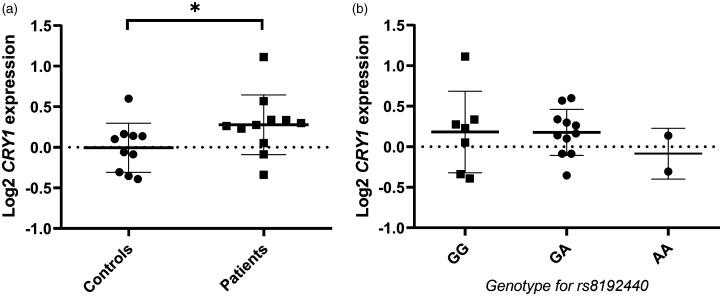
In this case-control study, we investigated the role of cryptochrome () genes in cluster headache by screening 628 cluster headache patients and 681 controls from Sweden for four known genetic variants in the (rs2287161 and rs8192440) and (rs10838524 and rs1554338) genes. In addition, we analyzed gene expression in primary fibroblast cell lines from eleven patients and ten controls.
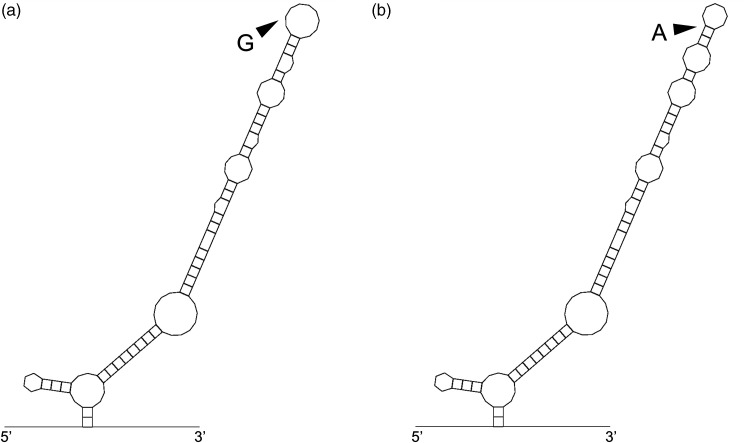
The exonic variant rs8192440 was associated with cluster headache on allelic level (=0.02) and this association was even more pronounced in a subgroup of patients with reported diurnal rhythmicity of attacks (=0.002). We found a small significant difference in gene expression between cluster headache patients and control individuals (=0.04), but we could not identify an effect of the associated variant rs8192440 on expression.
We discovered a disease-associated variant in the gene and slightly increased gene expression in tissue from cluster headache patients, strengthening the hypothesis of circadian dysregulation in cluster headache. How this gene variant may contribute to the pathophysiology of the disease remains subject to further studies.
丛集性头痛是一种严重的原发性头痛疾病,通常具有明显的昼夜发作模式。因此,昼夜节律系统被认为在丛集性头痛的病理生理学中发挥着关键作用。隐花色素是产生昼夜节律的分子钟的关键组成部分,先前已被证明与几种精神疾病有关,包括季节性情感障碍、双相情感障碍和抑郁症。
在这项病例对照研究中,我们通过对来自瑞典的 628 名丛集性头痛患者和 681 名对照者进行四种已知遗传变异( 基因中的 rs2287161 和 rs8192440 以及 基因中的 rs10838524 和 rs1554338)的筛查,来研究 基因在丛集性头痛中的作用。此外,我们分析了来自 11 名患者和 10 名对照者的原代成纤维细胞系中的 基因表达。
外显子 变异 rs8192440 与丛集性头痛在等位基因水平上相关(=0.02),并且这种关联在报告发作具有昼夜节律性的患者亚组中更为明显(=0.002)。我们发现丛集性头痛患者和对照者之间的 基因表达存在微小但显著的差异(=0.04),但我们无法确定相关变异 rs8192440 对 表达的影响。
我们在 基因中发现了一个与疾病相关的变异体,并且在丛集性头痛患者的组织中发现了 基因表达略有增加,这进一步支持了昼夜节律失调在丛集性头痛中的假说。该基因变异如何可能导致疾病的病理生理学仍有待进一步研究。