Neuropsychology Unit, IRCCS Istituto Centro San Giovanni di Dio Fatebenefratelli, Brescia, Italy.
Vascular Neurology Unit, Department of Neurological and Vision Sciences, ASST Spedali Civili, Brescia, Italy.
Transl Neurodegener. 2021 Jul 16;10(1):24. doi: 10.1186/s40035-021-00248-z.
Primary progressive aphasia (PPA) is a neurodegenerative disorder characterized by a gradual, insidious and progressive loss of language abilities, with naming difficulties being an early and persistent impairment common to all three variants. In the absence of effective pharmacological treatments and given the progressive nature of the disorder, in the past few decades, many studies have investigated the effectiveness of language training to minimize the functional impact of word-finding difficulties in daily life.
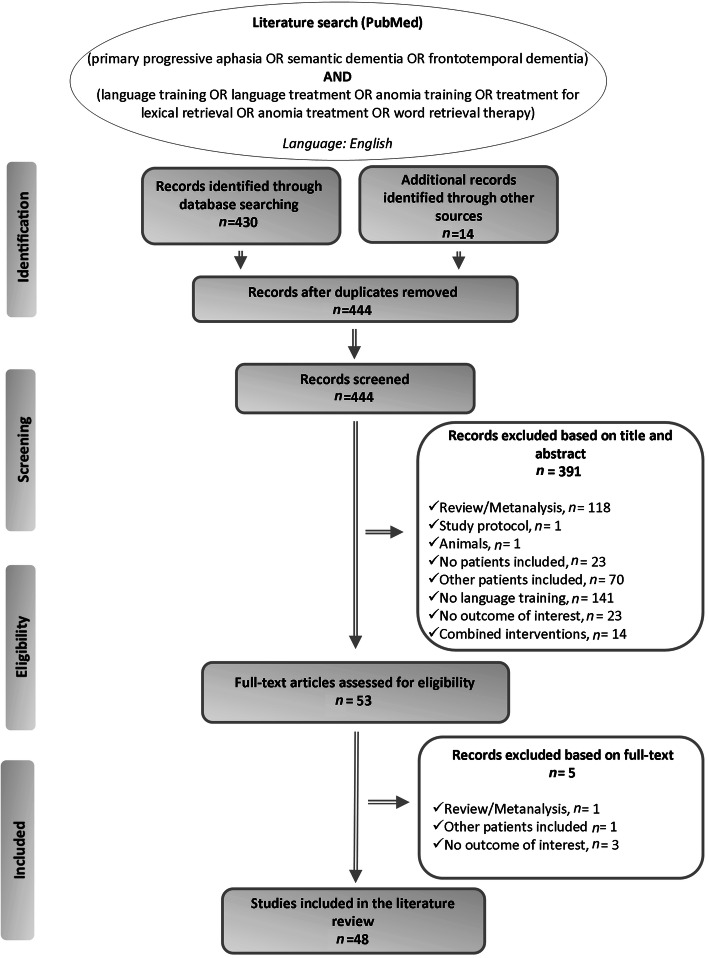
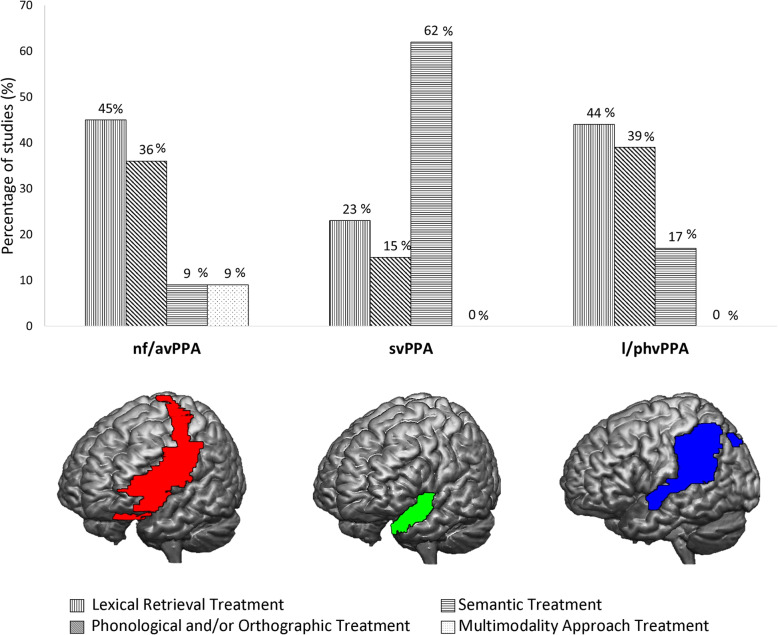
We review language treatments most commonly used in clinical practice among patients with different variants of PPA, with a focus on the enhancement of spoken and written naming abilities. Generalization of gains to the ability to name untrained stimuli or to other language abilities and the maintenance of these results over time are also discussed. Forty-eight studies were included in this literature review, identifying four main types of language treatment: a) lexical retrieval treatment, b) phonological and/or orthographic treatment, c) semantic treatment, and d) a multimodality approach treatment. Overall, language training is able to induce immediate improvements of naming abilities in all variants of PPA. Moreover, despite the large variability among results, generalization and long-term effects can be recorded after the training. The reviewed studies also suggest that one factor that determines the choice of a particular approach is the compromised components of the lexical/semantic processing system.
The majority of studies have demonstrated improvements of naming abilities following language treatments. Given the progressive nature of PPA, it is essential to apply language treatment in the early stages of the disease.
原发性进行性失语症(PPA)是一种神经退行性疾病,其特征是语言能力逐渐、隐匿和进行性丧失,命名困难是所有三种变体共有的早期和持续存在的障碍。由于缺乏有效的药物治疗方法,且考虑到该疾病的进行性性质,在过去几十年中,许多研究调查了语言训练的有效性,以最大程度地减少命名困难对日常生活的功能影响。
我们回顾了在 PPA 不同变体的患者中最常在临床实践中使用的语言治疗方法,重点是提高口语和书面命名能力。还讨论了收益向未训练刺激物的命名能力或其他语言能力的泛化以及这些结果随时间的维持。本文献综述共纳入了 48 项研究,确定了四种主要类型的语言治疗:a)词汇检索治疗,b)语音和/或正字法治疗,c)语义治疗,和 d)多模态方法治疗。总体而言,语言训练能够立即提高所有 PPA 变体的命名能力。此外,尽管结果存在很大差异,但可以在训练后记录到泛化和长期效果。综述研究还表明,决定特定方法选择的一个因素是词汇/语义处理系统受损的成分。
大多数研究表明,语言治疗后命名能力有所提高。鉴于 PPA 的进行性性质,在疾病的早期阶段应用语言治疗至关重要。