Microbiology Unit, Department of Experimental, Diagnostic and Specialty Medicine, IRCCS St. Orsola Hospital and University of Bologna, Bologna, Italy.
Department of Pharmacy and Biotechnology, University of Bologna, Bologna, Italy.
Front Cell Infect Microbiol. 2021 Jun 29;11:670424. doi: 10.3389/fcimb.2021.670424. eCollection 2021.
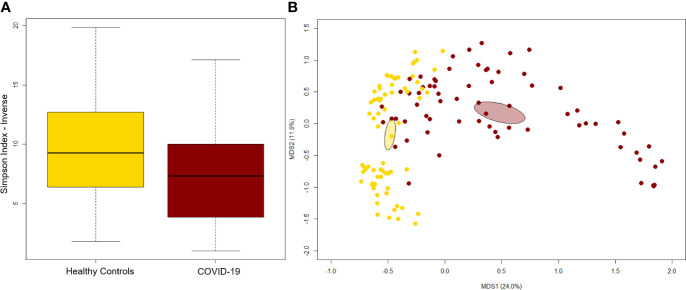
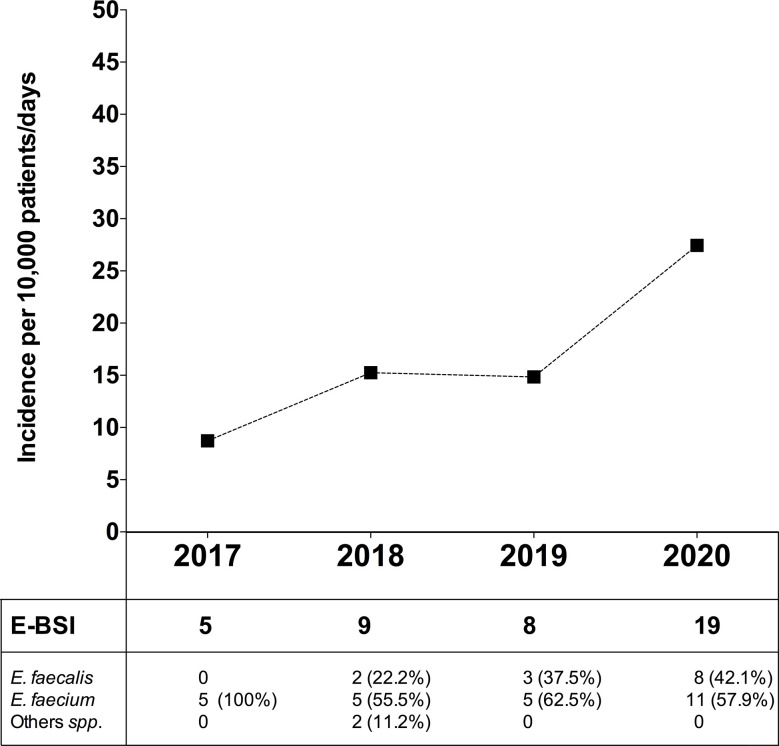
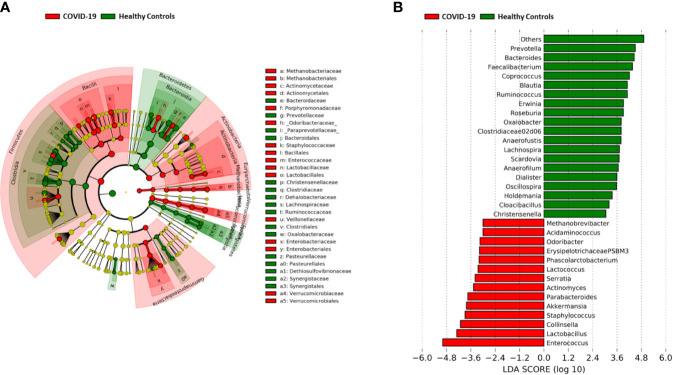
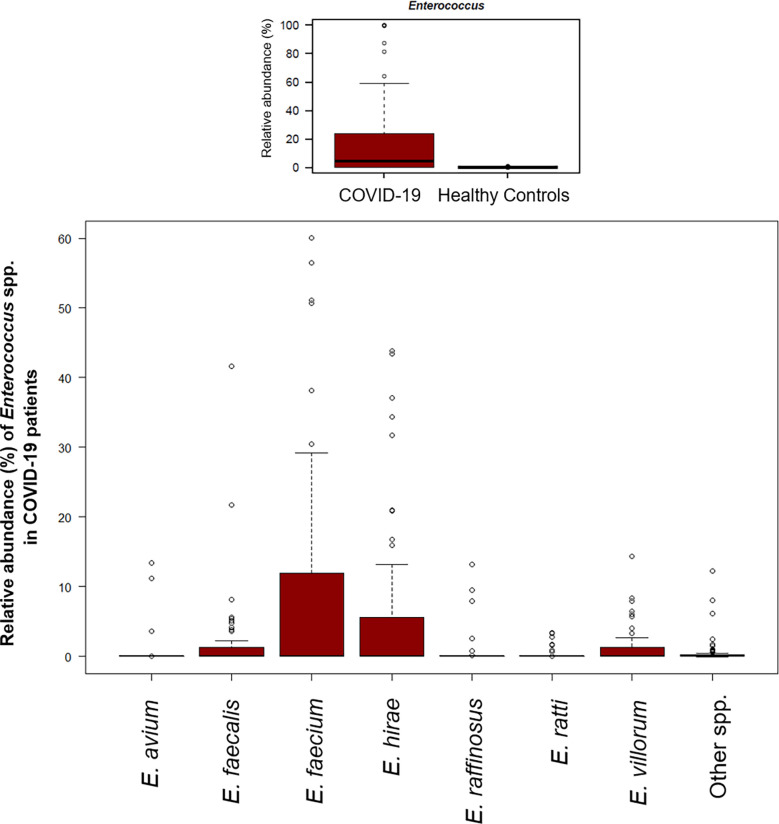
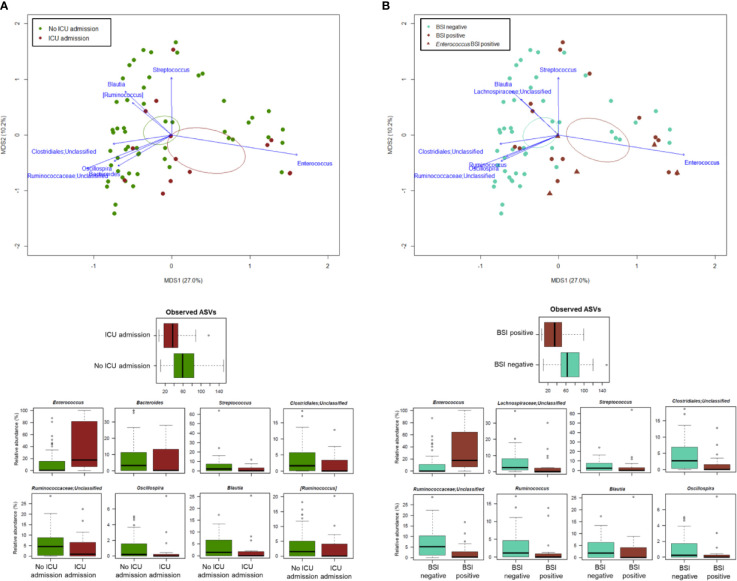
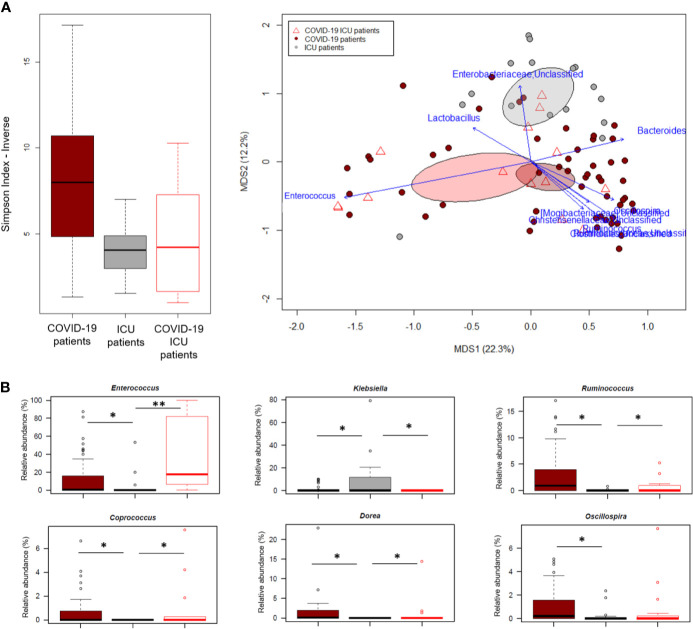
The SARS-CoV-2-associated COVID-19 pandemic has shaken the global healthcare system. Although the best-known symptoms are dry cough and pneumonia, viral RNA has been detected in the stool and about half of COVID-19 patients exhibit gastrointestinal upset. In this scenario, special attention is being paid to the possible role of the gut microbiota (GM). Fecal samples from 69 COVID-19 patients from three different hospitals of Bologna (Italy) were analyzed by 16S rRNA gene-based sequencing. The GM profile was compared with the publicly available one of healthy age- and gender-matched Italians, as well as with that of other critically ill non-COVID-19 patients. The GM of COVID-19 patients appeared severely dysbiotic, with reduced diversity, loss of health-associated microorganisms and enrichment of potential pathogens, particularly . This genus was far overrepresented in patients developing bloodstream infections (BSI) and admitted to the intensive care unit, while almost absent in other critically ill non-COVID-19 patients. Interestingly, the percentage of patients with BSI due to spp. was significantly higher during the COVID-19 pandemic than in the previous 3 years. Monitoring the GM of critically ill COVID-19 patients could help clinical management, by predicting the onset of medical complications such as difficult-to-treat secondary infections.
SARS-CoV-2 相关的 COVID-19 大流行撼动了全球医疗体系。尽管人们最熟知的症状是干咳和肺炎,但已在粪便中检测到病毒 RNA,并且约有一半 COVID-19 患者表现出胃肠道不适。在这种情况下,人们特别关注肠道微生物群(GM)可能发挥的作用。对来自博洛尼亚(意大利)的三家不同医院的 69 名 COVID-19 患者的粪便样本进行了基于 16S rRNA 基因测序的分析。将 GM 图谱与公开的健康年龄和性别匹配的意大利人进行了比较,也与其他重症非 COVID-19 患者进行了比较。COVID-19 患者的 GM 明显表现出严重的生态失调,多样性降低,与健康相关的微生物丧失,潜在病原体富集,特别是 。该属在发生血流感染(BSI)和入住重症监护病房的患者中过度表达,而在其他重症非 COVID-19 患者中几乎不存在。有趣的是,由于 spp.引起的 BSI 患者百分比在 COVID-19 大流行期间明显高于前 3 年。监测重症 COVID-19 患者的 GM 可能有助于临床管理,通过预测难以治疗的继发性感染等医疗并发症的发生。