
气候变化背景下登革热的历史和未来健康风险综述
A Review of Dengue's Historical and Future Health Risk from a Changing Climate.
机构信息
United Nations Development Programme, Vietnam Office, Washington, DC, USA.
HR Wallingford, Howbery Park, Wallingford, Oxfordshire, OX10 8BA, UK.
出版信息
Curr Environ Health Rep. 2021 Sep;8(3):245-265. doi: 10.1007/s40572-021-00322-8. Epub 2021 Jul 16.
PURPOSE OF REVIEW
The purpose of this review is to summarize research articles that provide risk estimates for the historical and future impact that climate change has had upon dengue published from 2007 through 2019.
RECENT FINDINGS
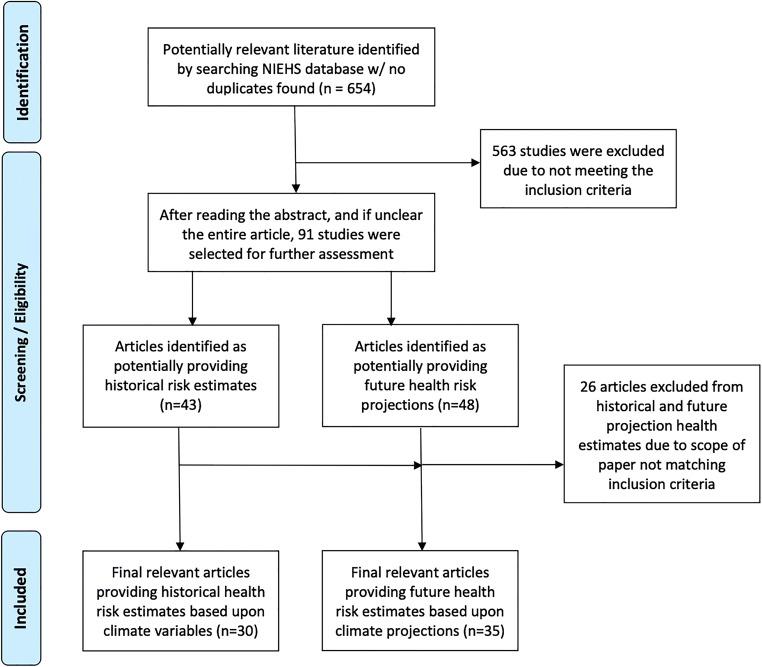
Findings from 30 studies on historical health estimates, with the majority of the studies conducted in Asia, emphasized the importance of temperature, precipitation, and relative humidity, as well as lag effects, when trying to understand how climate change can impact the risk of contracting dengue. Furthermore, 35 studies presented findings on future health risk based upon climate projection scenarios, with a third of them showcasing global level estimates and findings across the articles emphasizing the need to understand risk at a localized level as the impacts from climate change will be experienced inequitably across different geographies in the future. Dengue is one of the most rapidly spreading viral diseases in the world, with ~390 million people infected worldwide annually. Several factors have contributed towards its proliferation, including climate change. Multiple studies have previously been conducted examining the relationship between dengue and climate change, both from a historical and a future risk perspective. We searched the U.S. National Institute of Environmental Health (NIEHS) Climate Change and Health Portal for literature (spanning January 2007 to September 2019) providing historical and future health risk estimates of contracting dengue infection in relation to climate variables worldwide. With an overview of the evidence of the historical and future health risk posed by dengue from climate change across different regions of the world, this review article enables the research and policy community to understand where the knowledge gaps are and what areas need to be addressed in order to implement localized adaptation measures to mitigate the health risks posed by future dengue infection.
综述目的
本篇综述的目的是总结 2007 年至 2019 年间发表的有关气候变化对登革热历史和未来影响的风险评估研究文章。
研究进展
30 项有关历史健康评估的研究结果表明,温度、降水和相对湿度以及滞后效应在理解气候变化如何影响登革热风险方面非常重要,其中大部分研究都在亚洲进行。此外,35 项研究根据气候预测情景提出了未来健康风险的研究结果,其中三分之一的研究展示了全球水平的估计结果,文章中的研究结果强调需要在地方层面理解风险,因为未来不同地理位置将不平等地经历气候变化的影响。登革热是世界上传播速度最快的病毒性疾病之一,每年约有 3.9 亿人感染。多种因素促成了其传播,包括气候变化。之前已经有多项研究从历史和未来风险的角度研究了登革热与气候变化之间的关系。我们在美国国立环境卫生科学研究所(NIEHS)的气候变化与健康门户中搜索了(2007 年 1 月至 2019 年 9 月)有关气候变化与登革热相关的全球气候变量对感染登革热风险的历史和未来健康风险评估的文献。通过对全球不同地区气候变化给登革热带来的历史和未来健康风险的证据进行综述,这篇综述文章使研究和政策界能够了解知识空白在哪里,以及需要在哪些方面做出努力,以实施地方适应措施来减轻未来登革热感染带来的健康风险。



 Zotero 插件