Virachith Siriphone, Pommelet Virginie, Calvez Elodie, Khounvisith Vilaysone, Sayasone Somphou, Kounnavong Sengchanh, Maxay Mayfong, Xangsayarath Phonepadith, Temmam Sarah, Eloit Marc, Escriou Nicolas, Rose Thierry, Vongphayloth Khamsing, Hübschen Judith M, Lacoste Vincent, Somlor Somphavanh, Phonekeo Darouny, Brey Paul T, Black Antony P
Institut Pasteur du Laos, Vientiane Capital, Lao PDR.
Lao Tropical Public Health Institute, Vientiane Capital, Lao PDR.
Lancet Reg Health West Pac. 2021 Aug;13:100197. doi: 10.1016/j.lanwpc.2021.100197. Epub 2021 Jul 14.
In 2020 Lao PDR had low reported COVID-19 cases but it was unclear whether this masked silent transmission. A seroprevalence study was done August - September 2020 to determine SARS-CoV-2 exposure.
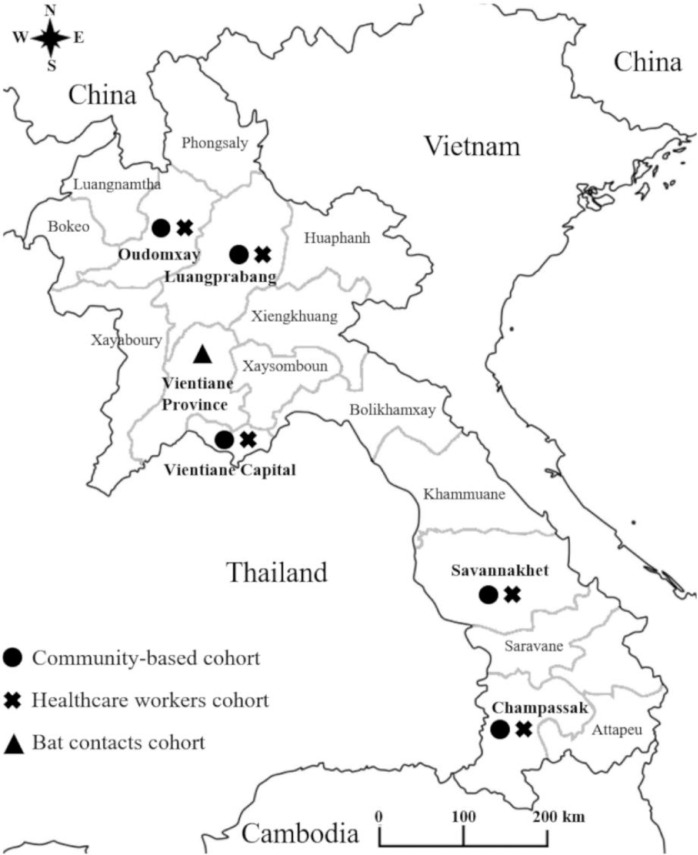
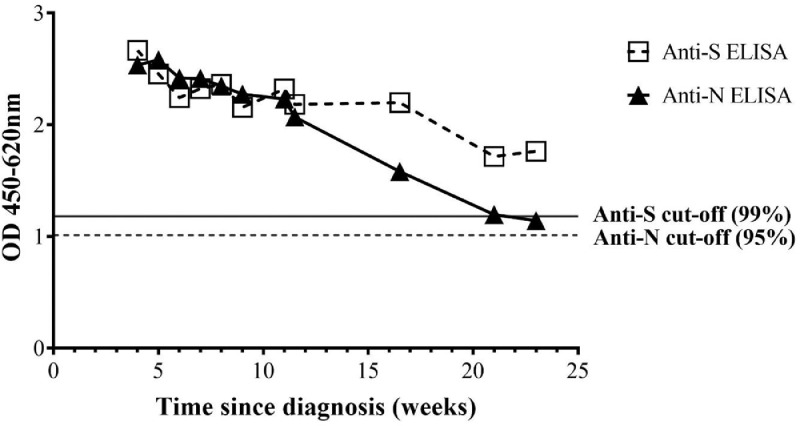
Participants were from the general community (n=2433) or healthcare workers (n=666) in five provinces and bat/wildlife contacts (n=74) were from Vientiane province. ELISAs detected anti- SARS-CoV-2 Nucleoprotein (N; n=3173 tested) and Spike (S; n=1417 tested) antibodies. Double-positive samples were checked by IgM/IgG rapid tests. Controls were confirmed COVID-19 cases (n=15) and pre-COVID-19 samples (n=265). Seroprevalence for the general community was weighted to account for complex survey sample design, age and sex.
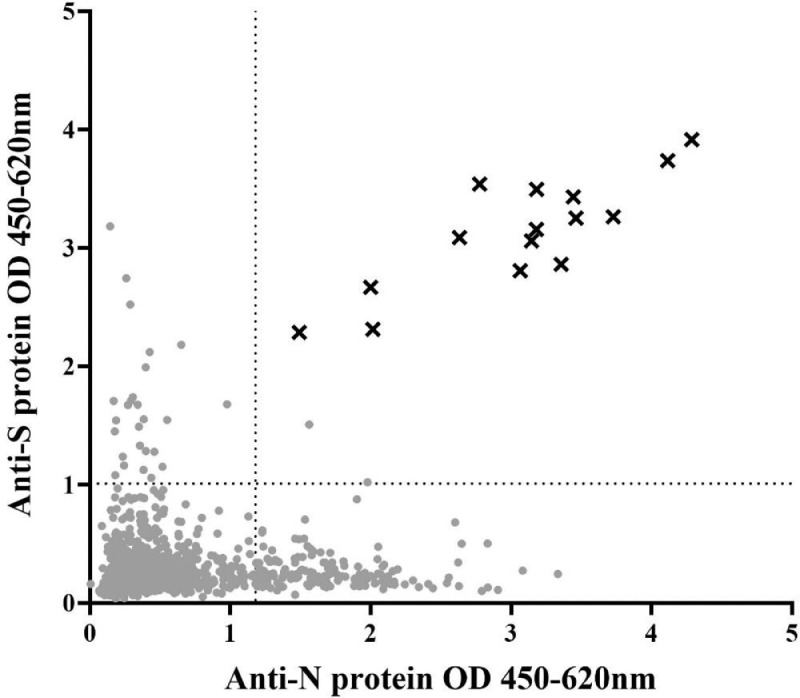
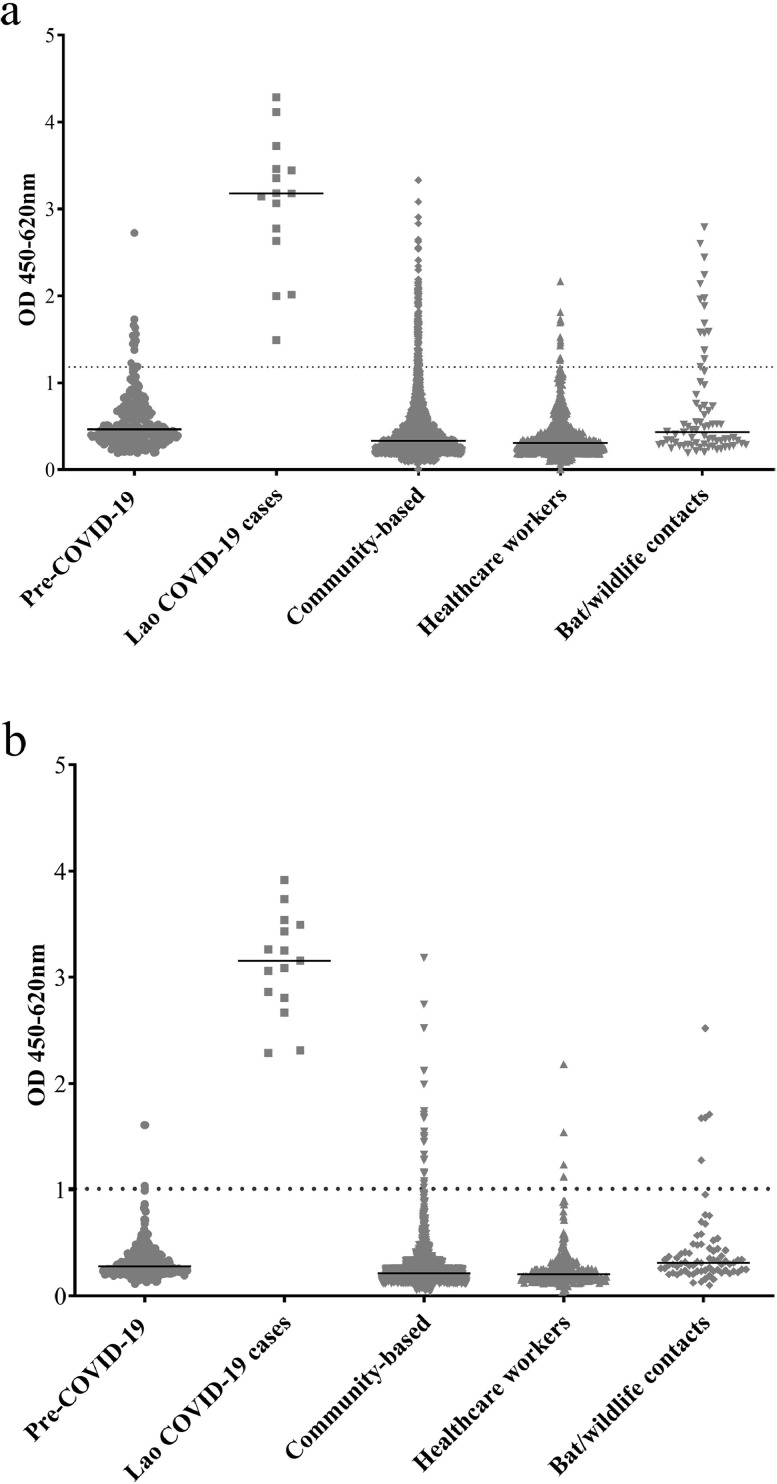
In pre-COVID-19 samples, 5·3%, [95% CI=3·1-8·7%] were anti-N antibody single-positive and 1·1% [0·3-3·5%] were anti-S antibody single positive. None were double positive. Anti-N and anti-S antibodies were detected in 5·2% [4·2-6·5%] and 2·1% [1·1-3·9%] of the general community, 2·0% [1·1-3·3%] and 1·4% [0·5-3·7%] of healthcare workers and 20·3% [12·6-31·0%] and 6·8% [2·8-15·3%] of bat/wildlife contacts. 0·1% [0·02-0·3%] were double positive for anti-N and anti-S antibodies (rapid test negative).
We find no evidence for significant SARS-CoV-2 circulation in Lao PDR before September 2020. This likely results from early decisive measures taken by the government, social behavior, and low population density. High anti-N /low anti-S seroprevalence in bat/wildlife contacts may indicate exposure to cross-reactive animal coronaviruses with threat of emerging novel viruses.
Agence Française de Développement. Additional; Institut Pasteur du Laos, Institute Pasteur, Paris and Luxembourg Ministry of Foreign and European Affairs ("PaReCIDS II").
2020年,老挝报告的新冠病毒病例数较低,但尚不清楚这是否掩盖了隐匿传播情况。2020年8月至9月开展了一项血清流行率研究,以确定严重急性呼吸综合征冠状病毒2(SARS-CoV-2)的暴露情况。
参与者来自五个省份的普通社区(n = 2433)或医护人员(n = 666),与蝙蝠/野生动物接触者(n = 74)来自万象省。酶联免疫吸附测定(ELISA)检测抗SARS-CoV-2核蛋白(N;检测3173例)和刺突蛋白(S;检测1417例)抗体。双阳性样本通过IgM/IgG快速检测进行核查。对照为确诊的新冠病毒病例(n = 15)和新冠疫情前的样本(n = 265)。普通社区的血清流行率根据复杂的调查样本设计、年龄和性别进行加权计算。
在新冠疫情前的样本中,5.3%[95%置信区间(CI)=3.1 - 8.7%]为抗N抗体单阳性,1.1%[0.3 - 3.5%]为抗S抗体单阳性。无双阳性情况。普通社区中抗N和抗S抗体的检出率分别为5.2%[4.2 - 6.5%]和2.1%[1.1 - 3.9%],医护人员中分别为2.0%[1.1 - 3.3%]和1.4%[0.5 - 3.7%],与蝙蝠/野生动物接触者中分别为20.3%[12.6 - 31.0%]和6.8%[2.8 - 15.3%]。0.1%[0.02 - 0.3%]的抗N和抗S抗体呈双阳性(快速检测阴性)。
我们没有发现2020年9月之前SARS-CoV-2在老挝有显著传播的证据。这可能是由于政府采取的早期果断措施、社会行为以及较低的人口密度所致。与蝙蝠/野生动物接触者中抗N抗体高/抗S抗体低的血清流行率可能表明接触了具有交叉反应性的动物冠状病毒,存在新型病毒出现的威胁。
法国开发署。额外资金;老挝巴斯德研究所、巴黎巴斯德研究所和卢森堡外交与欧洲事务部(“PaReCIDS II”)。