Institute for Clinical Research, Veterans Affairs Medical Center, Washington, DC, USA.
Dartmouth-Hitchcock Medical Center, Lebanon, NH, USA.
Sci Rep. 2021 Jul 20;11(1):14814. doi: 10.1038/s41598-021-94064-0.
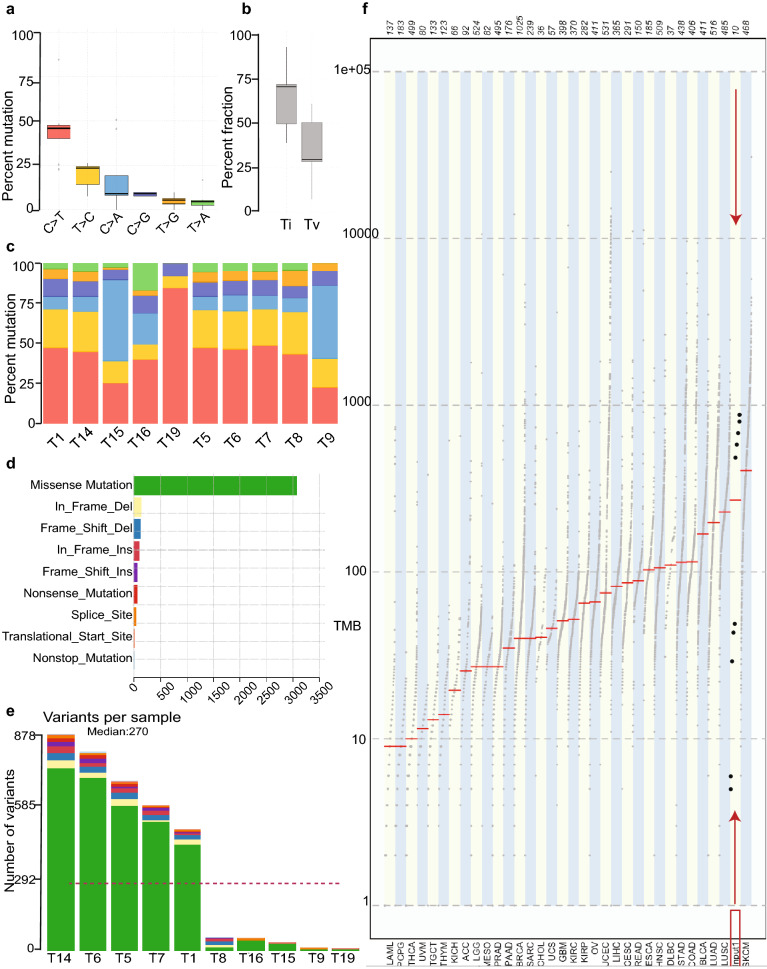
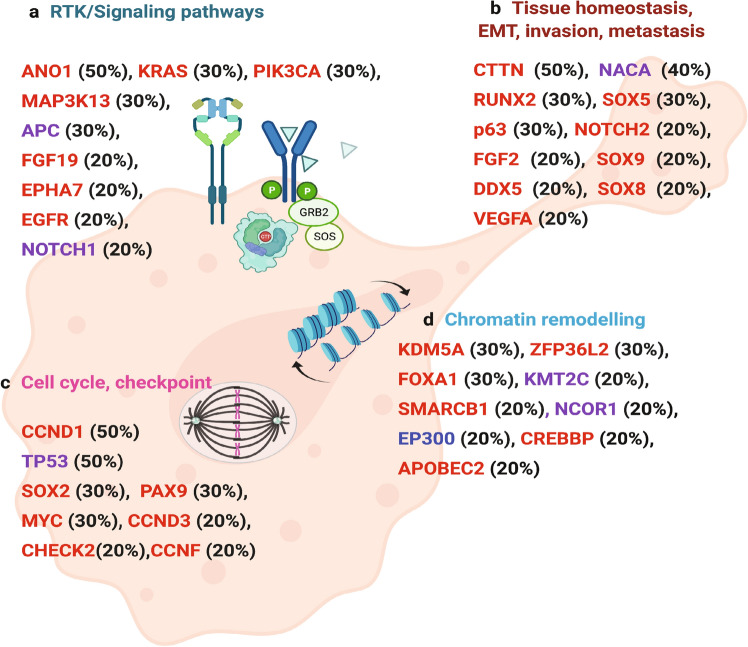
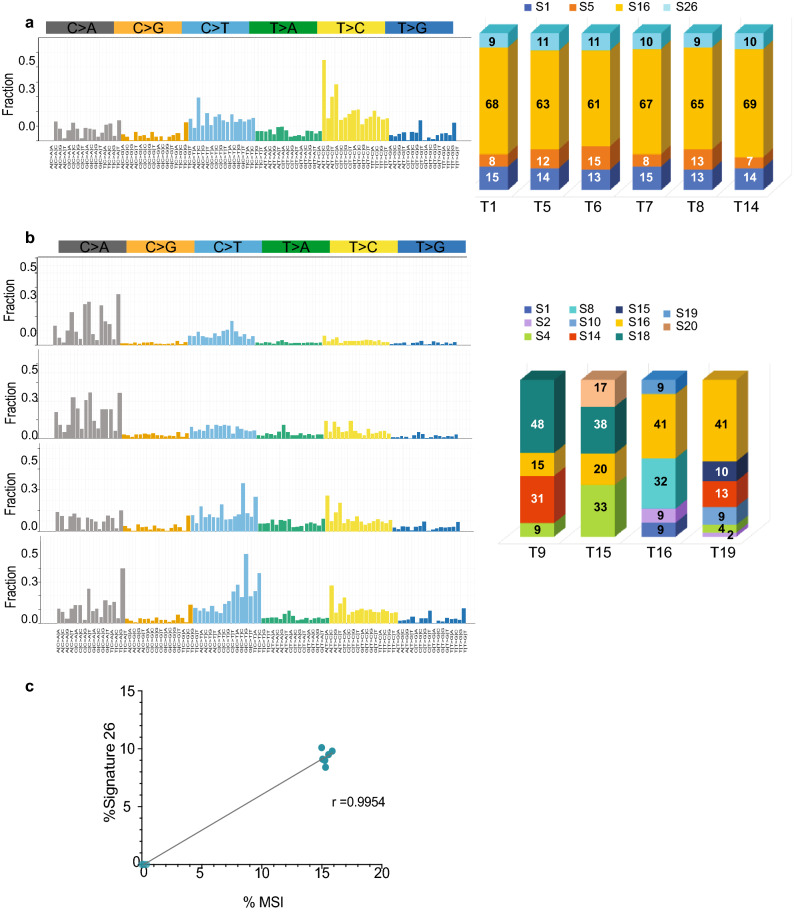
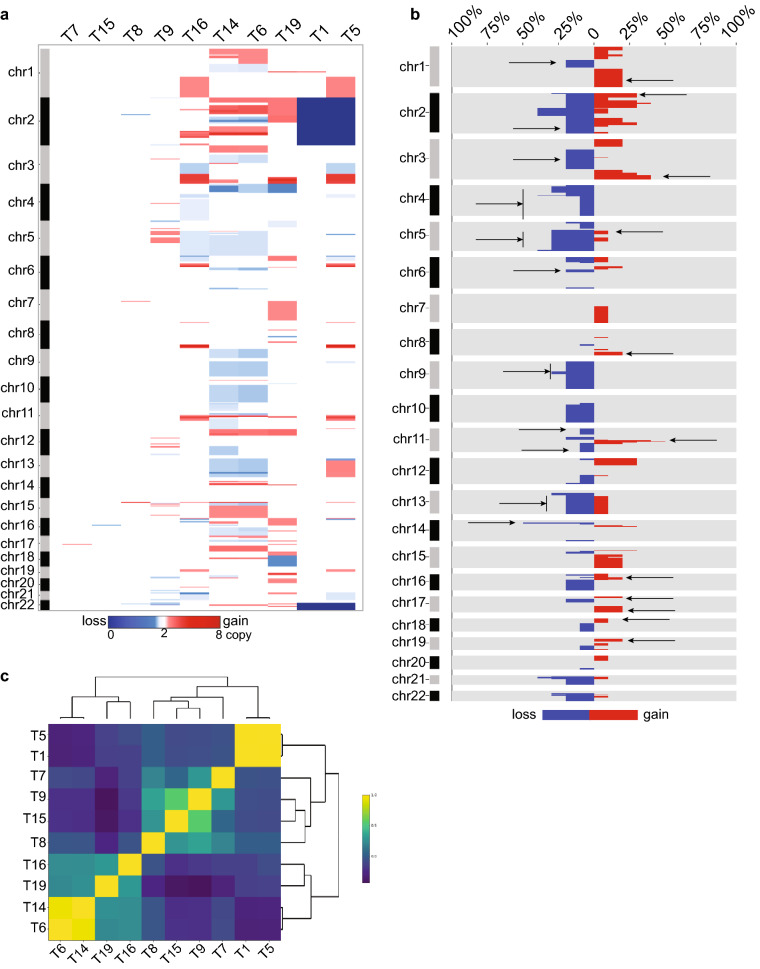
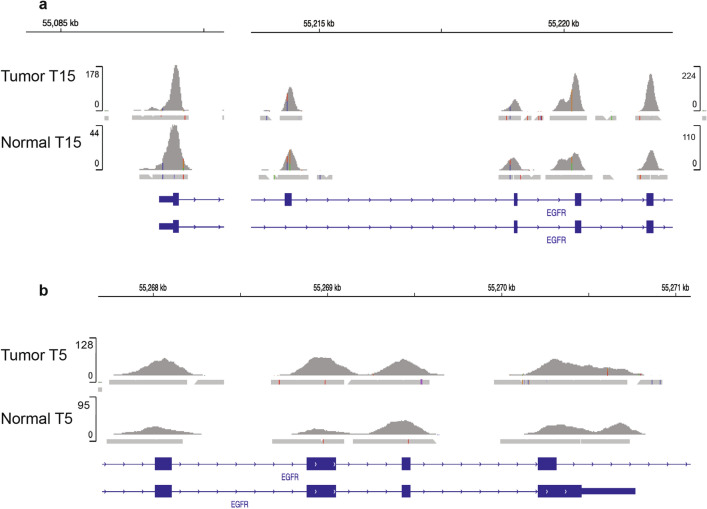
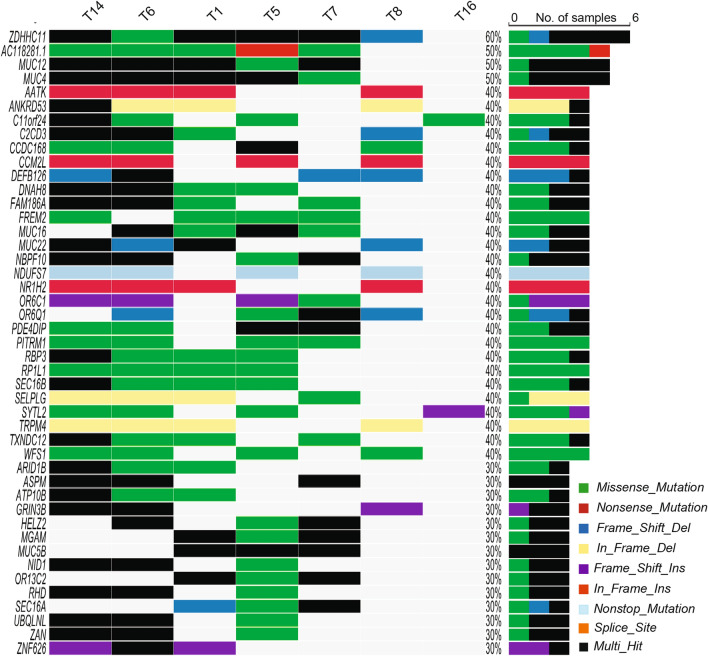
Esophageal cancer has a strikingly low survival rate mainly due to the lack of diagnostic markers for early detection and effective therapies. In the U.S., 75% of individuals diagnosed with esophageal squamous cell carcinoma (ESCC) are of African descent. African American ESCC (AA ESCC) is particularly aggressive, and its biological underpinnings remain poorly understood. We sought to identify the genomic abnormalities by conducting whole exome sequencing of 10 pairs of matched AA esophageal squamous cell tumor and control tissues. Genomic analysis revealed diverse somatic mutations, copy number alterations (SCNAs), and potential cancer driver genes. Exome variants created two subgroups carrying either a high or low tumor mutation burden. Somatic mutational analysis based on the Catalog of Somatic Mutations in Cancer (COSMIC) detected SBS16 as the prominent signature in the high mutation rate group suggesting increased DNA damage. SBS26 was also detected, suggesting possible defects in mismatch repair and microsatellite instability. We found SCNAs in multiple chromosome segments, encoding MYC on 8q24.21, PIK3CA and SOX2 on 3q26, CCND1, SHANK2, CTTN on 11q13.3, and KRAS on 12p12. Amplifications of EGFRvIII and EGFRvIVa mutants were observed in two patients, representing a novel finding in ESCC that has potential clinical relevance. This present exome sequencing, which to our knowledge, represents the first comprehensive exome analysis exclusively in AA ESCC, and highlights novel mutated loci that might explain the aggressive nature of AA ESCC and lead to the development of diagnostic and prognostic markers as well as therapeutic targets.
食管癌的存活率极低,主要是因为缺乏早期检测和有效治疗的诊断标志物。在美国,75%被诊断为食管鳞状细胞癌(ESCC)的患者为非洲裔。非裔美国人 ESCC(AA ESCC)尤为侵袭性,其生物学基础仍知之甚少。我们通过对 10 对匹配的 AA 食管鳞状细胞肿瘤和对照组织进行全外显子组测序,试图确定基因组异常。基因组分析揭示了多种体细胞突变、拷贝数改变(SCNAs)和潜在的癌症驱动基因。外显子变体创建了两个亚组,分别携带高或低肿瘤突变负担。基于癌症体细胞突变目录(COSMIC)的体细胞突变分析检测到 SBS16 是高突变率组中的主要特征,表明 DNA 损伤增加。还检测到 SBS26,表明可能存在错配修复和微卫星不稳定性缺陷。我们在多个染色体片段中发现了 SCNAs,编码 8q24.21 上的 MYC、3q26 上的 PIK3CA 和 SOX2、11q13.3 上的 CCND1、SHANK2 和 CTTN 以及 12p12 上的 KRAS。在两名患者中观察到 EGFRvIII 和 EGFRvIVa 突变体的扩增,这是 ESCC 中的一个新发现,具有潜在的临床意义。本外显子组测序代表了首次专门针对 AA ESCC 的全面外显子组分析,突出了新的突变位点,这些突变可能解释了 AA ESCC 的侵袭性,并为诊断和预后标志物以及治疗靶点的开发提供了依据。