Department of breast and thyroid surgery, Union Hospital, Tongji Medical College, Huazhong University of Science and Technology, 1277 Jiefang Avenue, Wuhan, 430022, Hubei, China.
Mol Med. 2021 Jul 16;27(1):78. doi: 10.1186/s10020-021-00338-8.
Extracellular vesicles (EVs) derived from tumor cells are implicated in the progression of malignancies through the transfer of molecular cargo microRNAs (miRNAs or miRs). We aimed to explore the role of EVs derived from breast cancer cells carrying miR-182-5p in the occurrence and development of breast cancer.
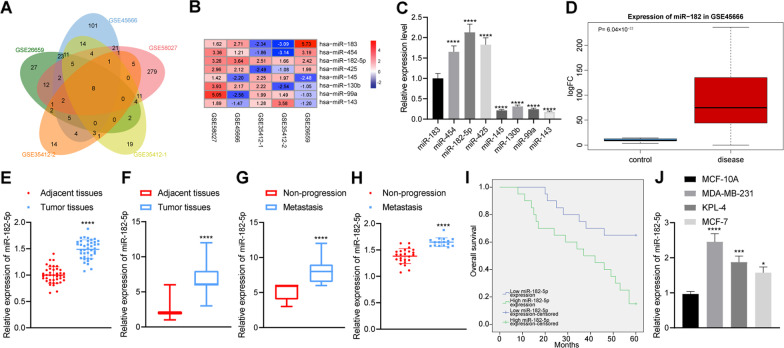
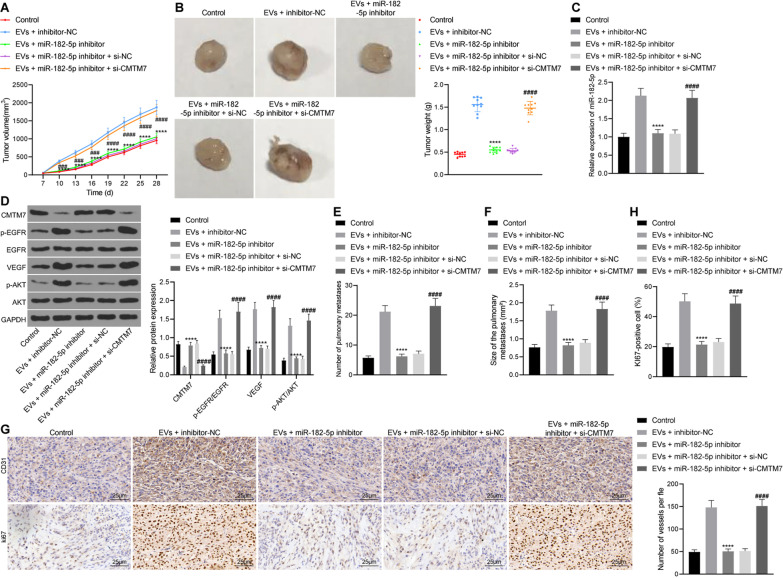
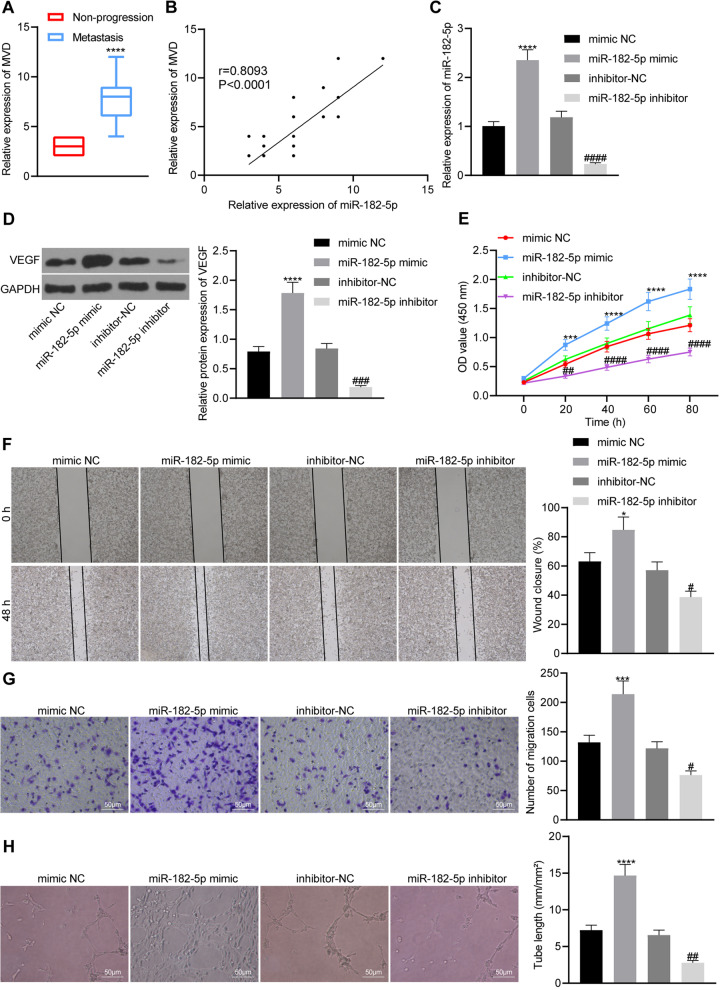
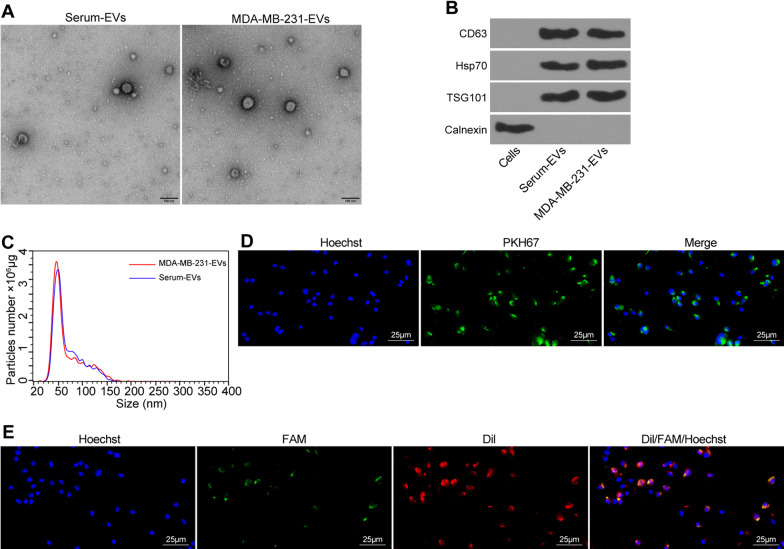
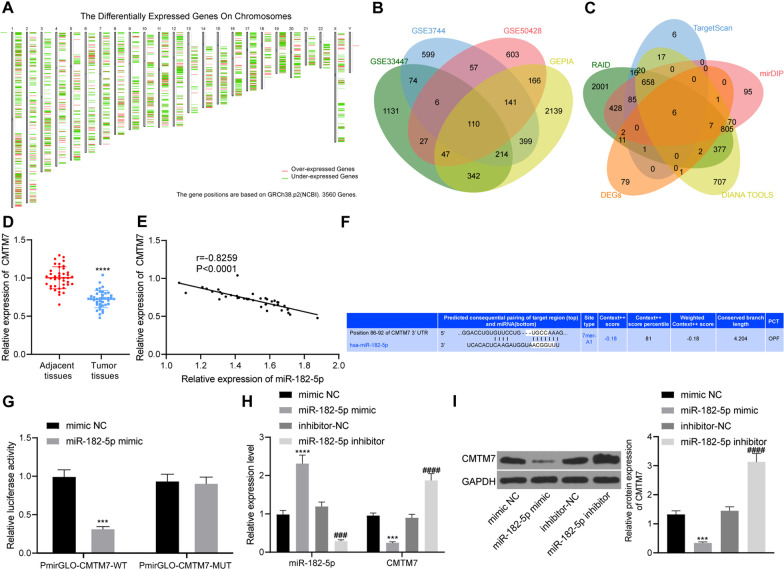
Differentially expressed miRNAs and their downstream target genes related to breast cancer were screened through GEO and TCGA databases. miR-182-5p expression was examined in cancer tissues and adjacent normal tissues from patients with breast cancer. EVs were isolated from breast cancer cell line MDA-MB-231 cells and identified. The gain- and loss-of function approaches of miR-182-5p and CKLF-like MARVEL transmembrane domain-containing 7 (CMTM7) were performed in MDA-MB-231 cells and the isolated EVs. Human umbilical vein endothelial cells (HUVECs) were subjected to co-culture with MDA-MB-231 cell-derived EVs and biological behaviors were detected by CCK-8 assay, flow cytometry, immunohistochemical staining, Transwell assay and vessel-like tube formation in vitro. A xenograft mouse model in nude mice was established to observe the tumorigenesis and metastasis of breast cancer cells in vivo.
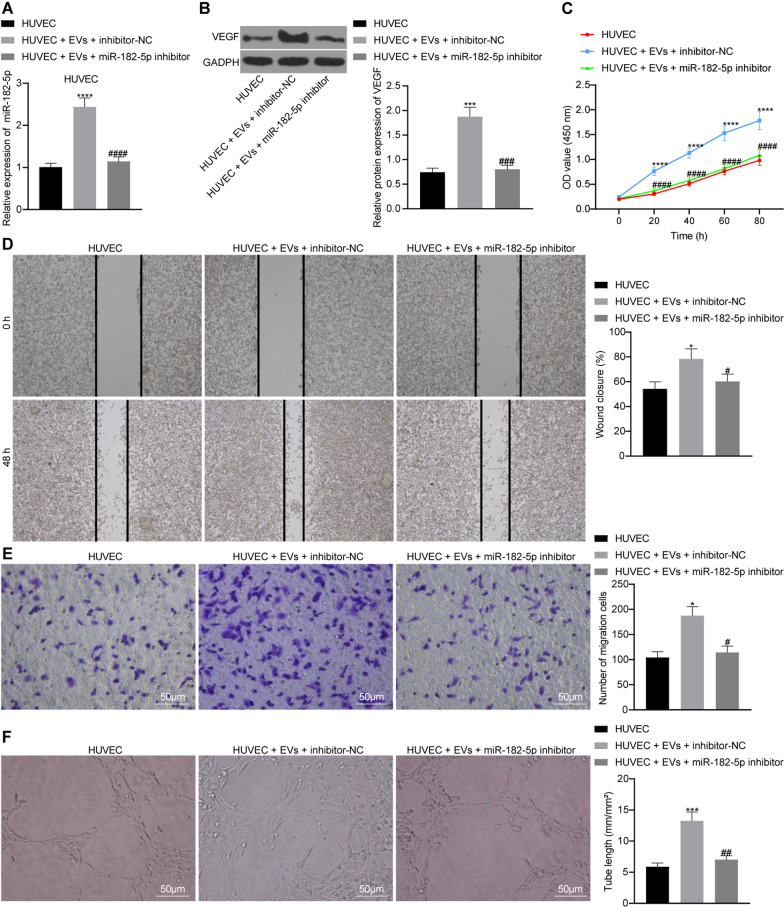
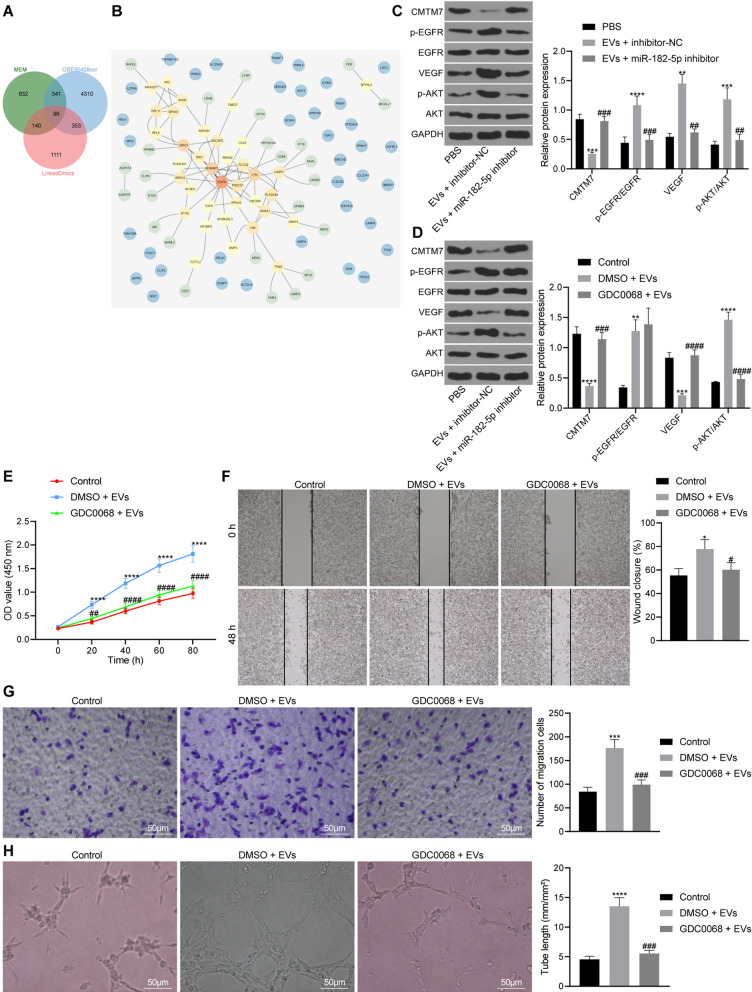
miR-182-5p was highly expressed in breast cancer tissues and cells, and this high expression was associated with poor prognosis of breast cancer patients. miR-182-5p overexpression was shown to promote tumor angiogenesis in breast cancer. Moreover, our data indicated that miR-182-5p was highly enriched in EVs from MDA-MD-231 cells and then ultimately enhanced the proliferation, migration, and angiogenesis of HUVECs in vitro and in vivo. Moreover, we found that CMTM7 is a target of miR-182-5p. EVs-miR-182-5p promotes tumorigenesis and metastasis of breast cancer cells by regulating the CMTM7/EGFR/AKT signaling axis.
Taken altogether, our findings demonstrates that EVs secreted by breast cancer cells could carry miR-182-5p to aggravate breast cancer through downregulating CMTM7 expression and activating the EGFR/AKT signaling pathway.
肿瘤细胞来源的细胞外囊泡(EVs)通过转移分子货物 microRNAs(miRNAs 或 miRs)参与恶性肿瘤的进展。我们旨在探索携带 miR-182-5p 的乳腺癌细胞衍生的 EVs 在乳腺癌发生和发展中的作用。
通过 GEO 和 TCGA 数据库筛选与乳腺癌相关的差异表达 miRNA 及其下游靶基因。检测乳腺癌患者癌组织和癌旁正常组织中 miR-182-5p 的表达。从乳腺癌细胞系 MDA-MB-231 细胞中分离 EVs 并进行鉴定。在 MDA-MB-231 细胞和分离的 EVs 中进行 miR-182-5p 的增益和缺失功能方法以及 CKLF 样 MARVEL 跨膜结构域包含 7(CMTM7)。将人脐静脉内皮细胞(HUVEC)与 MDA-MB-231 细胞来源的 EVs 共培养,并通过 CCK-8 测定、流式细胞术、免疫组织化学染色、Transwell 测定和体外血管样管形成检测细胞的生物学行为。建立裸鼠异种移植小鼠模型,观察体内乳腺癌细胞的致瘤和转移。
miR-182-5p 在乳腺癌组织和细胞中高表达,这种高表达与乳腺癌患者的不良预后相关。miR-182-5p 过表达促进乳腺癌肿瘤血管生成。此外,我们的数据表明,miR-182-5p 在 MDA-MD-231 细胞衍生的 EVs 中高度富集,然后最终增强了 HUVECs 在体外和体内的增殖、迁移和血管生成。此外,我们发现 CMTM7 是 miR-182-5p 的靶标。EVs-miR-182-5p 通过调节 CMTM7/EGFR/AKT 信号通路促进乳腺癌细胞的发生和转移。
综上所述,我们的研究结果表明,乳腺癌细胞分泌的 EVs 可以通过携带 miR-182-5p 来加重乳腺癌,通过下调 CMTM7 表达并激活 EGFR/AKT 信号通路。