Soltani Madjid, Bonakdar Armin, Shakourifar Nastaran, Babaie Reza, Raahemifar Kaamran
Department of Mechanical Engineering, K. N. Toosi University of Technology, Tehran, Iran.
Department of Electrical and Computer Engineering, University of Waterloo, Waterloo, ON, Canada.
Front Oncol. 2021 Jul 6;11:661123. doi: 10.3389/fonc.2021.661123. eCollection 2021.
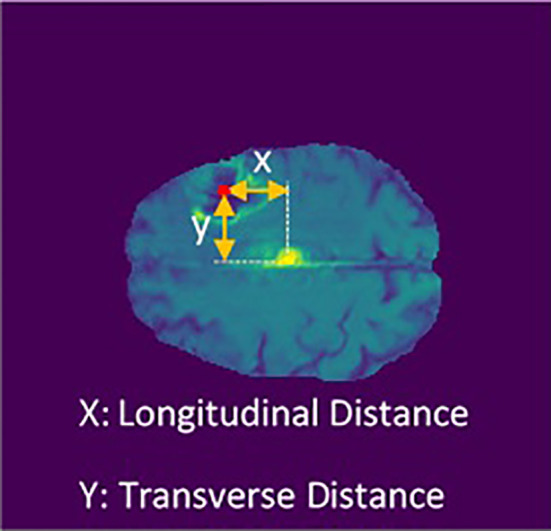
Cancer stands out as one of the fatal diseases people are facing all the time. Each year, a countless number of people die because of the late diagnosis of cancer or wrong treatments. Glioma, one of the most common primary brain tumors, has different aggressiveness and sub-regions, which can affect the risk of disease. Although prediction of overall survival based on multimodal magnetic resonance imaging (MRI) is challenging, in this study, we assess if and how location-based features of tumors can affect overall survival prediction. This approach is evaluated independently and in combination with radiomic features. The process is carried out on a data set entailing MRI images of patients with glioblastoma. To assess the impact of resection status, the data set is divided into two groups, patients were reported as gross total resection and unknown resection status. Then, different machine learning algorithms were used to evaluate how location features are linked with overall survival. Results from regression models indicate that location-based features have considerable effects on the patients' overall survival independently. Additionally, classifier models show an improvement in prediction accuracy by the addition of location-based features to radiomic features.
癌症是人们一直面临的致命疾病之一。每年,都有无数人因癌症诊断延迟或治疗不当而死亡。神经胶质瘤是最常见的原发性脑肿瘤之一,具有不同的侵袭性和亚区域,这会影响疾病风险。尽管基于多模态磁共振成像(MRI)预测总生存期具有挑战性,但在本研究中,我们评估肿瘤的基于位置的特征是否以及如何影响总生存期预测。该方法单独以及与放射组学特征相结合进行评估。该过程在一个包含胶质母细胞瘤患者MRI图像的数据集上进行。为了评估切除状态的影响,将数据集分为两组,一组患者报告为全切除,另一组切除状态未知。然后,使用不同的机器学习算法来评估位置特征与总生存期之间的联系。回归模型的结果表明,基于位置的特征对患者的总生存期有独立的显著影响。此外,分类器模型显示,通过在放射组学特征中添加基于位置的特征,预测准确性有所提高。