Department of Medical Big Data, College of AI Convergence, Inje University, Gimhae 50834, Korea.
Int J Environ Res Public Health. 2021 Jul 18;18(14):7625. doi: 10.3390/ijerph18147625.
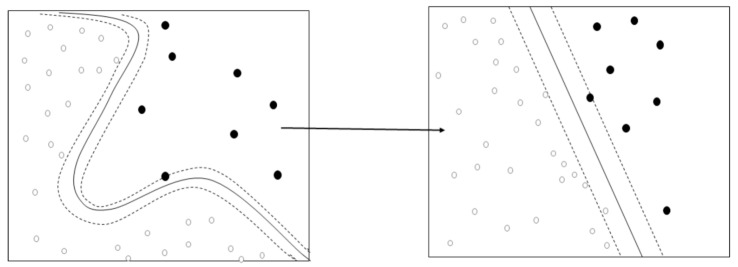
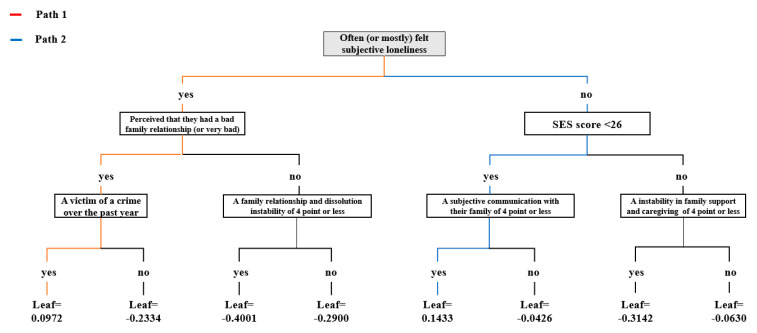
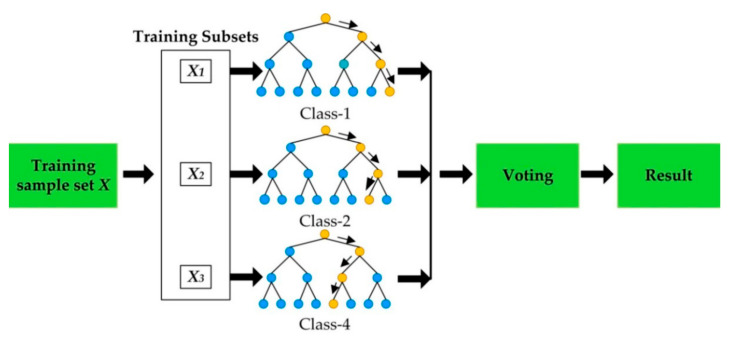
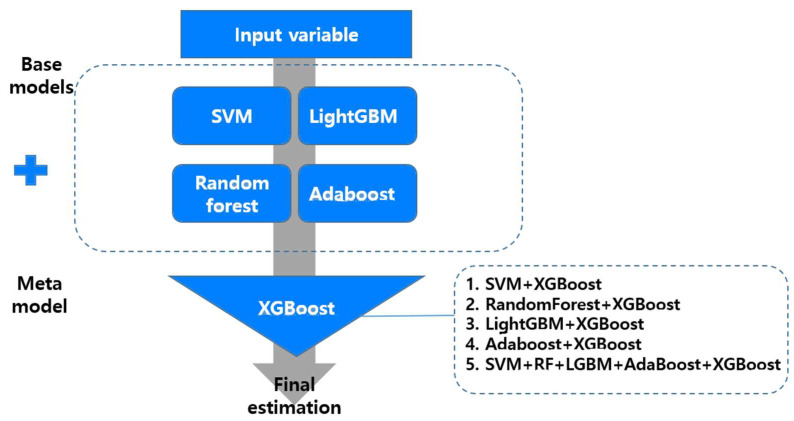
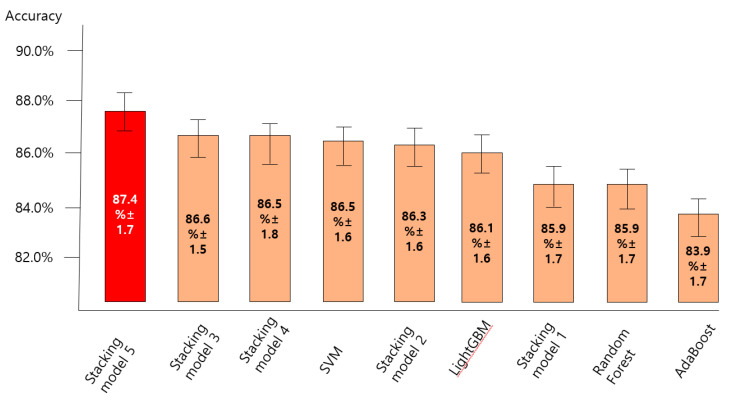
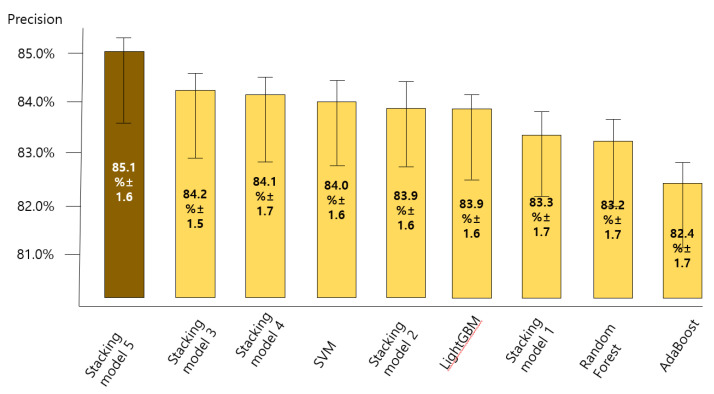
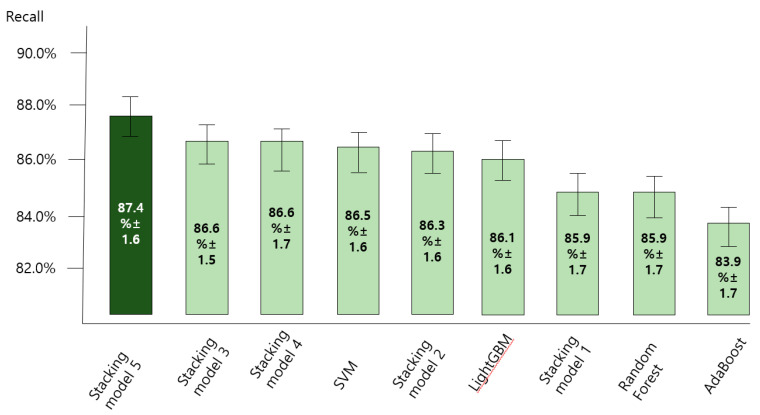
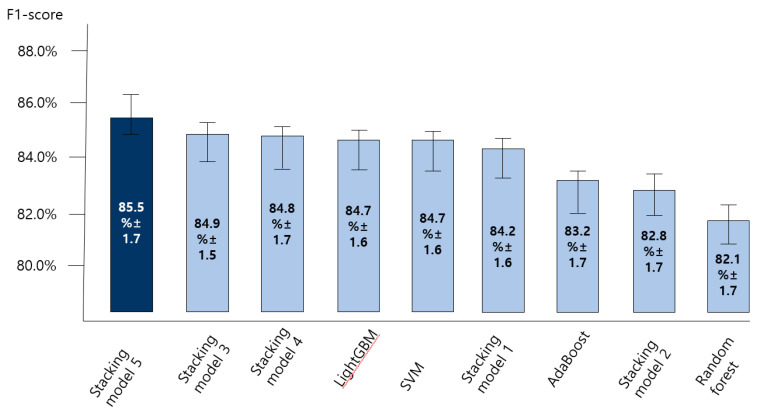
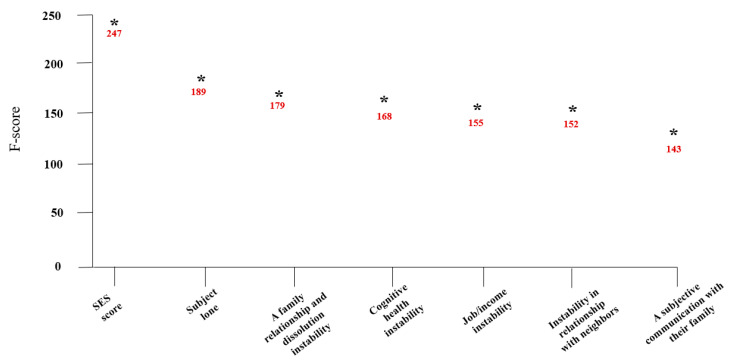
This epidemiological study aimed to develop an X-AI that could explain groups with a high anxiety disorder risk in old age. To achieve this objective, (1) this study explored the predictors of senile anxiety using base models and meta models. (2) This study presented decision tree visualization that could help psychiatric consultants and primary physicians easily interpret the path of predicting high-risk groups based on major predictors derived from final machine learning models with the best performance. This study analyzed 1558 elderly (695 males and 863 females) who were 60 years or older and completed the Zung's Self-Rating Anxiety Scale (SAS). We used support vector machine (SVM), random forest, LightGBM, and Adaboost for the base model, a single predictive model, while using XGBoost algorithm for the meta model. The analysis results confirmed that the predictive performance of the "SVM + Random forest + LightGBM + AdaBoost + XGBoost model (stacking ensemble: accuracy 87.4%, precision 85.1%, recall 87.4%, and F1-score 85.5%)" was the best. Also, the results of this study showed that the elderly who often (or mostly) felt subjective loneliness, had a Self Esteem Scale score of 26 or less, and had a subjective communication with their family of 4 or less (on a 10-point scale) were the group with the highest risk anxiety disorder. The results of this study imply that it is necessary to establish a community-based mental health policy that can identify elderly groups with high anxiety risks based on multiple risk factors and manage them constantly.
本项流行病学研究旨在开发一种 X-AI,以便能够识别出老年人群中具有较高焦虑障碍风险的群体。为了实现这一目标,(1)本研究使用基础模型和元模型探索了导致老年焦虑的预测因子。(2)本研究提出了决策树可视化,它可以帮助精神科顾问和初级医师根据从表现最佳的最终机器学习模型中得出的主要预测因子,轻松解释预测高风险群体的路径。本研究分析了 1558 名年龄在 60 岁及以上且完成了 Zung 自评焦虑量表(SAS)的老年人(695 名男性和 863 名女性)。我们使用支持向量机(SVM)、随机森林、LightGBM 和 Adaboost 作为基础模型、单一预测模型,而 XGBoost 算法作为元模型。分析结果证实,“SVM+随机森林+LightGBM+AdaBoost+XGBoost 模型(堆叠集成:准确率 87.4%,精度 85.1%,召回率 87.4%,F1 得分 85.5%)”的预测性能最佳。此外,本研究的结果表明,经常(或大部分)感到主观孤独、自尊心量表得分为 26 或更低、与家人的主观交流为 4 或更低(十分制)的老年人是焦虑障碍风险最高的群体。本研究的结果表明,有必要制定一项基于多种风险因素的社区心理健康政策,以识别具有较高焦虑风险的老年人群体,并对其进行持续管理。